Transformer Splashback Wall — Oil Containment and Vehicle Protection for Western Power Substation
Project Summary
Transformers at electrical substations carry significant volumes of dielectric oil — the fluid that both insulates the high-voltage windings and provides the primary cooling path for the unit. If a transformer fails and that oil escapes, the consequences can include fire, environmental contamination, and extended outage while the equipment is replaced and the site cleaned up. A splashback wall is a relatively simple steel structure that addresses two specific risks: containing the oil in a defined zone if the transformer casing is breached, and protecting the transformer from vehicle impact.
This project was fabricated for Westforce Construction, who engaged Elite Engineering WA to supply the steel splashback wall as part of a Western Power substation project in the Perth metropolitan area. The wall was sized and detailed to suit the specific transformer bay — custom designed and fabricated to fit the installation rather than adapted from a generic product.
Hot-dip galvanising provides the corrosion protection appropriate for an outdoor substation environment, where the wall will remain in service for the life of the substation with minimal maintenance access.
Why Transformer Splashback Walls Are Specified
Transformer oil containment is a requirement in substation design, not an optional addition. Western Power, like other electricity network operators in Australia, specifies containment infrastructure for oil-filled transformers above a threshold size to manage the environmental and fire risk of an oil release. The splashback wall is one part of that containment system — typically working in conjunction with a bunded pad or drainage arrangement beneath the transformer.
The vehicle protection function addresses a separate but related risk. Substations are often accessed by maintenance vehicles, and a transformer that is struck by a vehicle — even at low speed — can sustain damage to the casing or pipework that results in an oil leak. A robust steel barrier positioned between traffic routes and the transformer provides a passive defence against this without requiring active management.
Combining both functions in a single fabricated wall keeps the installation straightforward. One structure serves two purposes, requires one installation event, and occupies a predictable footprint that can be coordinated with the civil and electrical work on the substation site.
Fabrication
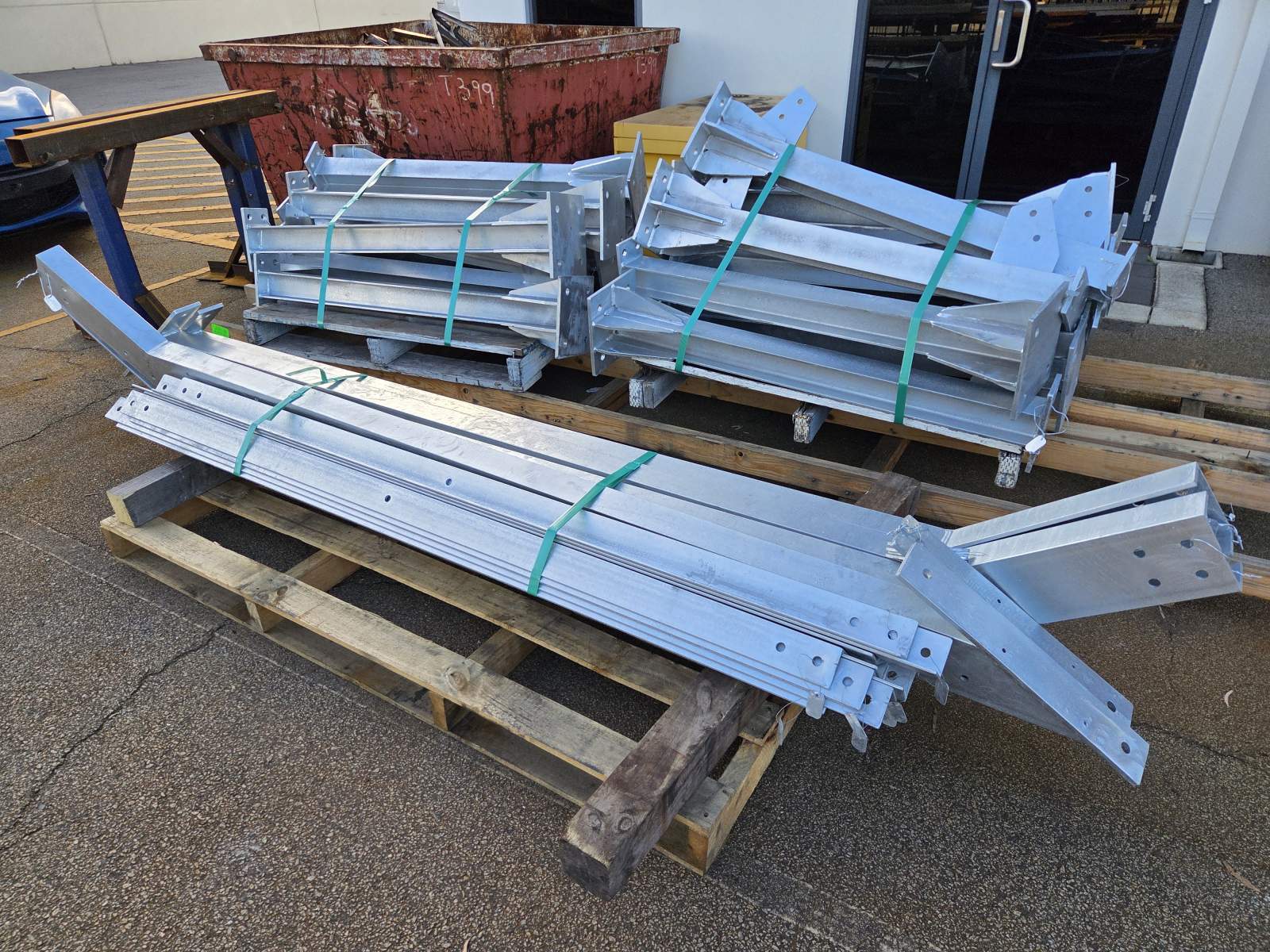
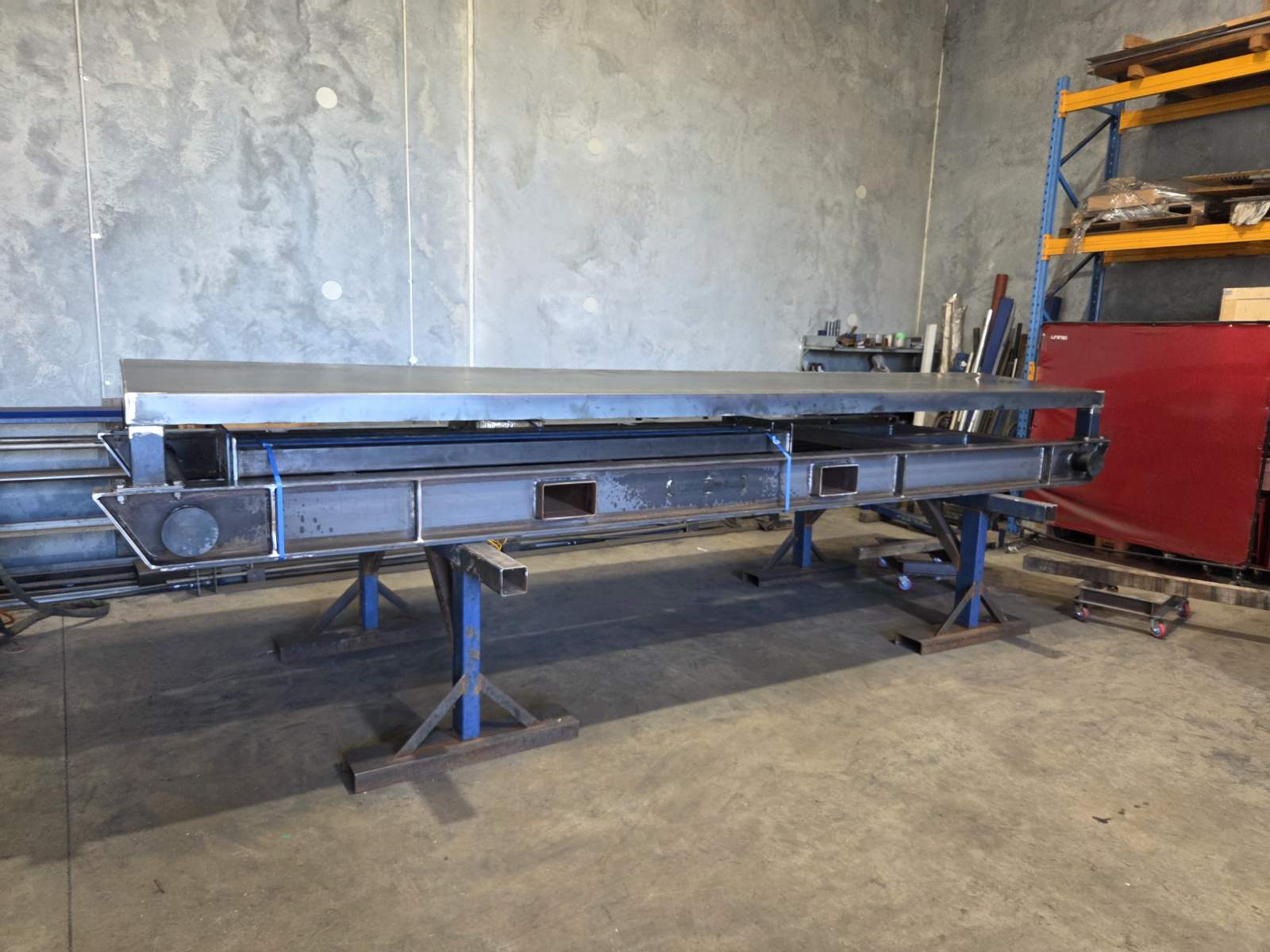
The wall was fabricated in our Forrestdale workshop to dimensions established by the transformer bay layout. Structural steel members were cut, fitted, and welded to AS/NZS 1554.1 Category SP — see our welding consulting and AS1554 compliance service for more on our welding standards — before the completed assembly was sent for hot-dip galvanising. Galvanising after fabrication rather than using pre-galvanised material ensures full corrosion protection on cut edges and weld zones — areas that are particularly vulnerable in an outdoor environment.
Once galvanised, the wall was inspected and despatched to Westforce Construction ready for installation on the substation site.
Applications
Similar transformer splashback walls and oil containment barriers are required at:
- Zone and terminal substations operated by Western Power and other network operators
- Mining site distribution substations and switchrooms handling oil-filled transformers
- Industrial facilities with high-voltage transformers — manufacturing plants, water treatment, data centres
- Construction sites with temporary high-voltage supply transformers in areas with vehicle movement
- Rail corridor electrical infrastructure where transformer protection is specified by the network operator
The specific geometry and sizing varies with the transformer model and bay dimensions, but the fabrication approach — custom structural steel structure, galvanised finish, structural welds — applies across the full range of substation sizes and operators.
Frequently Asked Questions
A transformer splashback wall is a steel barrier positioned adjacent to an oil-filled transformer. Its primary function is to contain transformer oil within a defined zone if the transformer casing fails and oil is released — preventing the oil from spreading across the site where it could ignite or cause environmental contamination. A secondary function is to protect the transformer from vehicle impact.
Oil-filled transformers carry significant volumes of dielectric oil under pressure. If the casing is breached — through electrical failure, overheating, or mechanical damage — the released oil is a fire risk and an environmental contaminant. Network operators including Western Power specify containment infrastructure for transformers above threshold sizes as part of their standard substation design requirements.
The splashback wall typically works with a bunded concrete pad or drainage system beneath the transformer. Together, these elements contain the oil within the substation footprint so it can be recovered rather than spreading to stormwater drains or adjacent ground. The specific containment volume required depends on the transformer's oil capacity and the relevant network operator's specifications.
Outdoor substations are maintained infrequently — the wall needs to remain serviceable for many years with minimal attention. Hot-dip galvanising provides a thick, metallurgically bonded zinc coating that protects the steel at cut edges and welds as well as flat surfaces. A paint system applied to fabricated steel would require periodic inspection and recoating; a galvanised finish performs reliably for decades in an outdoor environment without regular maintenance.
Yes — the wall dimensions are determined by the transformer bay layout and the containment volume required. We fabricate to the specific dimensions for each installation rather than supplying a standard size that may not fit the existing bay correctly.
Electrical contractors, civil construction companies, and specialist substation contractors — all of whom are working to a network operator's specification and need a fabricated steel component delivered on a project timeline. We supply the fabricated steelwork as a subcontractor to the principal construction contractor.
A typical small-to-medium splashback wall — this project was completed in approximately five working days from start to delivery, including the galvanising turnaround. Larger or more complex containment structures with multiple bays or integrated drainage provisions take longer. Lead time for galvanising is the primary variable.
Project Gallery
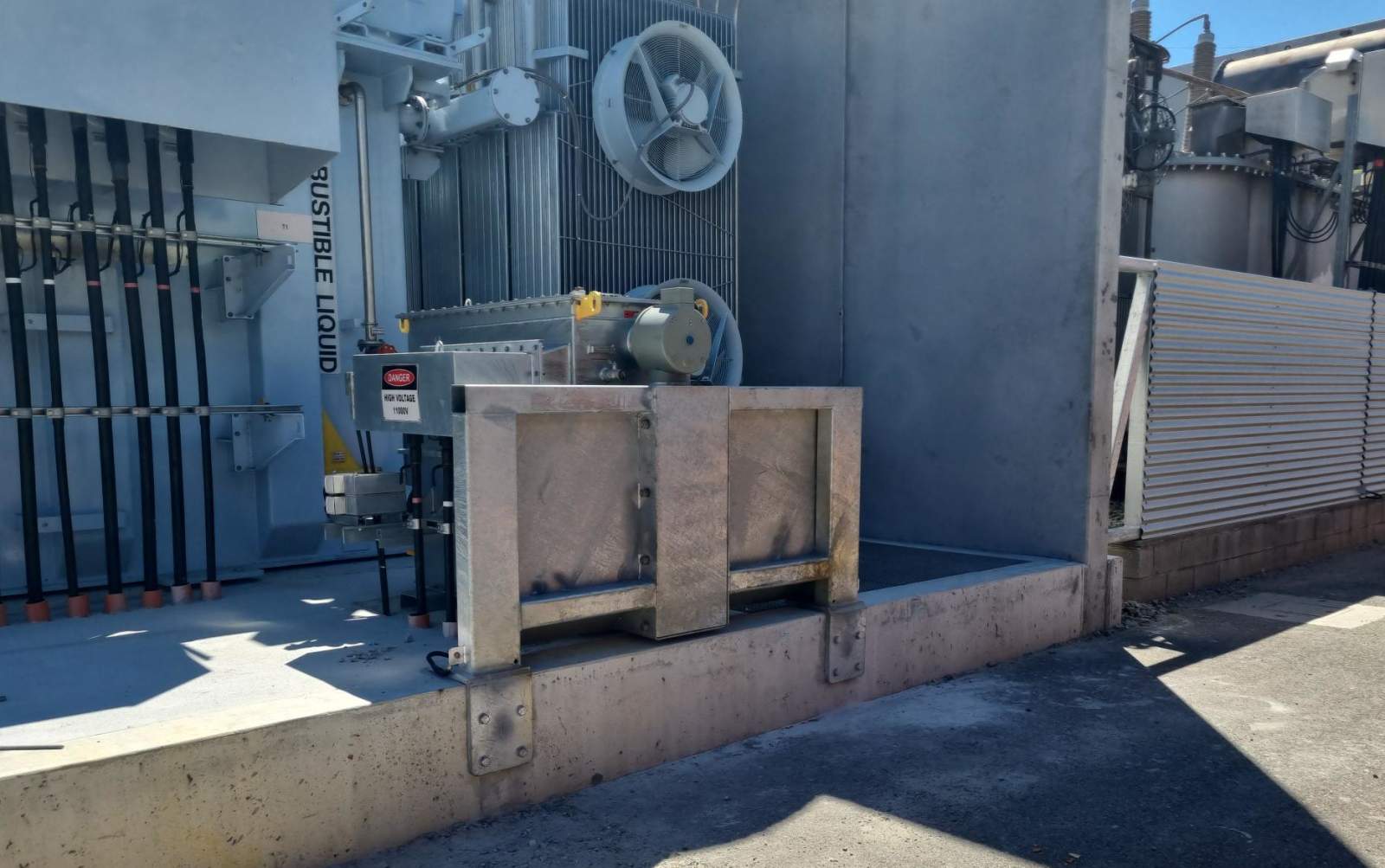
Completed transformer splashback wall — fabricated to contain transformer oil and protect against vehicle impact
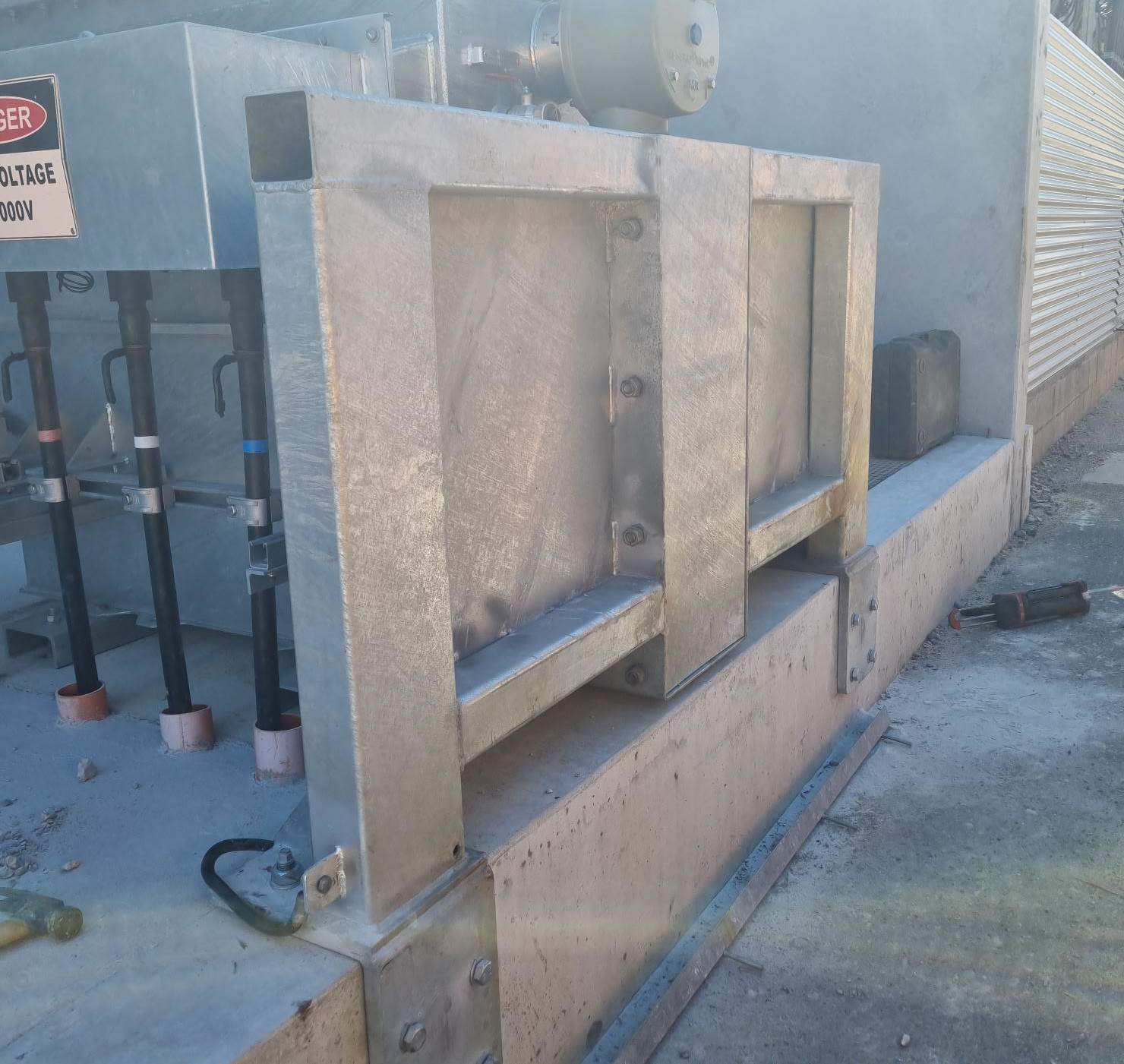
Splashback wall detail — galvanised finish for long-term corrosion resistance in an outdoor substation environment
Project Details
- Location
- Welshpool, Western Australia, Australia
- Sector
- Government & Infrastructure
- Status
- Completed
- Project Value
- $
- Completion Date
- February 2026
- Standards
- AS/NZS 1554.1 SP - Structural Steel Welding (Structural Purpose)