Large Dual Transformer Splashback Walls — Oil Containment for Twin Substation Transformers
Project Summary
Following Elite Engineering WA’s earlier fabrication of transformer splashback walls for a substation project, Westforce Construction returned with a requirement for a second, significantly larger installation. This project involved the fabrication of new hot-dip galvanised steel splashback walls designed to protect two transformers positioned side by side — a greater scale and scope than the previous job.
Where the first installation covered a single transformer, this set of walls needed to span and protect twin transformers in close proximity. The geometry, sizing, and structural requirements were scaled up accordingly to ensure both units were fully contained within the oil catchment zone should a leak or rupture occur.
Elite Engineering WA’s structural steel fabrication team handled the design and fabrication of the new walls in our Forrestdale workshop. Hot-dip galvanising was specified for long-term corrosion resistance in the outdoor substation environment.
Scope of Work
The project required fabrication of larger splashback walls sized to the footprint and height requirements for a dual-transformer arrangement. Key considerations included:
- Coverage for two transformers — walls configured to provide containment for both units side by side, rather than a single transformer footprint
- Increased scale — overall dimensions, panel sizes, and structural sections were larger than the previous installation
- Oil containment compliance — geometry designed to retain transformer oil within the bunded area in the event of a leak or failure
- Hot-dip galvanised finish — specified for durability in the exposed substation environment, consistent with the earlier installation
Components were fabricated in our workshop and delivered to site for installation by Westforce Construction.
Why Larger Walls for Dual Transformers?
Transformer oil containment walls — sometimes called splashback walls or bund walls — are designed to prevent transformer oil from escaping the immediate area in the event of a leak, fire, or catastrophic failure. When two transformers sit side by side, the containment structure must account for the oil volume of both units, the spacing between them, and the need to direct any spillage away from adjacent infrastructure.
A larger, purpose-built structure is the right solution here — not an adaptation of the previous installation. The geometry of a dual-transformer arrangement demands a new design that accounts for both units simultaneously.
Our custom fabrication capability means we can size and configure containment steelwork to suit any transformer arrangement, whether single, dual, or larger arrays.
Frequently Asked Questions
Yes. We fabricate to suit the specific transformer dimensions and site layout. Whether it's a single unit, two side by side, or a larger substation array, we configure the wall geometry, height, and structural sections to match the containment requirements.
Hot-dip galvanising is the standard specification for outdoor substation environments. It provides corrosion resistance measured in decades and requires minimal maintenance. Paint systems can also be specified where galvanising is not practical.
Yes. We regularly supply fabricated steelwork to builders and construction contractors as a subcontractor on infrastructure and utility projects throughout Perth and Western Australia.
A standard transformer splashback wall fabrication typically takes one to two weeks from confirmed order through to delivery, depending on workload and material availability. Contact us for a current lead time.
Project Gallery
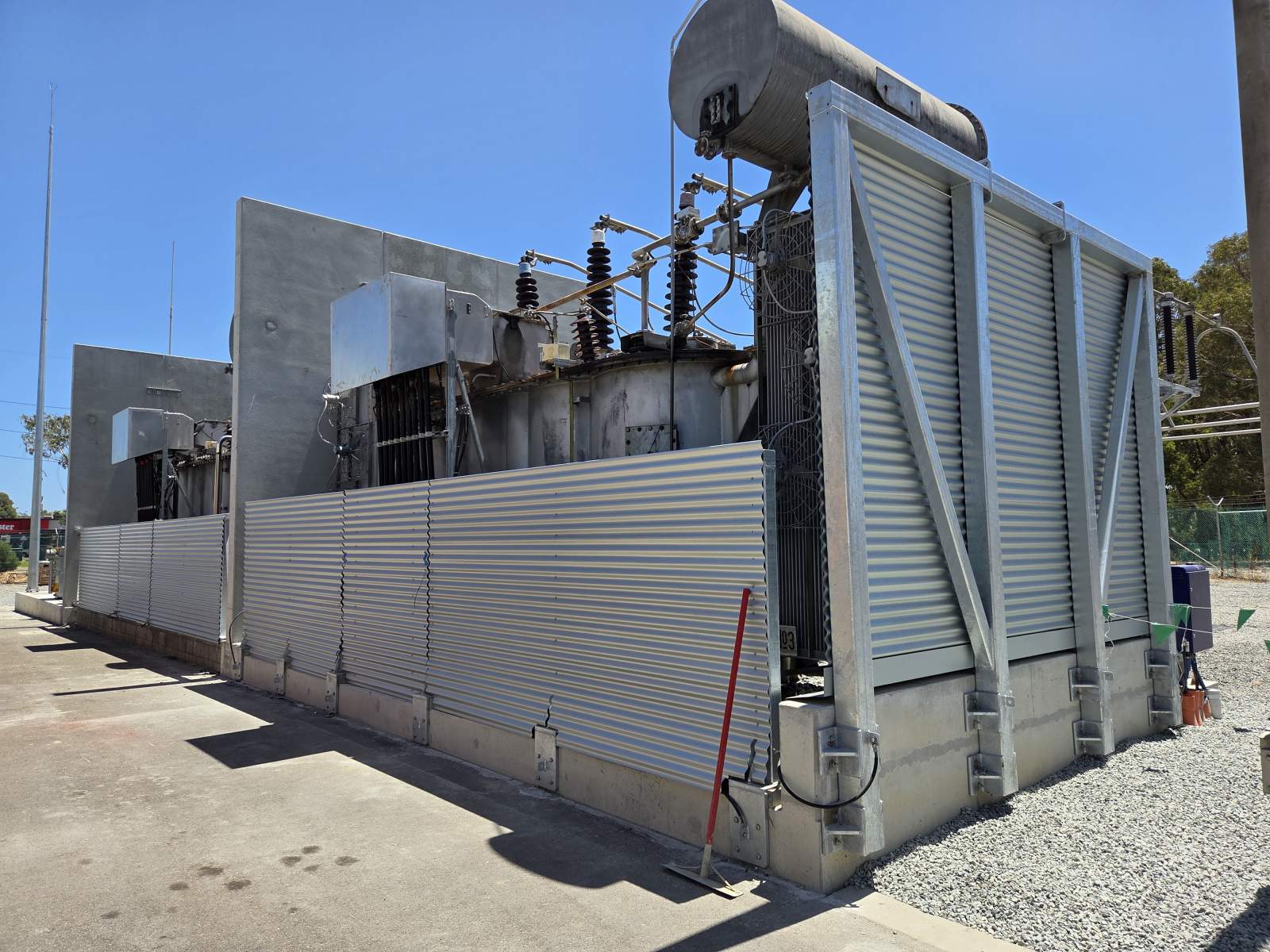
Large dual transformer splashback walls — new hot-dip galvanised steel oil containment walls protecting two side-by-side transformers
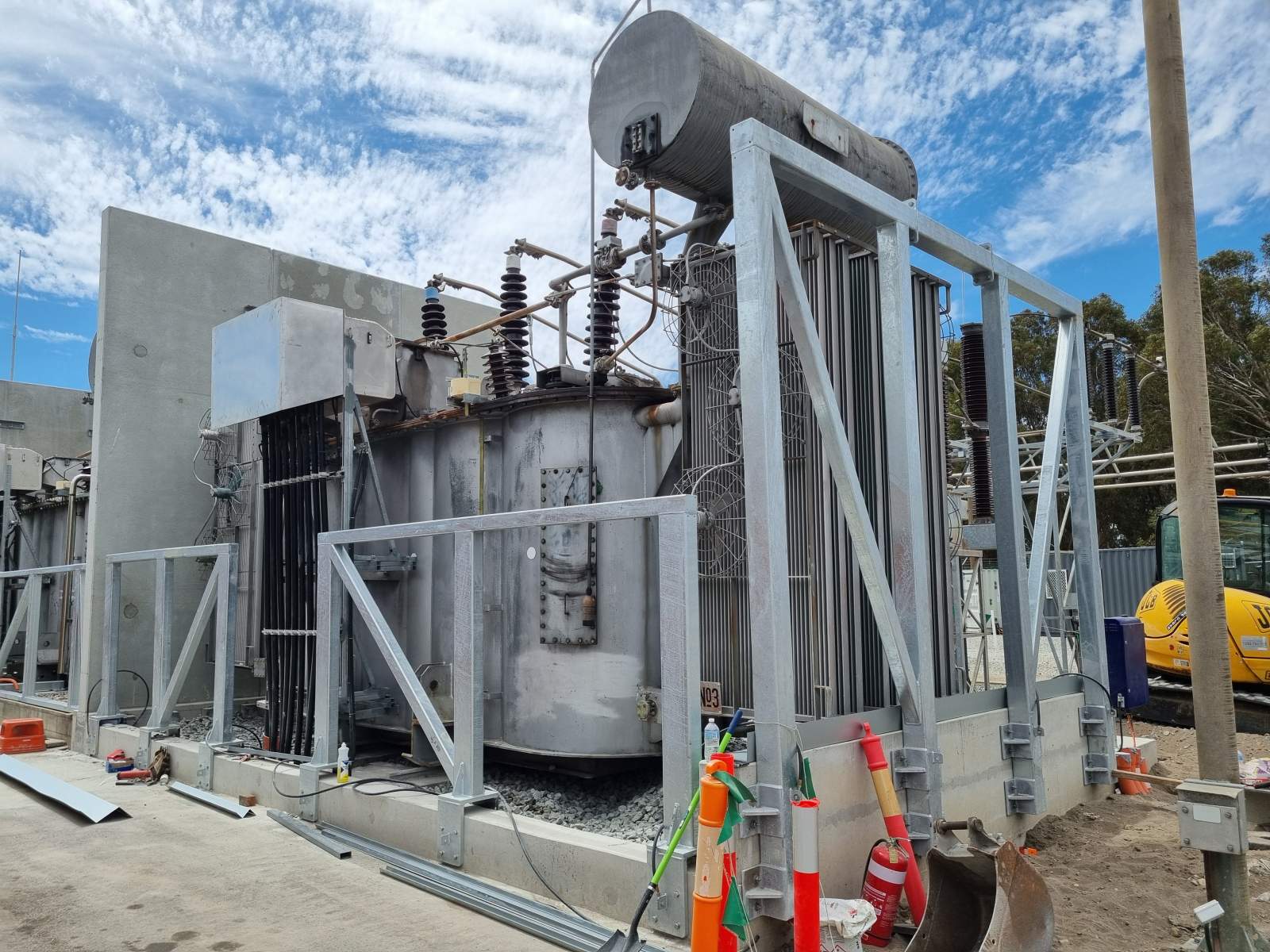
Twin transformer oil containment steelwork — larger scale and scope than the previous splashback wall installation
Project Details
- Location
- Perth, Western Australia, Australia
- Sector
- Government & Infrastructure
- Status
- Completed
- Project Value
- $
- Completion Date
- February 2026
- Standards