Solar Array Frame for 20ft Container — Remote Mine Site Power
Project Summary
Remote mining operations across Western Australia’s Pilbara region face a persistent challenge: how do you reliably power camp facilities, communications equipment, instrumentation, and auxiliary systems when you’re hours from the nearest grid connection? Diesel generation is the default answer, but it comes with real costs — fuel logistics, generator maintenance, noise, emissions, and the ongoing vulnerability of fuel supply chains across vast distances. Off-grid solar is an increasingly practical alternative, but it needs infrastructure that can be deployed rapidly, moved between sites, and withstand the extreme conditions of the Pilbara without constant attention.
Our client approached Elite Engineering WA with a clear brief: design and fabricate a structural steel frame that would mount a full solar panel array on top of a standard 20-foot shipping container, creating a self-contained, mobile power generation unit that could be transported to remote mine sites, positioned, and connected with minimal site preparation. The container provides the structural base, battery storage space, and electrical housing all in one. The steel frame we fabricated provides the mounting platform for the solar panels that power the whole system.
The result is a compact, robust solar power unit that can be loaded onto a truck, driven to any remote WA site, and operational within hours of arrival. No concrete footings. No permanent installation. No grid connection required.
Designing for the Container Interface
The fundamental engineering challenge was designing a frame that transfers solar panel loads into the container structure safely and without modification to the container itself. Shipping containers are precisely engineered to carry loads through their corner castings and top rails — they’re not designed to have arbitrary loads applied to their roofs. A frame that spreads weight incorrectly can deform the container roof, which creates problems not just structurally but for the electrical and battery systems housed inside.
We designed the frame to connect at the container’s corner castings and top longitudinal rails, distributing panel and wind loads through the same structural members that are designed to handle them. The connections are bolted rather than welded — no permanent modification to the container, which keeps the unit flexible for lease arrangements or future repurposing. The frame sits flush with the container profile when viewed from the side, minimising the visual and structural footprint while still providing a rigid, level mounting surface for the solar panels.
The panel bays within the frame are laid out to match standard commercial solar module dimensions. This wasn’t accidental — designing for standard panel sizes means the client isn’t locked into a single supplier and can replace panels as technology improves or if individual panels are damaged during transport or from the occasional hailstorm that sweeps across the Pilbara. The galvanised sub-rails that actually support the panels are bolted to the main steel structure, again avoiding permanence and allowing the panel mounting system to be reconfigured as needed.
Engineering for Pilbara Conditions
The Pilbara is one of the harshest operating environments in the world for outdoor structures. Summer temperatures routinely exceed 45 degrees Celsius. Wind events, including tropical cyclones, periodically affect the region. UV radiation is extreme. Red dust penetrates everywhere. Any structure deployed there needs to handle all of this without maintenance attention for months at a time, because the whole point of a remote power unit is that it operates unattended.
Wind loading drove much of the structural sizing. A flat array of solar panels on top of a container presents a significant sail area, and in cyclone-affected regions the relevant Australian Standard AS 1170.2 specifies substantial design wind pressures. The frame members are sized to handle these loads without deformation, and the connections to the container are engineered to transfer uplift forces — not just downward gravity loads — because the critical failure mode in high winds is uplift, not crushing. The frame holds panels down against wind, not just up against gravity.
The surface treatment is specified for the Pilbara environment specifically: zinc-rich primer with a durable topcoat, applied over mechanically prepared steel, provides corrosion protection that will outlast many years of UV, dust, and the occasional driving rain event. The base frame is painted steel. The sub-rails and all bolts are hot-dip galvanised throughout — no standard zinc-plated hardware that would corrode and seize within a wet season.
Fabrication and Workshop Process
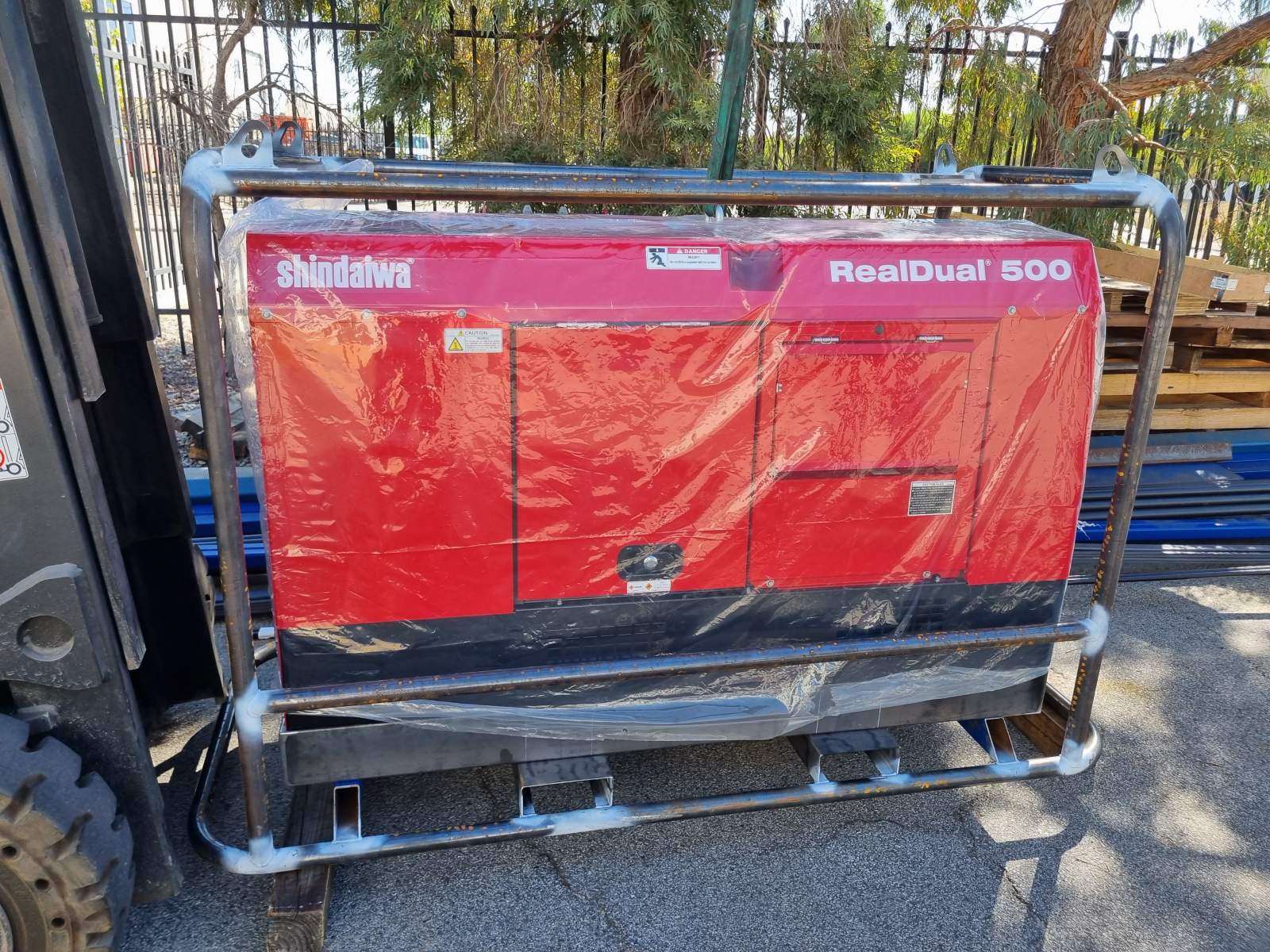
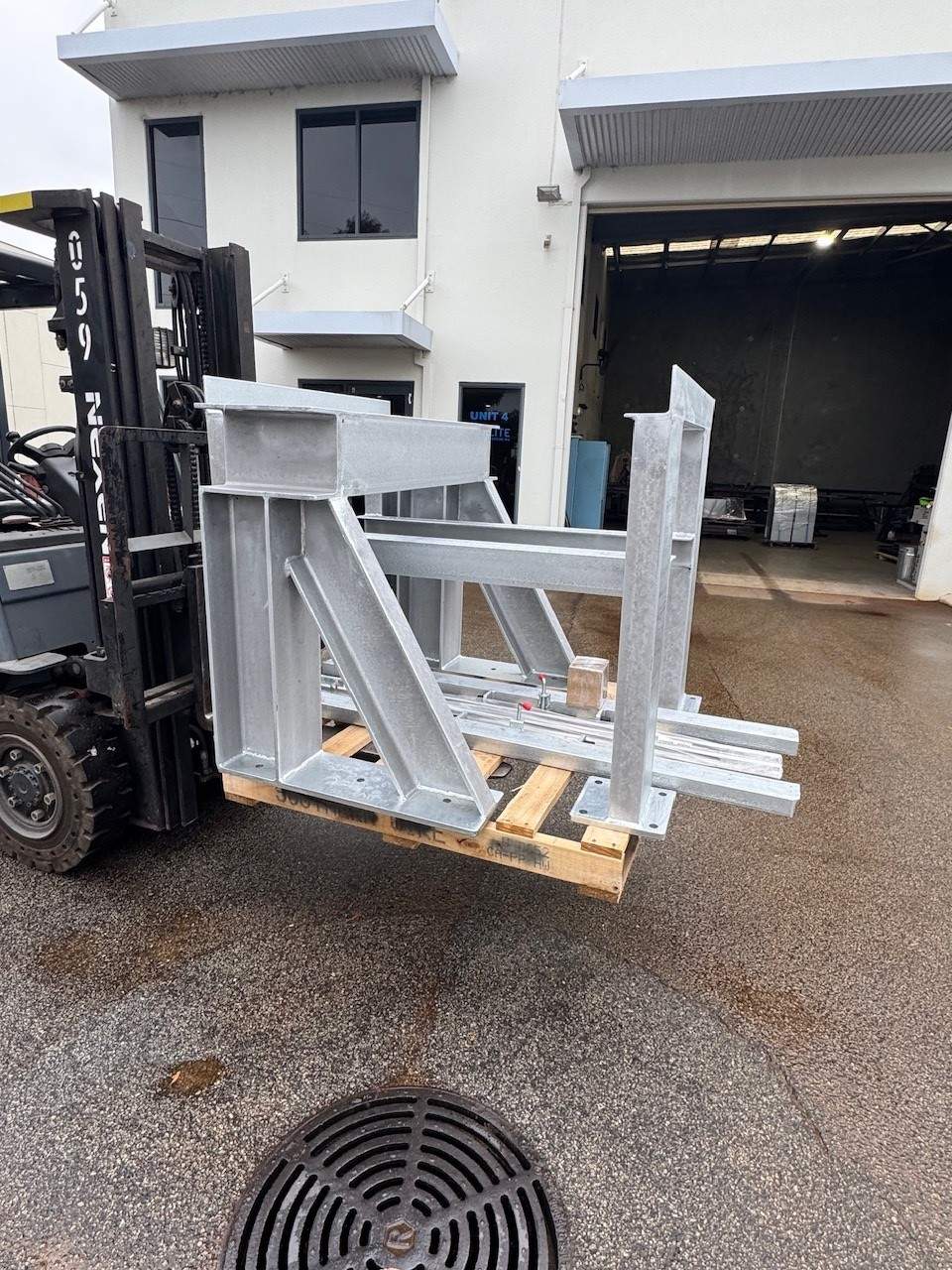
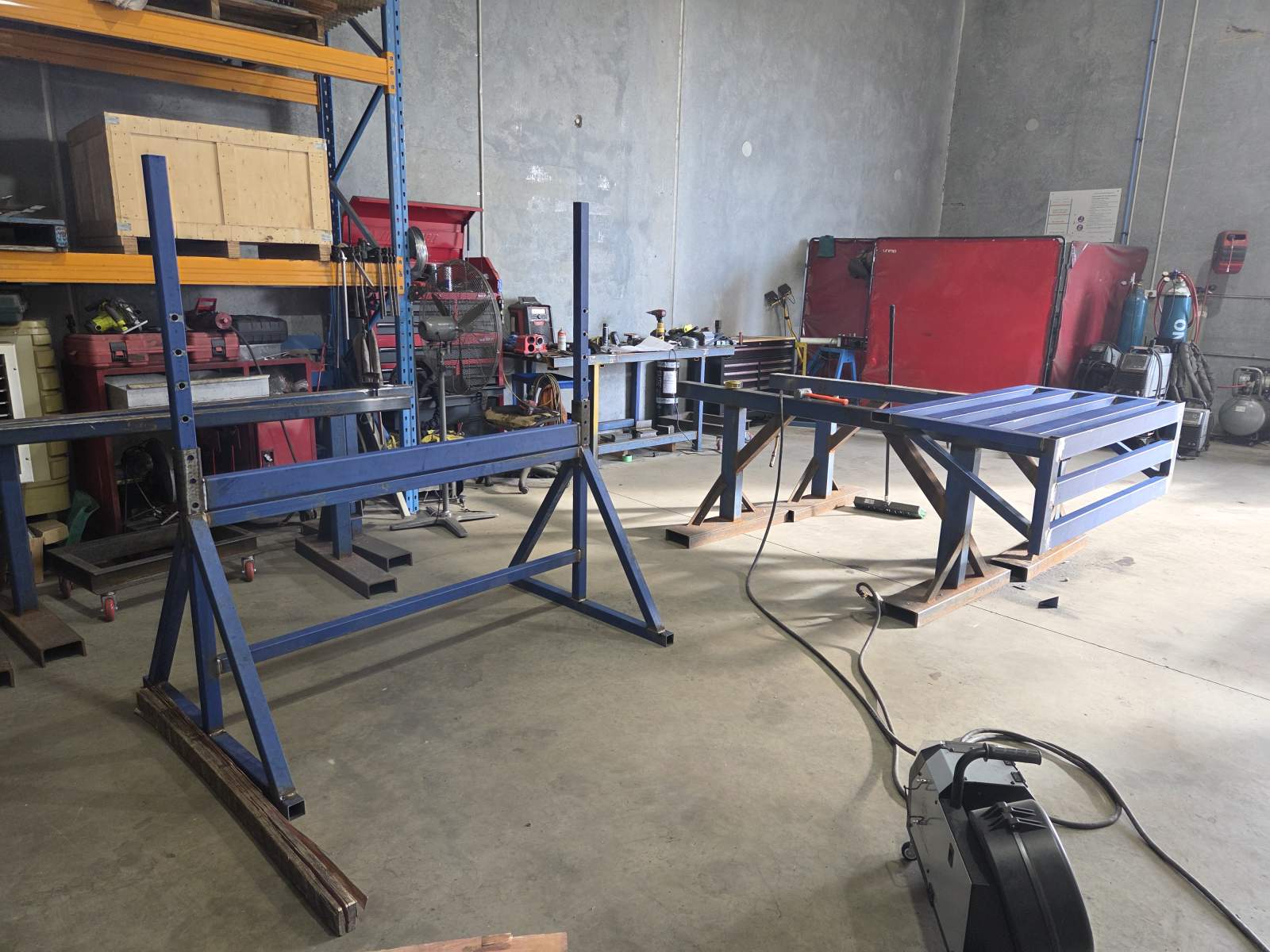
The frame was fabricated in our Perth workshop before being transported to Port Hedland for container installation. Fabricating in Perth rather than on site means controlled conditions, proper equipment, and quality checks that simply aren’t possible at a remote mine site. The frame was fully welded, treated, and test-fitted before it left our workshop, so the site team had a known-good, ready-to-install unit rather than raw components requiring site assembly.
The structural welding meets AS/NZS 1554 requirements throughout. Weld quality on a structure like this matters because it will experience constant vibration from wind loading and occasional shock loads from transport — the container and its roof frame get loaded and unloaded by cranes, transported on rough roads, and generally treated the way things get treated in remote mining logistics. The welds need to be sound enough to survive service conditions that are considerably more demanding than a static installation.
Project Benefits and Outcomes
The completed solar power unit provides our client with a genuinely deployable renewable energy asset that can follow their operations as they move between sites. The initial capital investment in the steel frame is modest relative to the ongoing diesel savings it enables, particularly at current fuel logistics costs for remote WA locations where every litre of diesel represents not just its purchase price but substantial transport cost on top.
From a project management perspective, the modular approach — container as base, our frame as solar mounting — means the client can source and fit panels independently, upgrade the system as solar technology improves, and maintain the electrical systems inside the container without touching the steel structure. The frame does one job: hold panels in the right position at the right angle under all conditions. It does that job reliably, without requiring attention.
Applications
This type of container-mounted solar frame is increasingly relevant across a wide range of WA industries and applications:
- Remote mine site auxiliary power (communications, lighting, instrumentation)
- Construction camp power for remote or temporary camps
- Agricultural operations in off-grid locations
- Emergency and disaster response power units
- Remote pastoral station power systems
- Fly camp and exploration camp power
- Telecommunications tower supplementary power in remote areas
The 20-foot container format is particularly well suited to WA mining applications because the logistics infrastructure for moving ISO containers already exists across the Pilbara — the same trucks, cranes, and handling equipment that move site infrastructure can move a solar power unit without any special transport arrangements.
Frequently Asked Questions
Can the frame be adapted for 40-foot containers? Yes. The design logic is the same — we scale the frame to the container footprint and increase the structural members accordingly for the larger panel array and associated wind loads. A 40-foot unit can support roughly double the panel capacity.
How are the solar panels attached to the frame? The galvanised steel sub-rails provide standard solar mounting channel compatible with most commercial panel clamp systems. Panels are secured with mid-clamps and end-clamps along the sub-rails, the same method used in ground-mounted and rooftop solar installations.
Does the frame modification void the container’s structural certification? No, because we don’t modify the container. All connections are made to existing structural members via bolted interfaces. The container’s structural integrity is unaffected and it remains compliant with ISO 668 for transport purposes.
What wind rating does the frame achieve? The frame is designed to AS 1170.2 wind loading for the relevant geographic region and terrain category. Specific wind ratings depend on the deployment location — designs can be uprated for cyclone-affected regions if required.
Can the unit be transported with panels installed? The frame is designed to transport with panels fitted, provided the transport method and route are assessed for height and wind exposure. For road transport in WA, panels are typically removed and packed separately for long-distance hauls on open roads with high wind exposure.
How long does installation take on site? With the frame pre-fabricated and panels available, a typical installation — crane-lift frame onto container, bolt-down, mount panels, cable — can be completed in one working day by a small team.
What other structures can Elite Engineering WA fabricate for off-grid solar applications? We fabricate ground-mounted solar frames, pole-mounted single and dual-axis frames, rooftop structural supports for industrial buildings, and custom solar equipment skids. Any application that requires structural steel solar mounting we can design and build.
Project Gallery
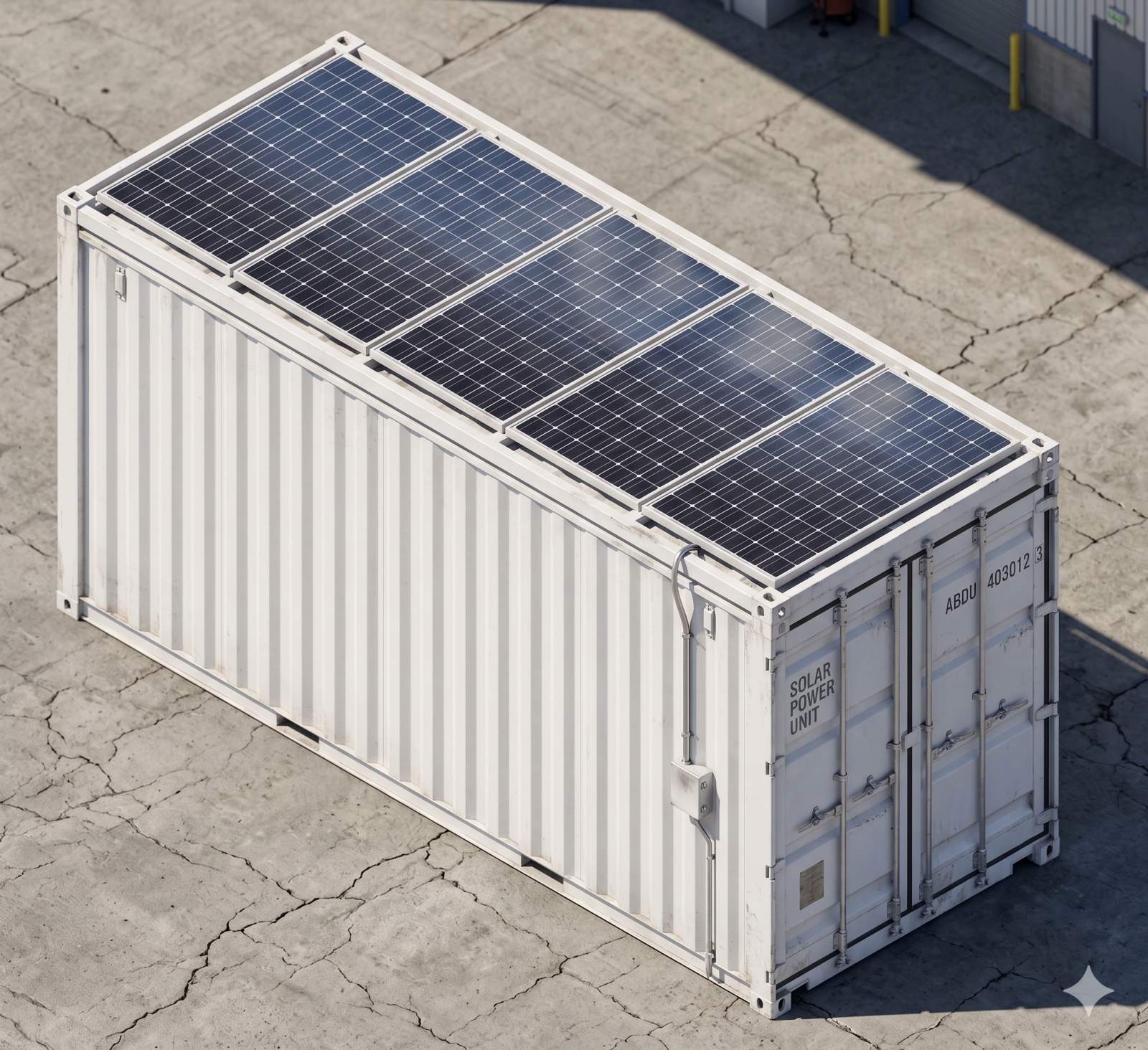
Solar array frame mounted on 20ft shipping container — providing off-grid power for remote mine site operations
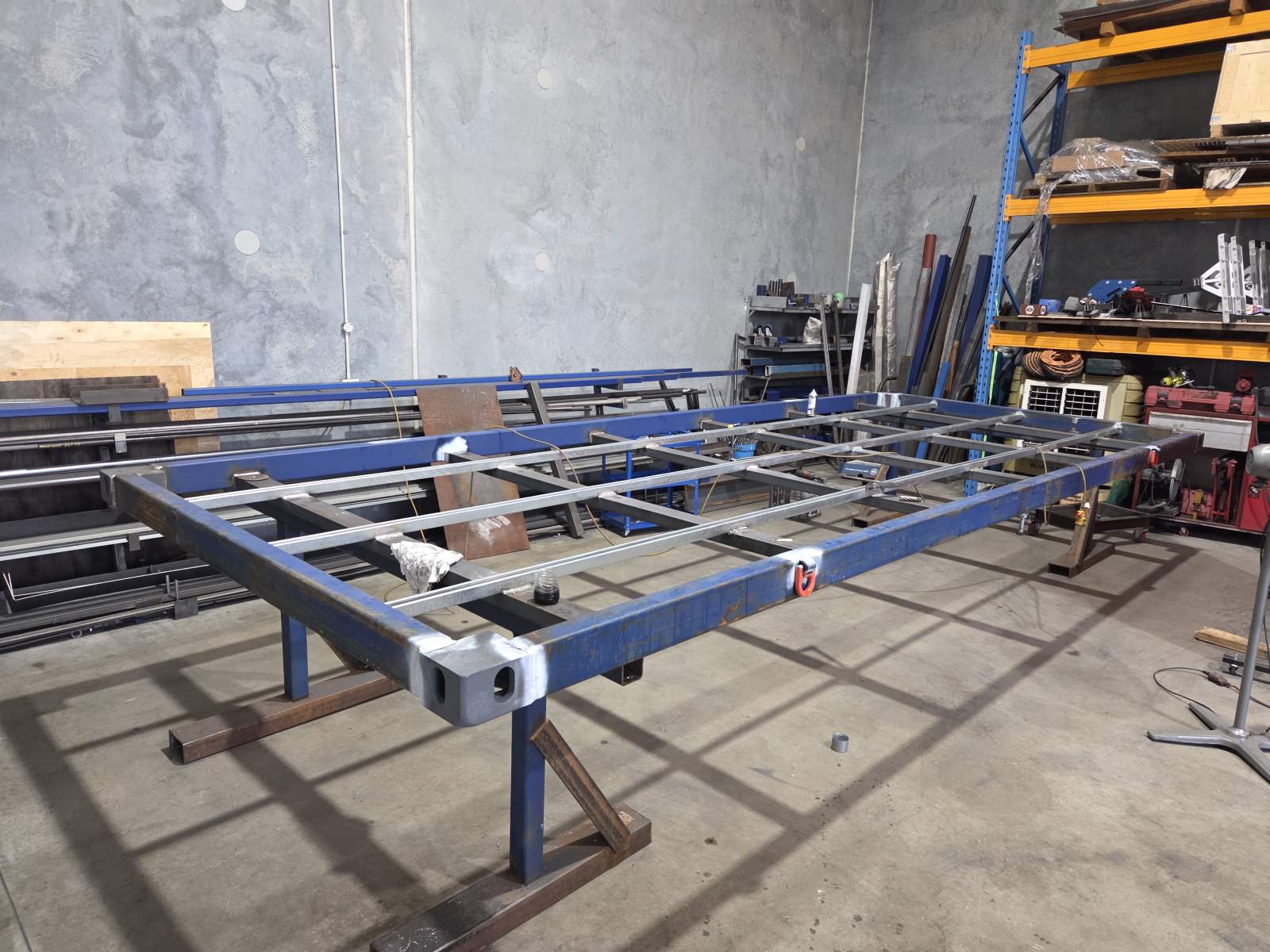
Solar array frame during fabrication in the Elite Engineering WA workshop, Perth
Project Details
- Location
- Port Hedland, Western Australia, Australia
- Sector
- Mining / Renewable Energy / Off-Grid Solar
- Status
- Completed
- Project Value
- $$$
- Completion Date
- April 2026
- Standards
- AS/NZS 1554 — Structural Steel Welding AS/NZS 4600 — Cold-Formed Steel Structures (sub-rails) AS 1170.2 — Wind Actions (Pilbara region wind loading) ISO 668 — Series 1 Freight Containers (interface compatibility)