Dual Compressor Skid — Custom Fabrication for Two Compressors, Dryers and Receiver
Project Summary
Compressed air systems in mining and industrial operations are rarely single-compressor affairs. Demand varies, redundancy matters, and integrating dryers, filters, and receivers into a single transportable unit simplifies both installation and maintenance. For Cleveland Compressors, supplying a complete dual-compressor air system meant they needed a skid capable of carrying all of it — two compressors, the associated filters and air dryers, and a receiver — as a single, self-contained assembly.
Elite Engineering WA designed and fabricated the skid to Cleveland Compressors’ equipment layout through our custom design process, building the frame from the ground up to match the specific footprint and mounting requirements of the compressor units and ancillary equipment. The result is a skid that isn’t a generic frame adapted to carry equipment, but one designed from the start to carry exactly this system — with the receiver mounting, dryer supports, and filter brackets incorporated structurally rather than bolted on as an afterthought.
The completed assembly gives Cleveland Compressors a single unit that can be moved, positioned, and connected on site with a crane or forklift. There’s no requirement to separately install a receiver, pipe in dryers from a separate location, or coordinate multiple mounting bases. The entire compressed air package travels and installs as one.
Why a Custom Skid Frame
Standard skid frames are designed around common equipment configurations. A dual-compressor system with integrated receiver and dryers is not a common configuration — it’s a specific engineering decision made because the application demands it, whether for capacity, redundancy, or operational convenience.
Off-the-shelf frames sized for a single compressor won’t carry two without significant modification. Generic structural frames large enough for the footprint won’t have the right receiver mounting geometry, dryer positions, or filter bracket locations. For Cleveland Compressors to supply a clean, integrated system to their customer, a custom-designed skid was the only practical path.
Custom fabrication also means the skid can be optimised for transportability. The overall dimensions can be set to suit the transport method and site constraints — fitting within a standard truck deck, clearing mine site cage dimensions, or matching the footprint of an existing equipment bay — rather than being determined by whatever generic frame was available.
Design and Engineering
The skid was designed around Cleveland Compressors’ equipment layout. Starting with the compressor footprints and mounting hole patterns, the frame was sized to provide a rigid base for both units with adequate clearance between them for service access. The receiver mounting was integrated into the main structural members rather than treated as a secondary addition — receiver tanks are heavy and the loads need to be carried back to the lifting points and ground supports through the primary structure.
Dryer and filter mounting positions were set to allow the air circuit to route cleanly between components — keeping pipework short and reducing pressure drop through the system. The arrangement also needed to allow the dryers and filters to be accessed and serviced without removing other components.
Forklift pockets and crane lifting provisions were designed for the total loaded weight of the skid including all equipment. Lifting an empty skid frame is straightforward; lifting a fully equipped compressed air system puts significantly higher loads through the lifting points, and these need to be engineered for the actual operating weight.
Fabrication
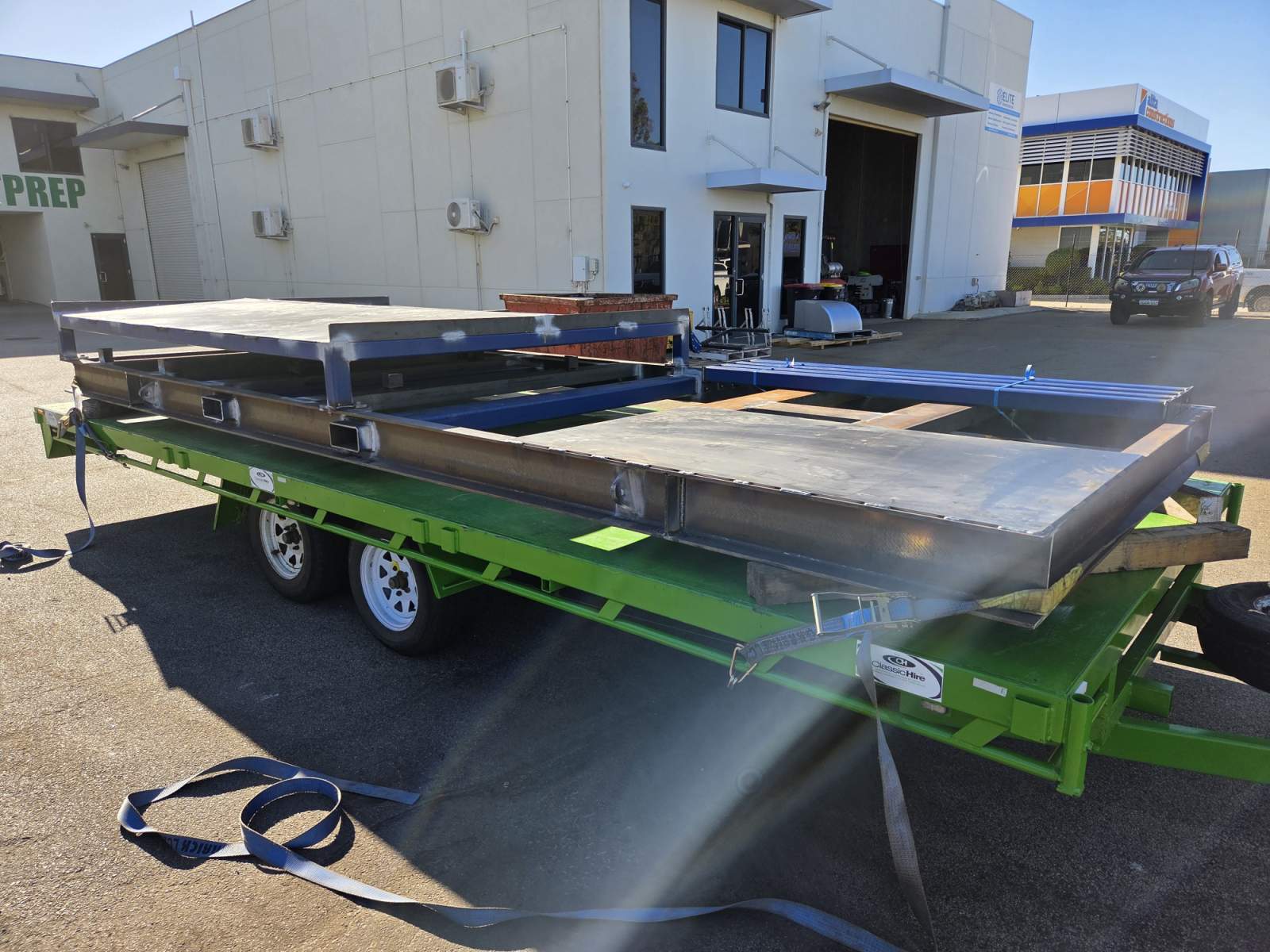
The project was fabricated in our Forrestdale workshop using our structural steel fabrication capability, working directly from the custom design drawings. Primary members were cut, profiled, and welded to form the base frame, with receiver saddles and mounting plates incorporated during fabrication rather than added afterwards. Secondary structure for the dryer and filter positions was fitted once the primary frame was complete and verified against the equipment layout.
Structural welding throughout is to AS/NZS 1554.1 Category SP — the standard central to our welding consulting and AS1554 certification services. Weld quality directly affects the structural performance of a skid that will be repeatedly lifted, transported, and set down with a full equipment load.
All mounting provisions were checked against Cleveland Compressors’ equipment specifications before the skid left the workshop. Getting the hole patterns, saddle heights, and clearance dimensions right at fabrication stage saves significant rectification work during equipment installation.
Applications
Custom dual-compressor skid frames are required across a range of industrial and mining applications:
- Mining operations requiring compressed air redundancy — where a single compressor failure can halt production
- Remote mine sites where multiple smaller compressors are preferred over a single large unit for transport and installation
- Processing plants with variable compressed air demand — dual compressors allow one unit to run at partial load while the second cuts in at peak demand
- Construction and civil sites where a complete, self-contained compressed air package is required
- Industrial facilities where the air system needs to be portable or relocated periodically
The integrated receiver and dryer configuration is particularly suited to applications where the compressed air quality requirement is high — mining equipment and instrumentation often requires dry, clean air that a receiver-and-dryer system delivers more reliably than a compressor alone.
Frequently Asked Questions
A compressor skid is a structural steel frame that mounts a compressor and associated equipment — receivers, dryers, filters — as a single transportable unit. Custom design is needed when the equipment configuration doesn't match a standard frame: a dual-compressor arrangement with integrated receiver and dryers has specific footprint, weight distribution, and mounting requirements that a generic frame won't satisfy correctly.
The frame needs to carry the combined static weight of two compressors, a receiver, dryers, and filters, plus the dynamic loads applied during lifting and transport. The primary structure is designed to carry these loads back to the lifting points and ground supports, with weld quality to AS/NZS 1554.1 Category SP throughout.
Receiver saddle heights and positions are set to carry the tank loads into the primary structural members. Dryer and filter positions are set to allow the air circuit to route cleanly between components with short pipework runs, while maintaining access for servicing. These positions are determined from the equipment layout before fabrication begins.
Yes — the overall skid dimensions can be set to suit transport method and site constraints. This is one of the key advantages of custom fabrication over adapting a standard frame: the footprint, height, and lifting point positions can all be optimised for how the skid will actually be moved and installed.
The standard finish for a compressor skid in a mining or industrial environment is a primer and topcoat paint system. Hot-dip galvanising is specified where the operating environment is particularly aggressive — underground mines, coastal locations, or wet processing areas — where a paint system would require more frequent maintenance.
Structural welding is performed to AS/NZS 1554.1 Category SP, which is the applicable standard for structural steel welding in Australia. For applications in regulated workplaces, the skid design may also need to consider relevant WorkSafe requirements for safe lifting and handling.
The key inputs are the compressor mounting dimensions and weights, receiver size and saddle requirements, dryer and filter positions and weights, required overall dimensions or footprint constraints, and the lift method (forklift pockets, crane lugs, or both). A layout drawing from the equipment supplier is the most useful starting point.
Project Gallery
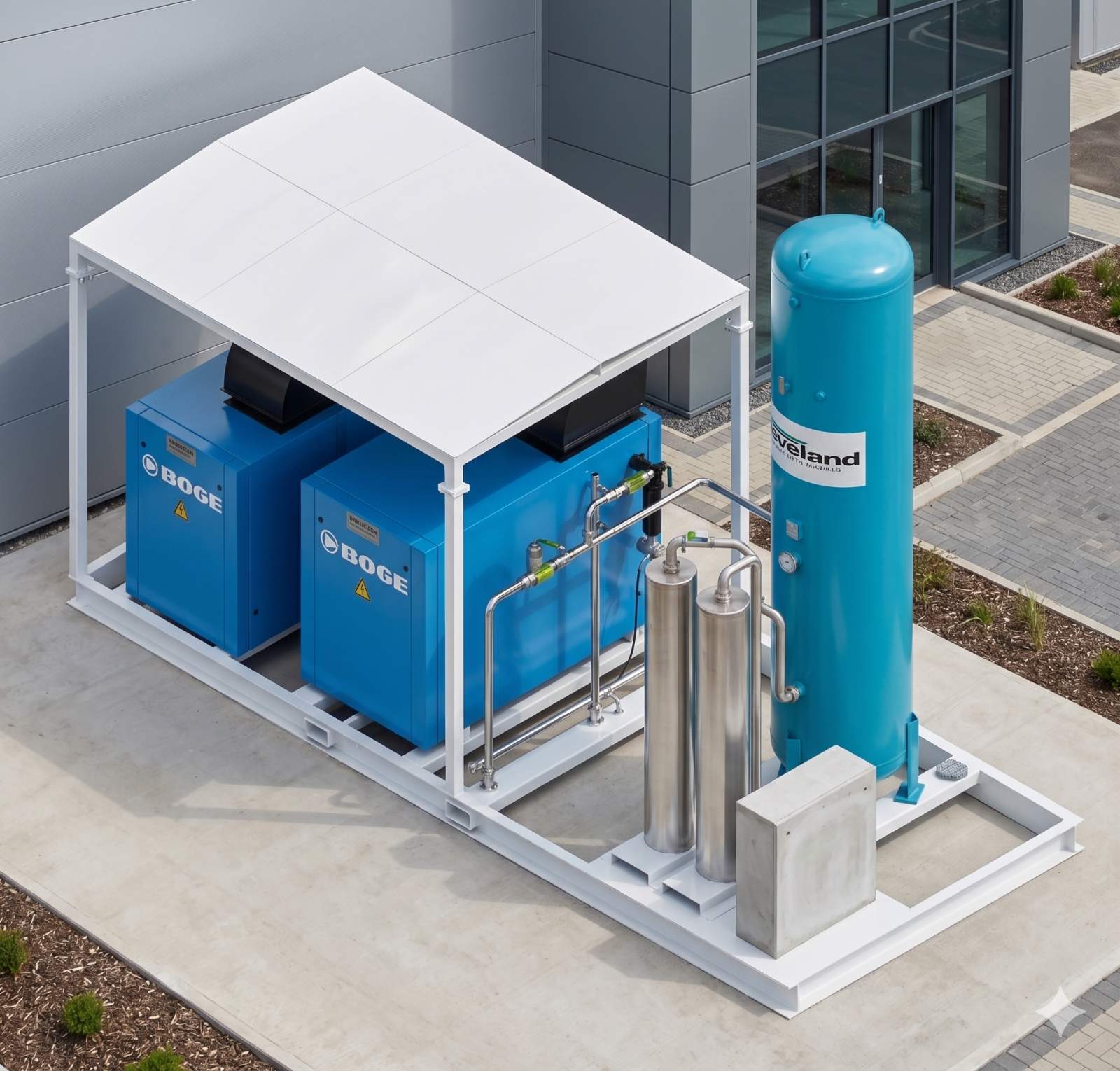
Completed dual compressor skid — custom fabricated to carry two compressors, filters, dryers and a receiver
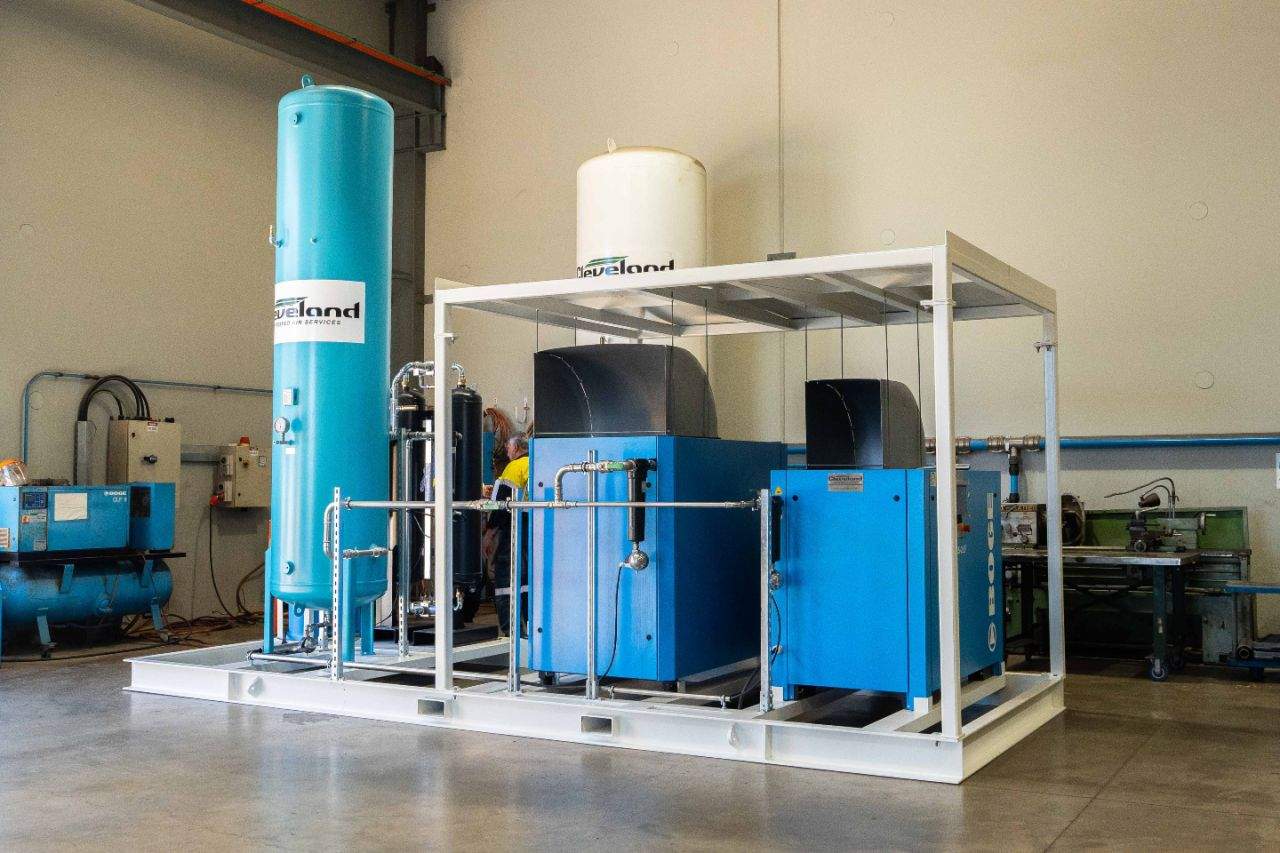
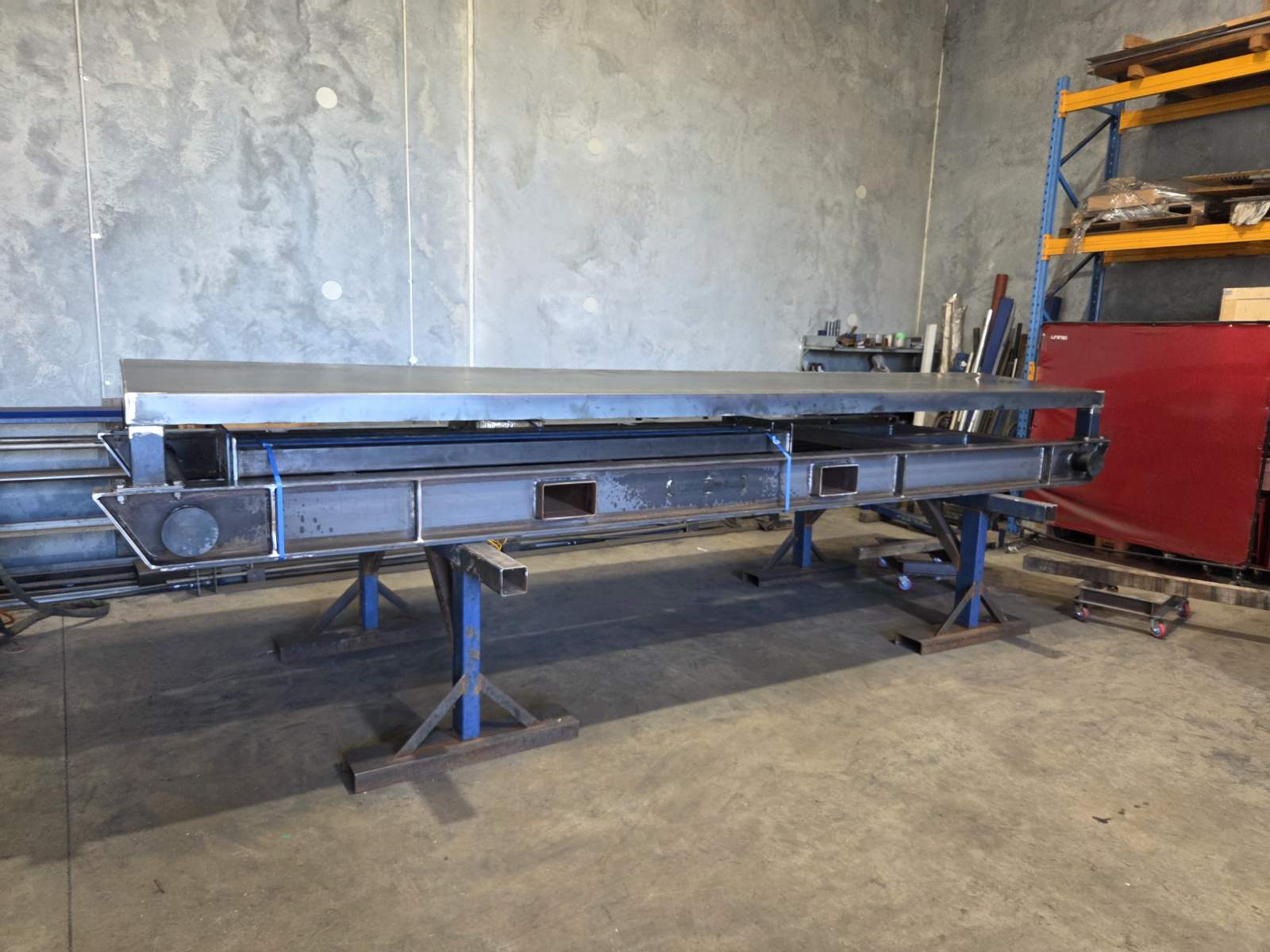
Dual compressor skid during fabrication in the Elite Engineering WA workshop, Forrestdale
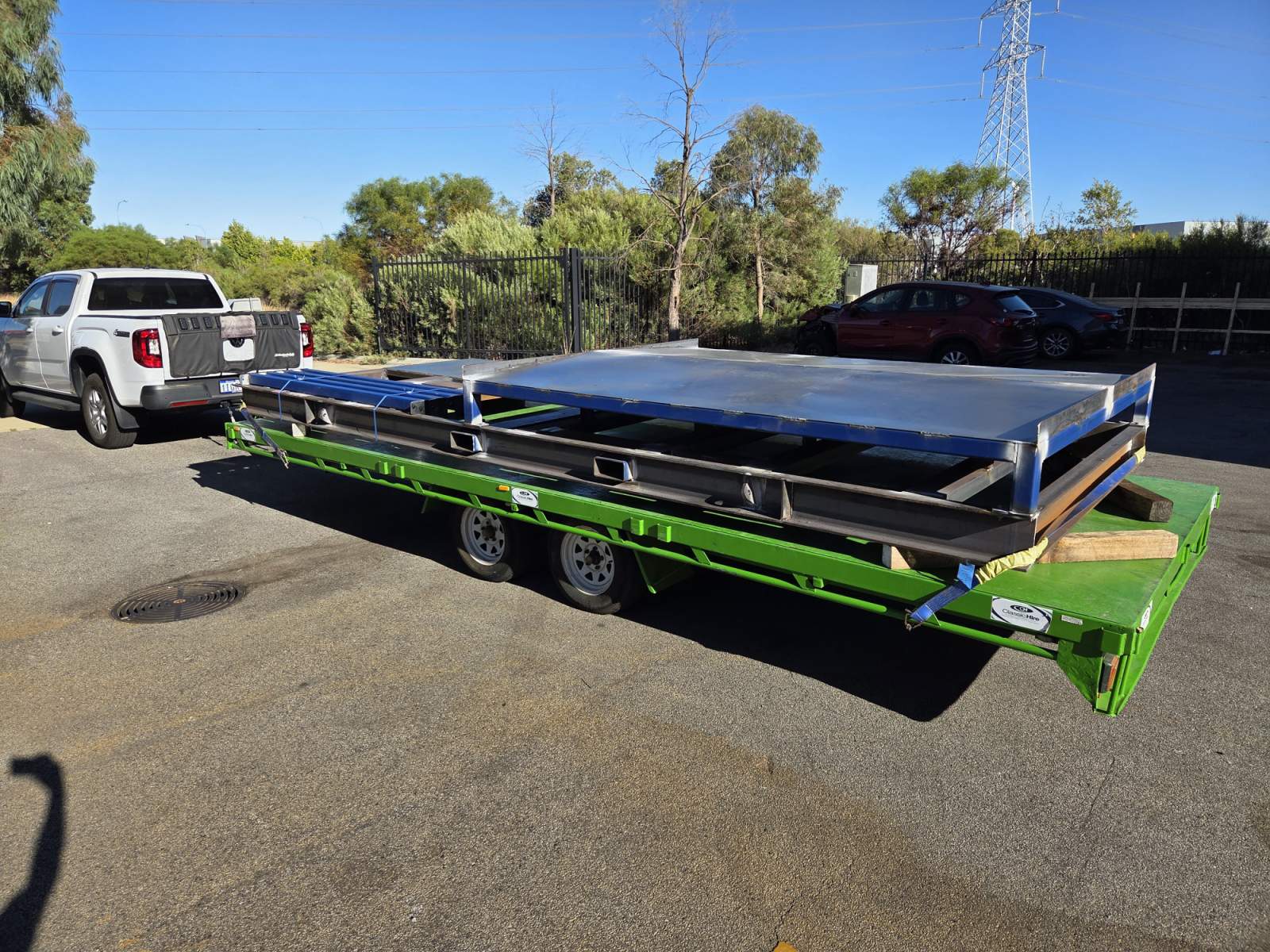
Structural steel frame — sized and configured to carry the full load of dual compressors and ancillary equipment
Receiver and ancillary equipment mounting provisions — integrated into the skid design from the outset
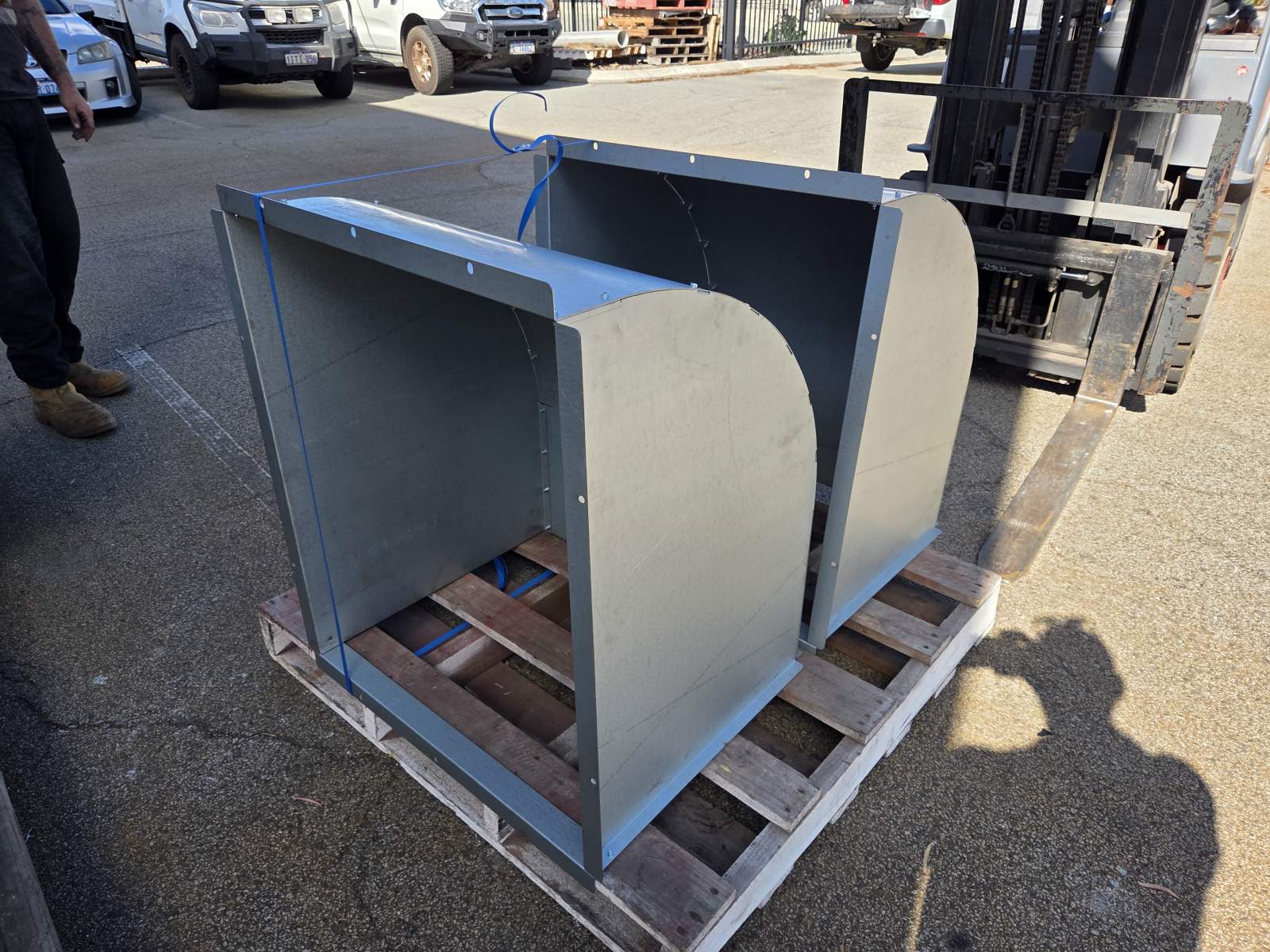
Finished skid ready for despatch — all mounting provisions checked against the equipment layout before delivery
Project Details
- Location
- Maddington, Western Australia, Australia
- Sector
- Mining / Compressed Air Systems
- Status
- Completed
- Project Value
- $$$
- Completion Date
- January 2026
- Standards
- AS/NZS 1554.1 SP - Structural Steel Welding (Structural Purpose)