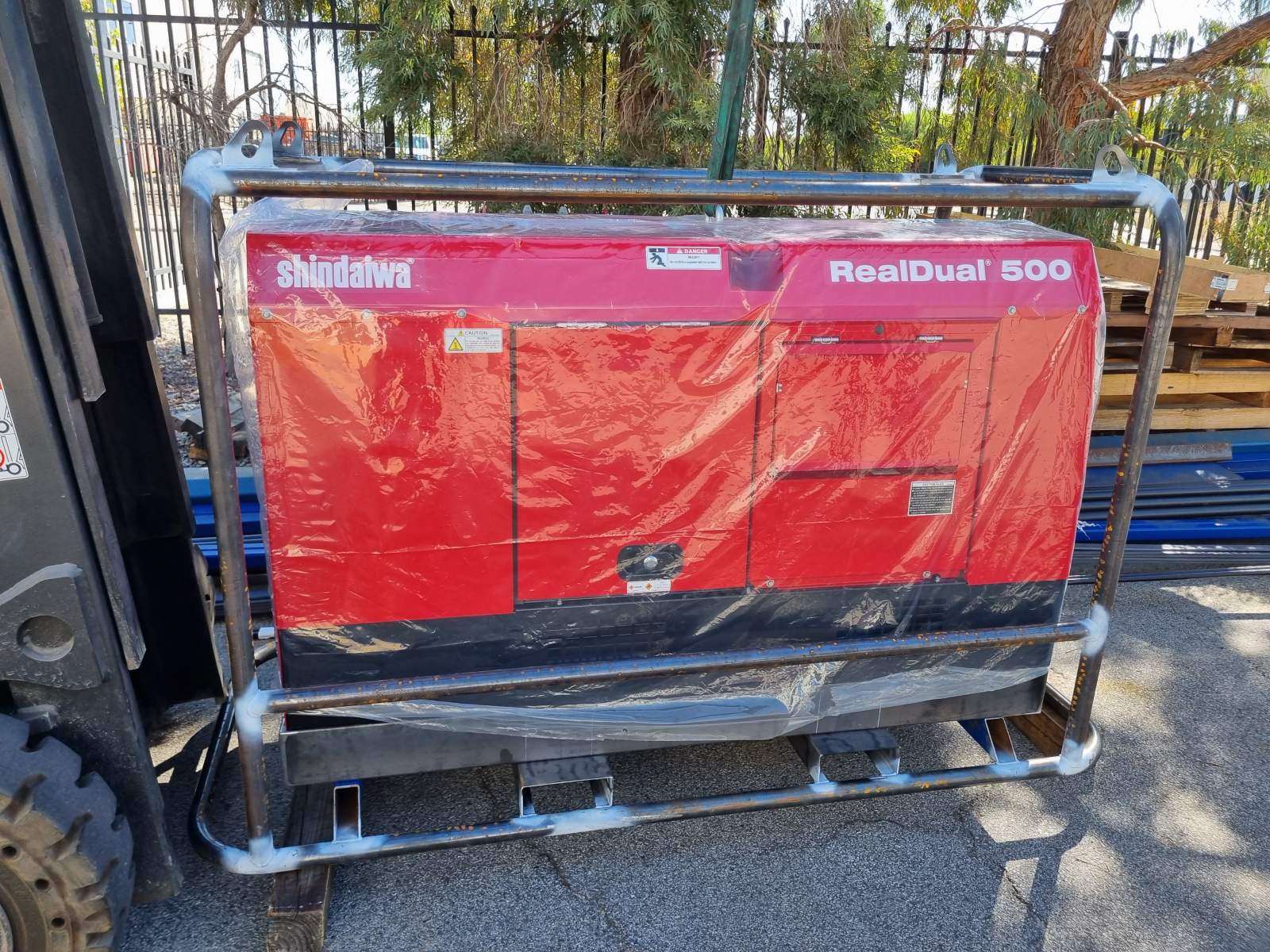
Extended Compressor Drag Skids with Air Dryer
Project Summary
Success in fabrication often means taking proven designs and evolving them. When we delivered the compressor drag skids to our client in February 2025, the design successfully solved their underground mining mobility challenges—drag capability for tunnel transport, forklift handling for surface operations, robust construction for harsh conditions. By August, our client returned with a new requirement. They needed to add air dryers to create complete compressed air treatment systems, but the dryers wouldn’t fit on the existing skid design without compromising the low profile or drag characteristics that made the original successful.
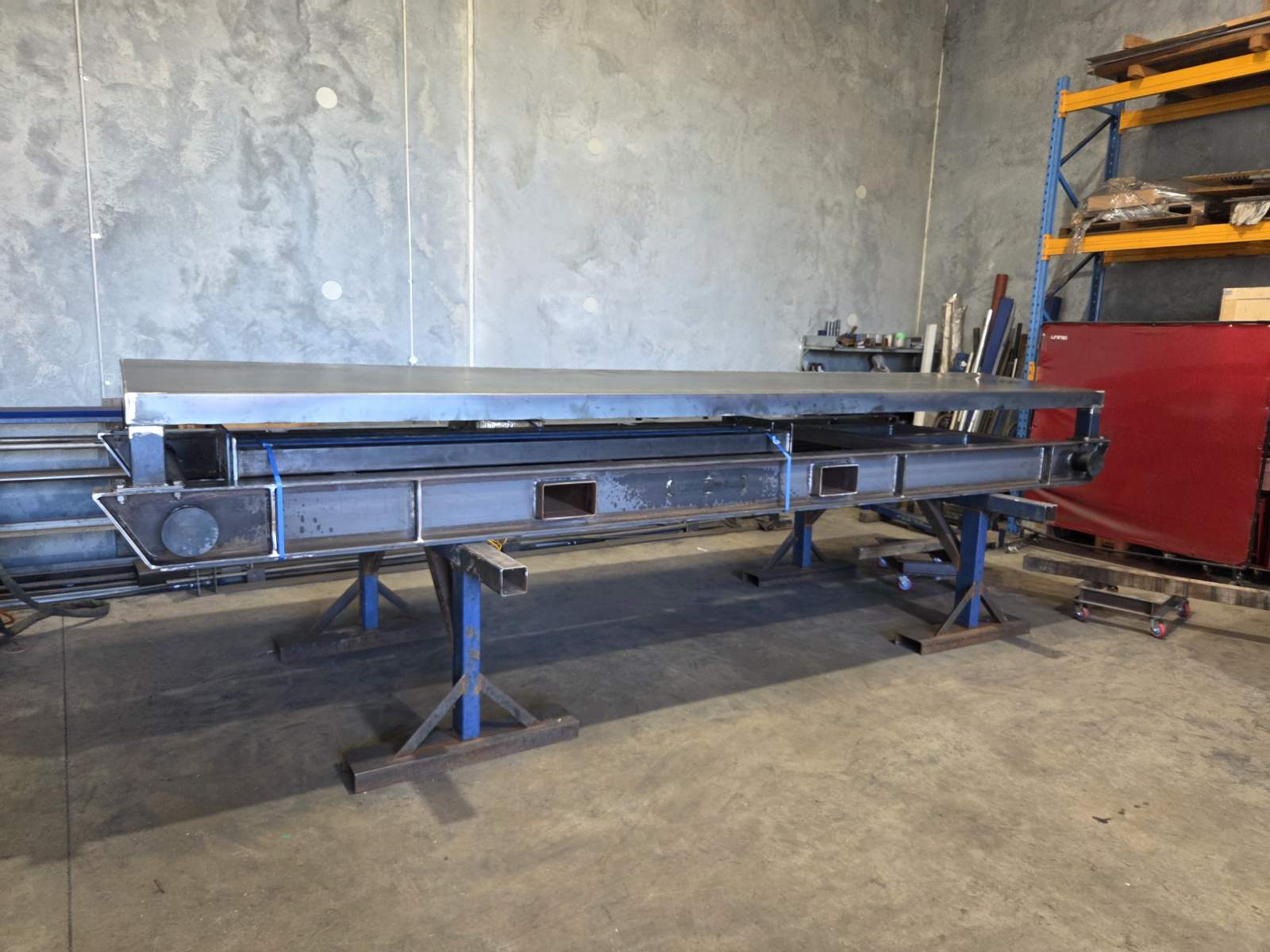
Rather than creating an entirely new platform from scratch—expensive and time-consuming—we extended our proven skid frame fabrication approach to accommodate the additional equipment while maintaining all the drag and forklift handling capabilities that made the original design successful in underground operations. This extended version creates a complete mobile air treatment system on a single platform where the compressor generates compressed air, the receiver tank stores it and smooths pressure fluctuations, and the air dryer removes moisture that would otherwise cause problems with pneumatic tools and equipment underground. Having all three components integrated on one mobile skid means the entire system can be relocated together as mining operations progress, maintaining the complete air treatment capability that underground operations require without disconnecting and reconnecting components.
Building on Proven Design
The original drag skid design we delivered in February had proven itself in underground mining operations where theory meets harsh reality. The drag capability worked reliably for moving equipment through tunnels. The forklift pockets provided practical above-ground handling. The low profile fit through mine tunnel clearances that are often minimal. The robust construction withstood the harsh underground environment where equipment failures are expensive and dangerous. Our client didn’t want to abandon this successful design—they wanted to extend it to accommodate additional equipment without losing the characteristics that made it work.
The challenge was extending the platform length through careful custom design while maintaining the characteristics that made the original design effective in ways that aren’t immediately obvious. A longer skid experiences different stresses during dragging—the extended span creates additional bending moments that can cause structural failures, and the increased length affects how the skid behaves when being towed through tunnels with turns and uneven surfaces. The forklift pocket spacing needed to be adjusted to properly balance the longer platform with its additional equipment weight—improper spacing creates tipping hazards. The structural reinforcement needed to be enhanced to handle the increased loads and span without excessive weight that would make the skid difficult to move.
We engineered the extended frame to maintain the drag skid profile and features while accommodating the longer platform that adds complexity. The reinforced structure handles the additional equipment weight and the increased stresses from the extended span without excessive deflection. The drag surfaces and towing points are designed for the longer skid’s behavior during underground transport where dynamics change with length. The low-profile design is maintained despite the additional equipment, ensuring the extended skids still fit through mine tunnel clearances—critical because equipment that’s too tall is useless underground regardless of other capabilities.
Complete Air Treatment Integration
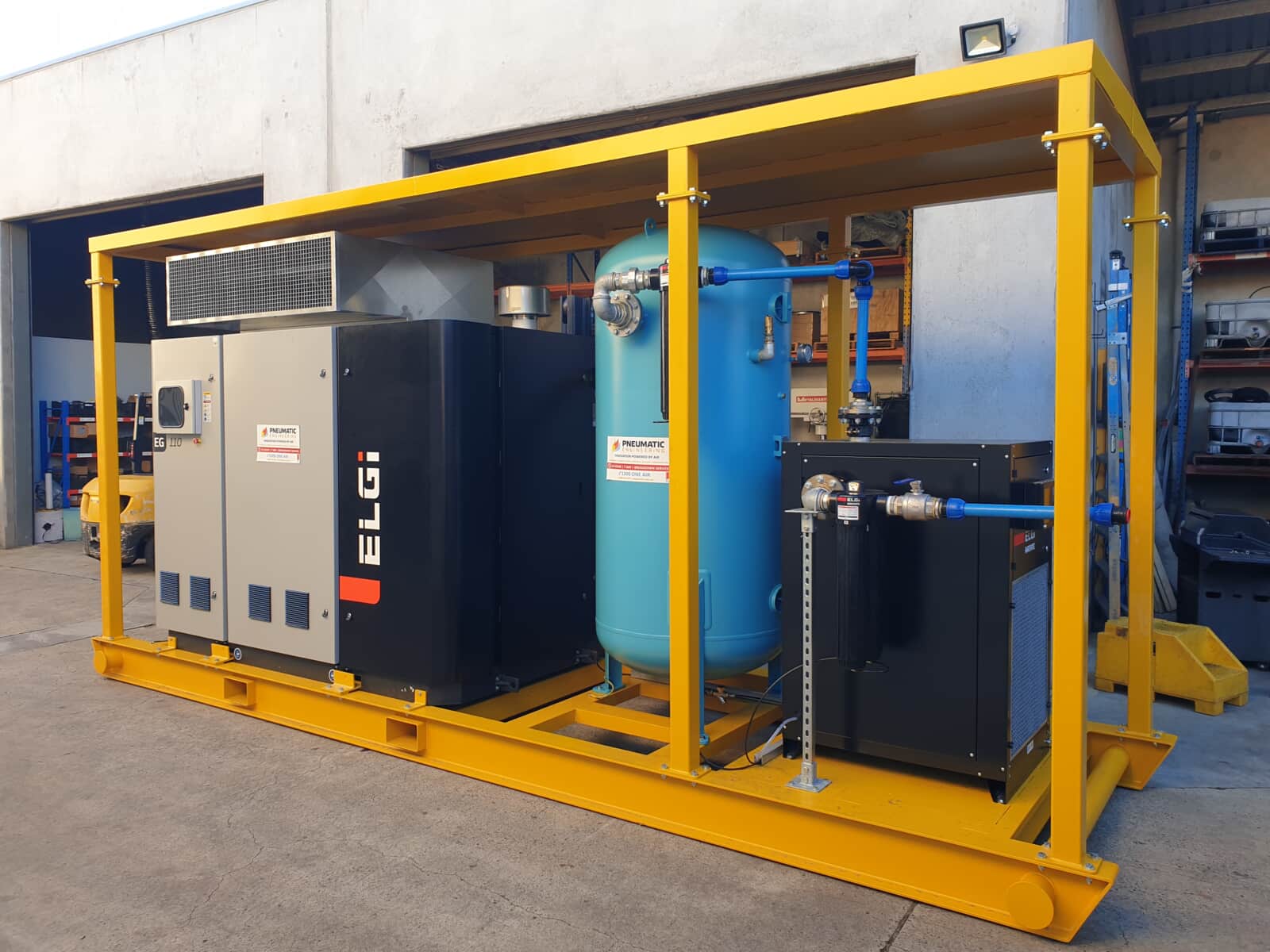
The extended platform accommodates three major components arranged in logical sequence for air treatment efficiency. The compressor generates compressed air and mounts in a position that provides access for maintenance while isolating its vibration from other components that could be damaged by continuous vibration. The air receiver tank mounts with structural support appropriate for its weight—tanks are heavy—positioned to receive compressed air from the compressor efficiently without excessive piping runs. The air dryer—the new addition driving this extended design—mounts with its own dedicated area, complete with piping connections, drainage provisions for condensate removal, and access for filter changes and maintenance that needs to happen regularly.
The system layout optimizes the air treatment process in ways that reduce energy losses. Compressed air flows from the compressor into the receiver tank, where pressure fluctuations are smoothed and some moisture condenses out naturally. From the receiver, air flows through the dryer, where remaining moisture is removed before the air is supplied to pneumatic tools and equipment. This logical flow minimizes piping runs and pressure losses while creating an efficient, integrated system that performs better than separately mounted components connected by long piping runs.
The piping integration is designed into the skid structure, with provisions for routing connections between components that protect piping from damage. The layout provides access to all components for maintenance—filters need changing, drains need servicing, compressors require regular maintenance that can’t be avoided. The integrated design means all these maintenance points are accessible without disassembling the system or removing components from the skid, reducing maintenance time and complexity.
Maintaining Mobility Capabilities
Despite the extended length and additional equipment that adds weight and complexity, the skids maintain their drag capability for underground transport where wheeled vehicles often can’t operate. The reinforced front drag points handle the towing forces generated when pulling the longer, heavier platform through tunnels—forces that increase with length and weight. The wear-resistant skid surfaces extend across the longer underside, providing smooth sliding characteristics that reduce friction during dragging operations that can extend for hundreds of meters. The structural design ensures the extended skid doesn’t flex excessively or develop stress concentrations during towing operations that could lead to fatigue failures.
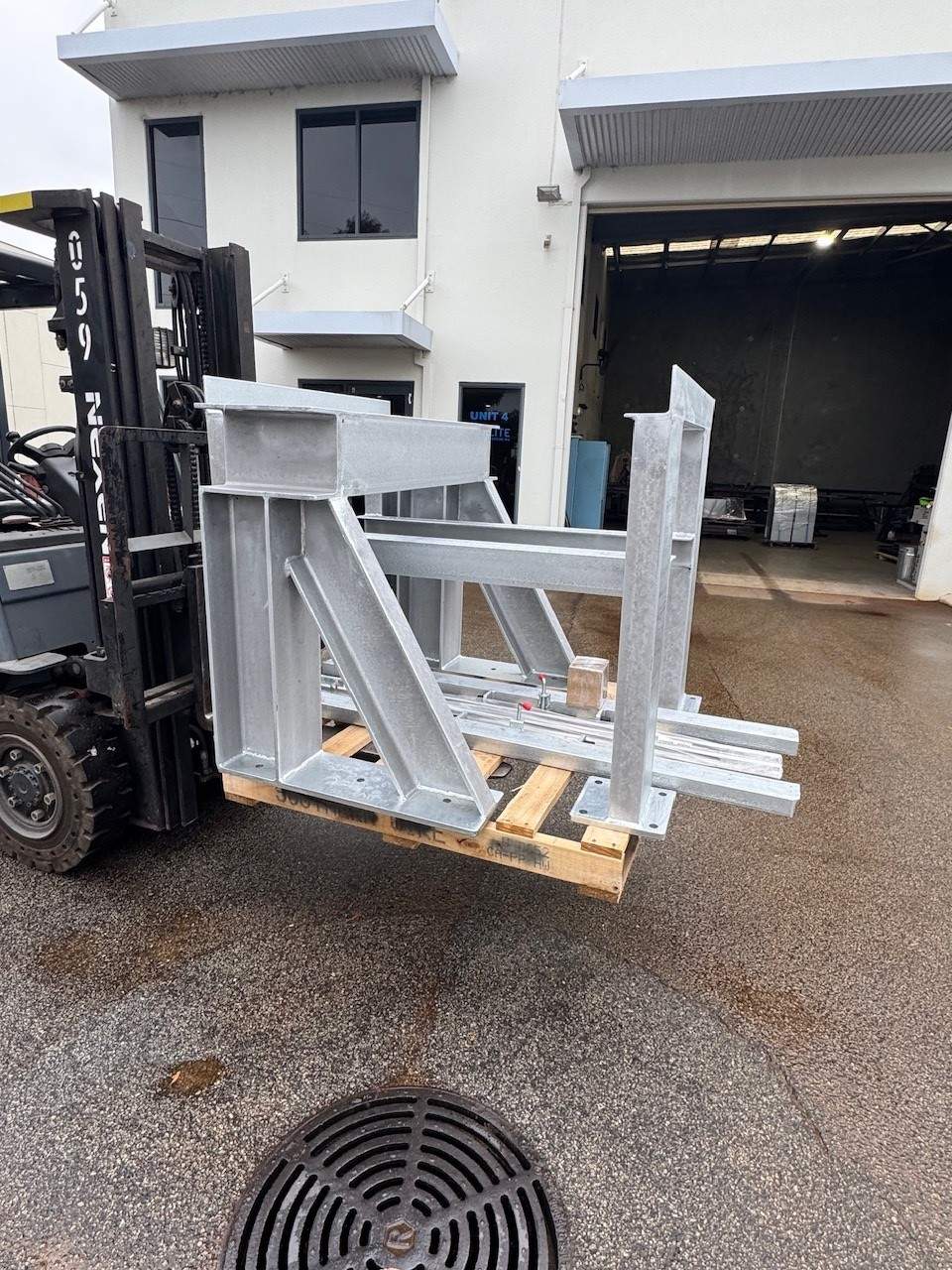
The forklift pocket spacing is adjusted for the extended platform length and the weight distribution of the complete air treatment system that shifts the center of gravity. The pockets are positioned to balance the load properly when lifted, preventing tipping and ensuring stable handling that’s safe for operators. The reinforced pocket structure handles the concentrated loads that occur during lifting operations with the heavier, longer platform without deforming or failing.
The extended skids maintain the low profile necessary for mine tunnel clearances that constrain equipment height. Even with the additional air dryer equipment, the overall height remains within the constraints imposed by underground operations where vertical space is limited. This profile is critical—equipment that’s too tall simply can’t be used underground, regardless of how well it performs other functions or how much it costs.
Enhanced System Capability
The extended skids transform what was a mobile compressor and receiver into a complete mobile air treatment system that provides capabilities the original design couldn’t. Underground mining operations require dry compressed air—moisture in compressed air causes problems with pneumatic tools that reduce efficiency, creates corrosion in air lines that leads to failures, and can freeze in cold conditions creating blockages. The integrated air dryer addresses these issues, providing dry, clean compressed air that supports reliable tool operation and reduces maintenance issues that would otherwise plague operations.
Having the complete system on a single mobile platform simplifies relocation as mining operations progress deeper underground. There’s no need to coordinate moving separate components or reconnect piping between independently mounted equipment that could be positioned incorrectly. The entire air treatment system moves together, maintaining its integration and functionality regardless of where it’s positioned underground—important because mining operations are dynamic and equipment needs to follow the work.
The system provides the complete compressed air treatment that mining operations require while maintaining the mobility that underground environments demand where fixed installations aren’t practical. The extended skid design proves that successful fabrication often involves evolving proven designs rather than starting from scratch, building on what works while adding new capabilities that expand the system’s value without abandoning proven characteristics.
Continuous Improvement Approach
This project demonstrates how fabrication expertise develops through iterative improvement rather than revolutionary redesigns. The February skid design established a successful foundation that worked in real-world conditions. The August extended design built on that foundation, maintaining proven features while adding significant new capability that customers needed. The result is equipment that serves our client’s expanding requirements while leveraging the reliability and performance characteristics of the original design that had been proven in service.
The extended compressor drag skids we delivered provide complete mobile air treatment systems for underground mining operations where compressed air quality matters. They maintain the drag and forklift handling capabilities that made the original design successful while integrating air dryers that transform them into comprehensive compressed air treatment platforms. Our commitment to quality control throughout fabrication ensures these systems perform reliably in the demanding conditions of underground mining. The design evolution demonstrates our capability to develop solutions that build on proven concepts while meeting our client’s expanding requirements, delivering enhanced functionality without abandoning the characteristics that made the original design effective in demanding underground mining environments.
Project Gallery
Extended drag skid showing robust construction
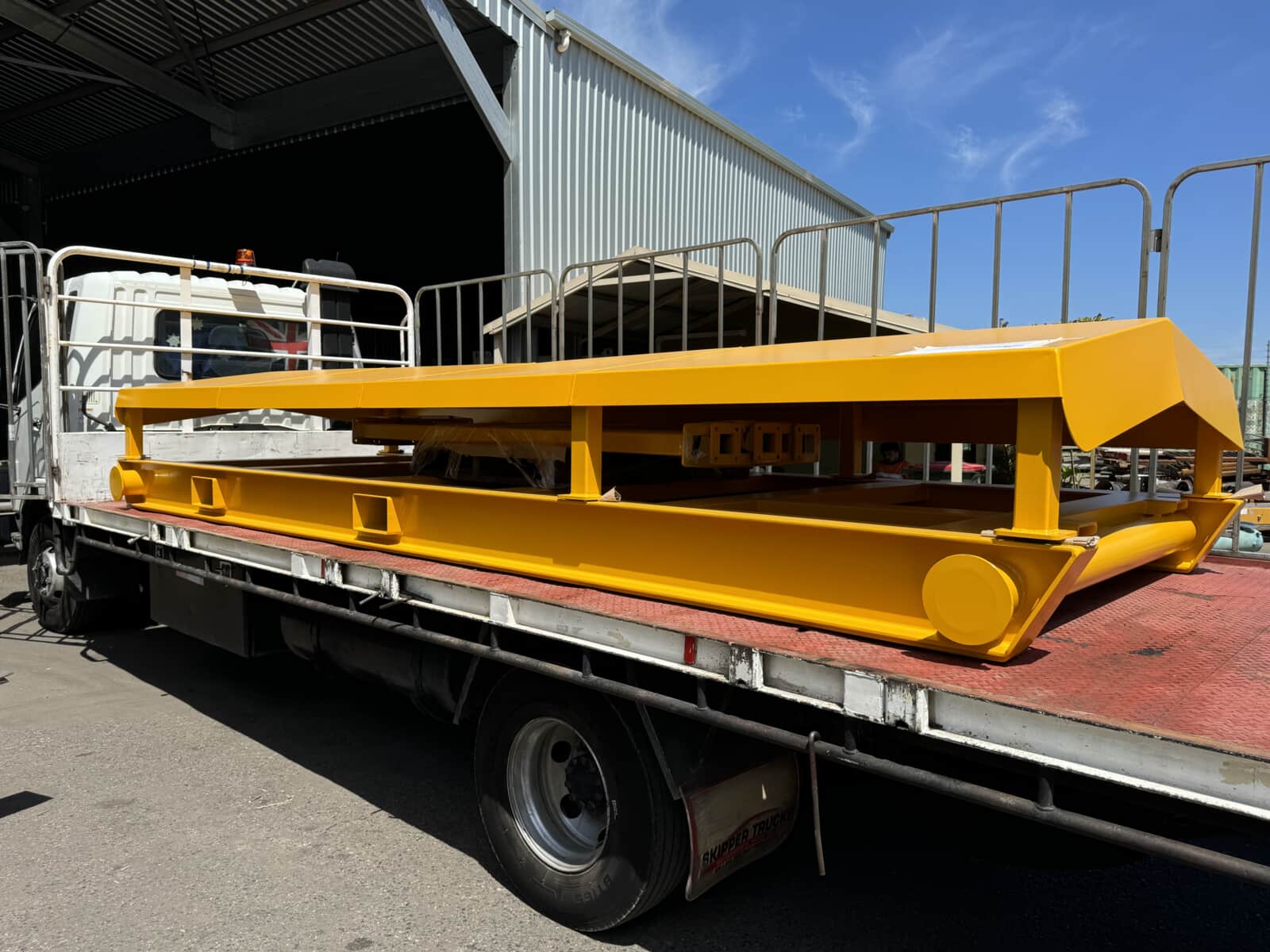
Painted compressor drag skid ready for deployment
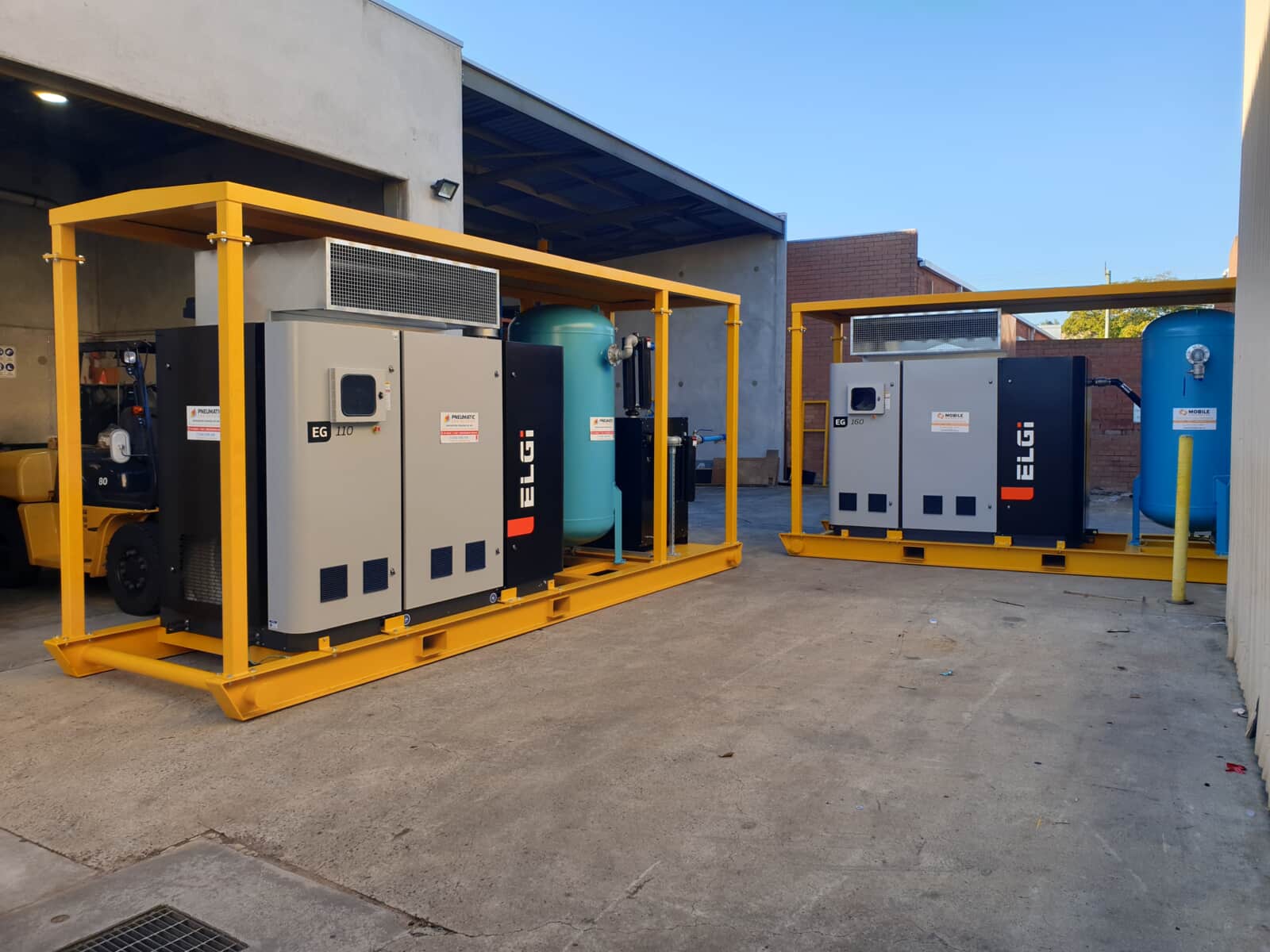
Multiple extended drag skids showing production capability
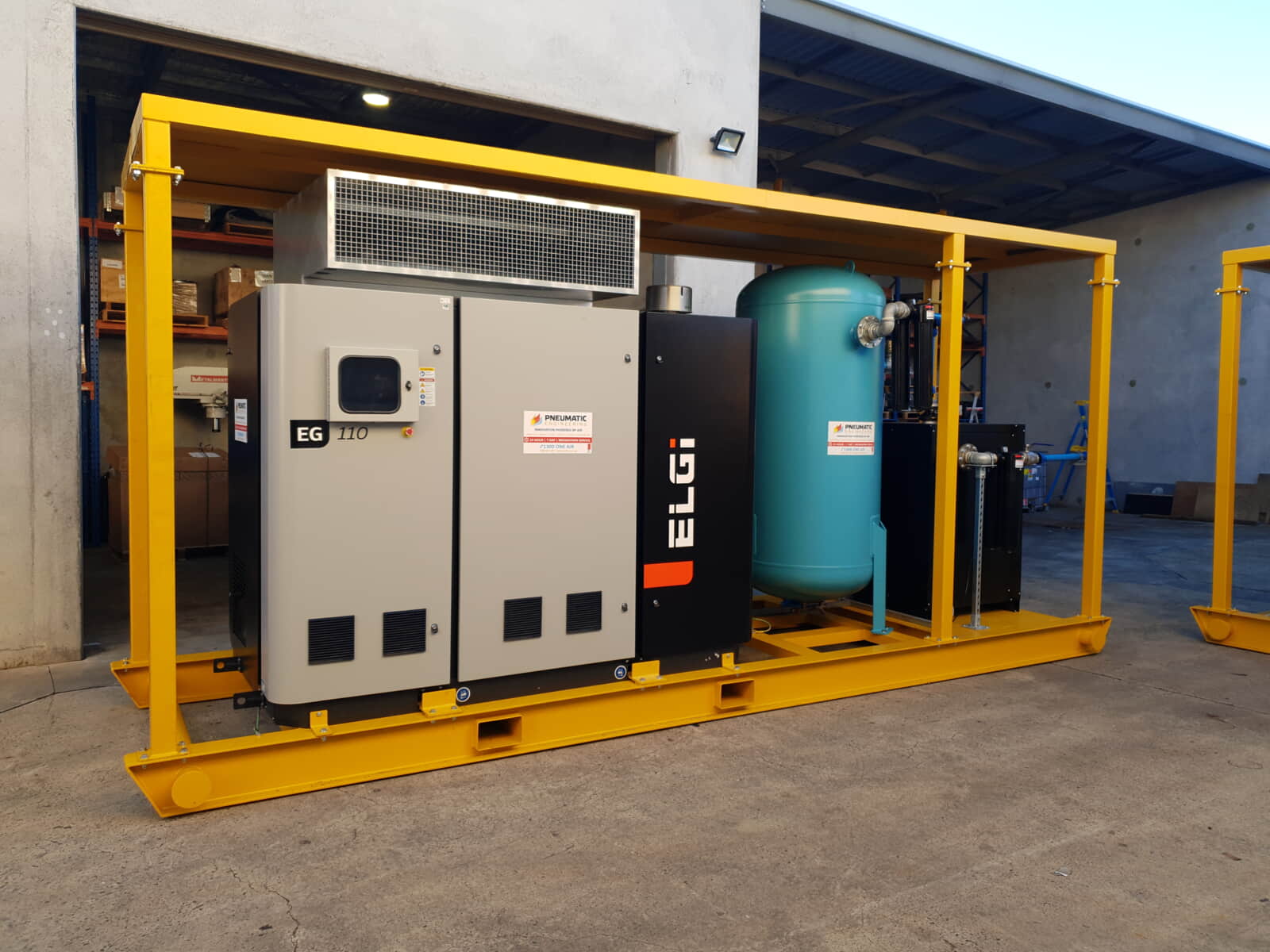
Integrated layout with compressor, receiver, and air dryer
Project Details
- Location
- Perth, Western Australia, Australia
- Sector
- Mining / Underground Mining / Compressed Air Systems
- Status
- Completed
- Project Value
- $$$$
- Completion Date
- August 2025
- Standards
- AS/NZS 1554 - Welding standards Mining industry equipment standards Underground mining safety requirements WorkSafe WA mining regulations Compressed air system standards