Modular Building Access Platforms, Stairs and Handrailing — AS1657 Compliant
Project Summary
Modular buildings need compliant, ready-to-use access from the moment they arrive on site. There’s no allowance for temporary ladders or makeshift entry while permanent access is sorted out later — the access system is part of the building, and it needs to be right when the building is commissioned. For Fabco, a modular building manufacturer based in Maddington, that meant engaging Elite Engineering WA to design and fabricate a complete access package: platforms, stairs, handrailing, and the structural support legs that carry the whole system.
The scope covered everything between ground level and the building entry — the elements that WorkSafe inspectors and site supervisors will look at first when a modular building is placed. Every component was fabricated to the requirements of AS1657, the Australian Standard for fixed platforms, walkways, stairways and ladders, which specifies not just structural requirements but the geometry of stair treads, handrail heights, mid-rail positioning, and kick plate dimensions that make the difference between a compliant access system and one that requires rectification on site.
This was a substantial project representing a complete access solution rather than individual components. Fabricating the full system in our workshop meant Fabco could receive a known-good, pre-checked assembly ready to install, rather than coordinating multiple suppliers for different parts of the access package.
Project Context and Client Requirements
Fabco manufactures modular buildings for a range of applications including mining accommodation, site offices, and industrial facilities. These buildings are fabricated to a known footprint and specification, then transported to site and positioned — often on remote mine sites where getting rectification work done is difficult and expensive.
The consequence of that remote deployment model is that access systems need to be correct before the building leaves the manufacturer. A stair that’s 50mm too short, a handrail height that doesn’t meet AS1657, or support legs that don’t land correctly on the building chassis creates a problem that’s straightforward to fix in a workshop but expensive and time-consuming to address on a mine site 1,200km away.
Elite Engineering WA fabricated to Fabco’s exact dimensional requirements, cross-checking every critical dimension — stair going and rise, platform height, handrail geometry, and leg anchor positions — against the building chassis specification before components left the workshop.
Design and Engineering Requirements
AS1657 establishes clear requirements for each element of an access system, but applying those requirements to a modular building context introduces additional considerations. The support legs needed to be sized not just for static loads but for the dynamic loading that occurs during transport — a modular building on a road train experiences accelerations and vibrations that a fixed structure never sees, and the access components need to survive the journey without distortion or loosening of connections.
Platform dimensions were set to provide adequate working space at the building entry — large enough for two people to pass, with non-slip surface treatment and the correct clearances from the door frame. Stairs were designed with a consistent rise and going throughout, which sounds straightforward but requires careful coordination with platform height and ground clearance to achieve without compromise.
Handrailing to AS1657 requires a top rail at a specified height, a mid-rail at the correct intermediate position, and a kick plate at the base to prevent tools or materials being kicked off the platform edge. Every run of handrailing was fabricated to these requirements, with welded connections rather than mechanical fittings at structural joints.
Fabrication Process
The project was fabricated from engineering drawings in our Forrestdale workshop. Working from drawings rather than from the chassis meant all dimensions had to be correct from the outset — components are cut, welded, and finished to the drawing, then despatched to Fabco ready to be fitted to the building.
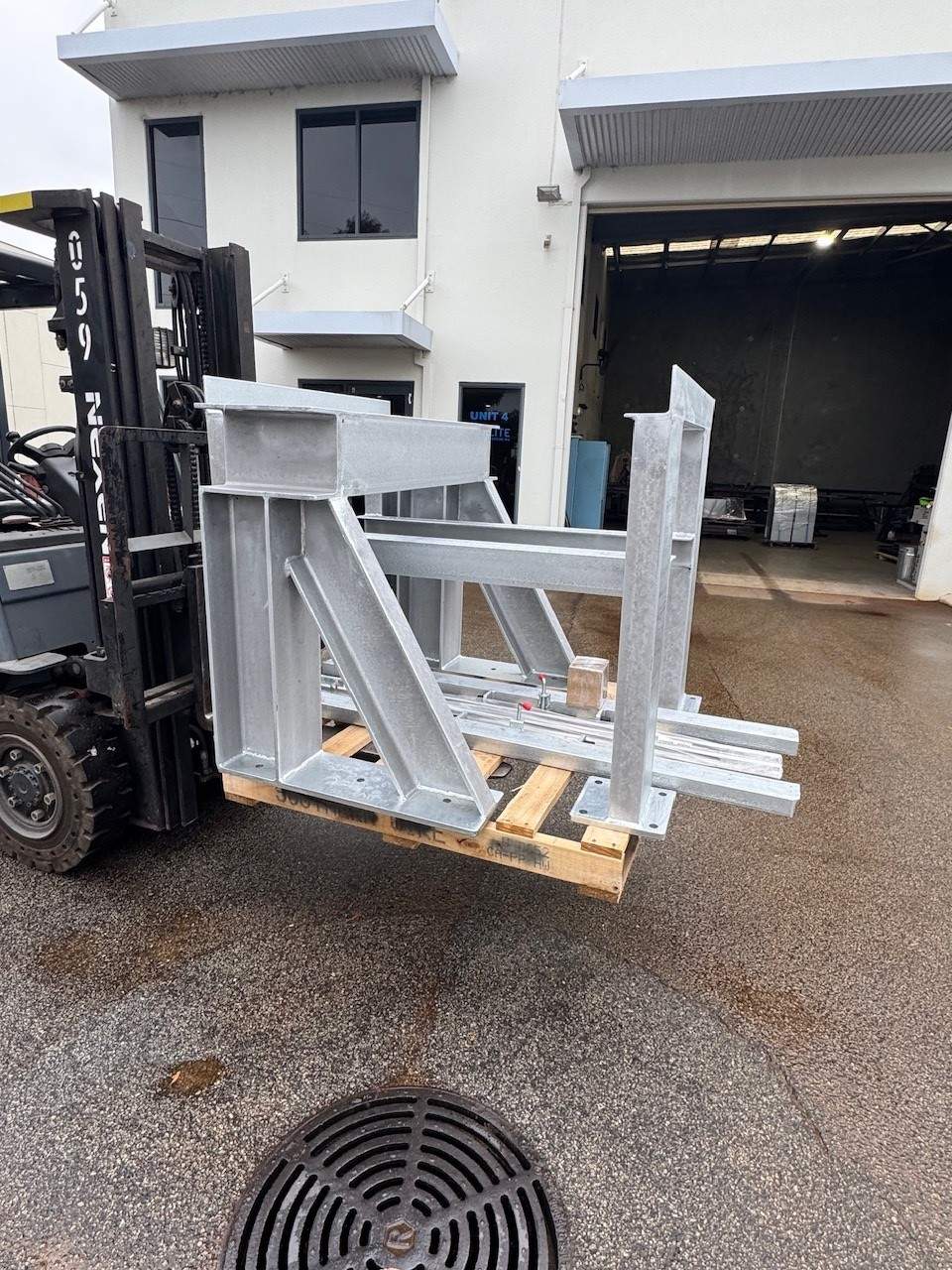
Support legs were fabricated first — these establish the datum heights for everything above them. Getting leg length, base plate geometry, and top connection details right before fabricating the platforms saves significant rework downstream. The structural leg design draws on the same engineering rigour we apply to all structural steel fabrication work. Once the legs were complete and checked against the drawings, platforms were fabricated to suit, followed by stairs and then handrailing.
Structural welding throughout is to AS/NZS 1554.1 Category SP — the structural welding standard applicable to load-bearing fabrications. This is the same standard applied to structural steelwork in buildings and bridges, appropriate for an access system that will carry people in a working environment.
The galvanised finish was specified for durability — modular buildings often end up in outdoor or semi-outdoor environments where painted steel would require ongoing maintenance. Hot-dip galvanising provides a significantly longer service life with minimal maintenance, appropriate for assets that will be deployed remotely.
Applications
Complete access platform systems for modular buildings are required across a wide range of industries and applications:
- Mining accommodation villages and site offices — where AS1657 compliance and remote durability are both critical
- Industrial modular facilities — control rooms, pump stations, switchroom buildings
- Construction site offices — where buildings move between sites and access systems need to be consistently compliant
- Agricultural and rural facilities — sheds, storage buildings, and processing facilities that need compliant elevated access
- Emergency and temporary facilities — where speed of deployment combined with safety compliance is essential
The modular nature of these access systems means they can be designed for disassembly and reinstallation when a building relocates — an important consideration for mining applications where buildings move between projects.
Frequently Asked Questions
AS1657 — Fixed platforms, walkways, stairways and ladders — is the primary standard. It specifies structural requirements, geometric requirements (stair rise and going, platform dimensions, handrail heights), and surface treatment requirements for fixed access systems. WorkSafe in each state also references this standard for workplace access compliance.
A complete system typically includes access platforms at building door height, a stairway connecting the platform to ground level, handrailing on both sides of the stairs and around the platform perimeter, and structural support legs that carry the platform loads to the ground. Kick plates along platform edges are also required under AS1657 to prevent materials from falling.
Workshop fabrication provides better quality outcomes and lower cost than site fabrication. In a workshop, components can be checked against specifications easily, welding can be performed in ideal conditions, and surface treatment can be applied correctly. For modular buildings deployed to remote sites, workshop fabrication also means the access system is ready to use the moment the building is placed — no waiting for on-site fabrication that may be difficult or expensive in a remote location.
Hot-dip galvanising is the preferred finish for any access system in an exposed outdoor environment. It provides significantly longer corrosion resistance than paint systems with minimal maintenance. Powder coat or two-pack paint systems are suitable for indoor or semi-protected applications. The specification should match the deployment environment — a building going to a coastal mine site needs a different surface treatment approach than one going to a dry inland location.
Yes — designing for disassembly is a legitimate requirement for mining and construction applications where buildings are routinely moved between projects. This typically means bolted connections at key interfaces rather than welded-in-place, and dimensional coordination with the building chassis that allows the access system to be detached, transported, and reinstalled. We can design for this requirement from the outset if the building will be relocated.
WorkSafe WA references AS1657 as the applicable standard for fixed access systems in workplaces. Compliance with AS1657 satisfies WorkSafe's requirements for access and egress from elevated platforms. The specific requirements for your building will depend on its use and the site's safety management plan, but AS1657 compliance is the starting point for any workplace access system.
The key inputs are building floor height above ground, door dimensions and threshold details, available footprint for the stair and platform, ground surface type (concrete pad, gravel, prepared ground), and any site-specific requirements from the end client. A drawing of the building chassis showing connection points for the access legs is also helpful. We can work from building manufacturer drawings or provide a site visit to measure up if required.
Project Gallery
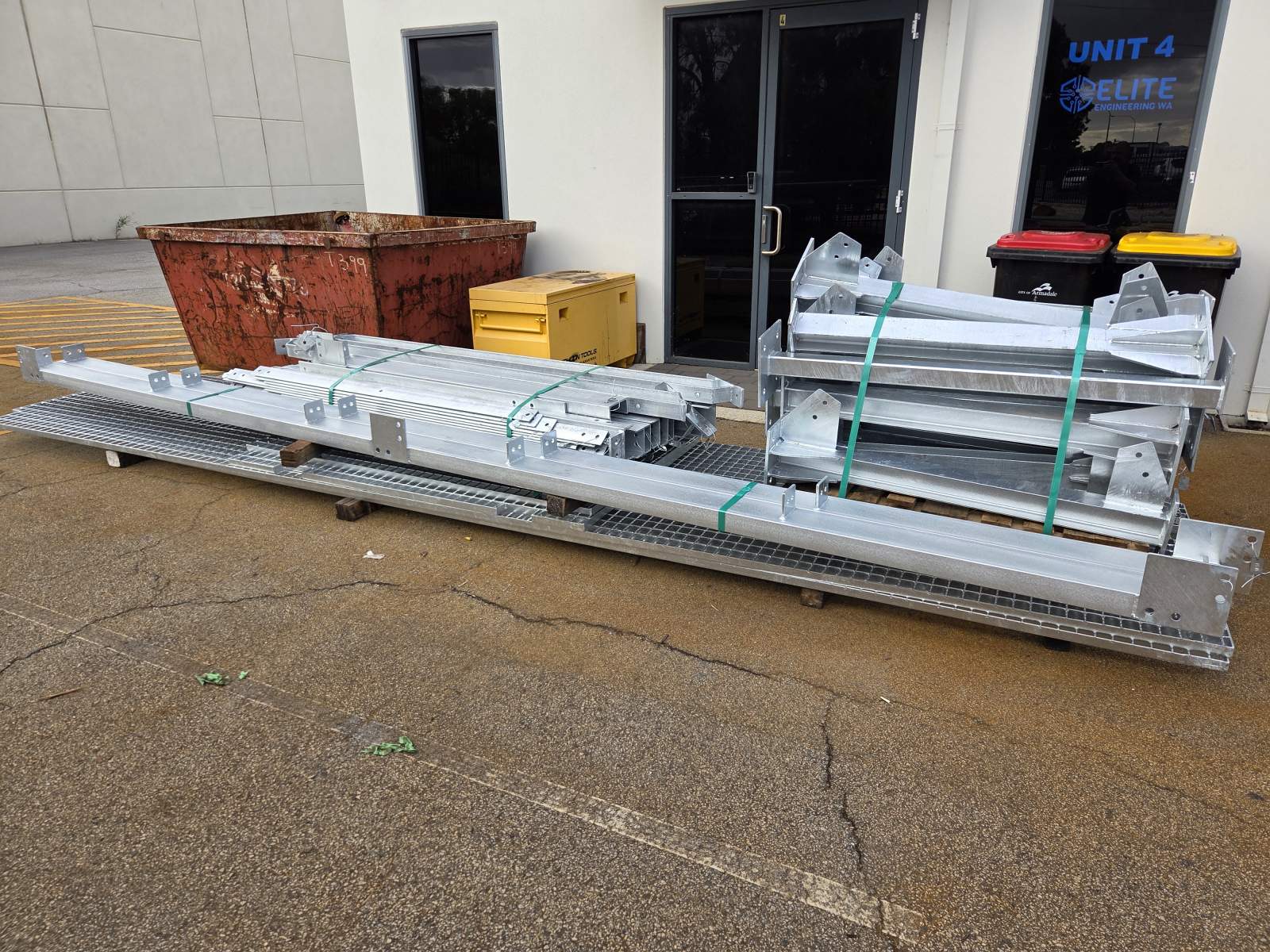
Complete modular building access system — platforms, stairs and AS1657-compliant handrailing fabricated for Fabco
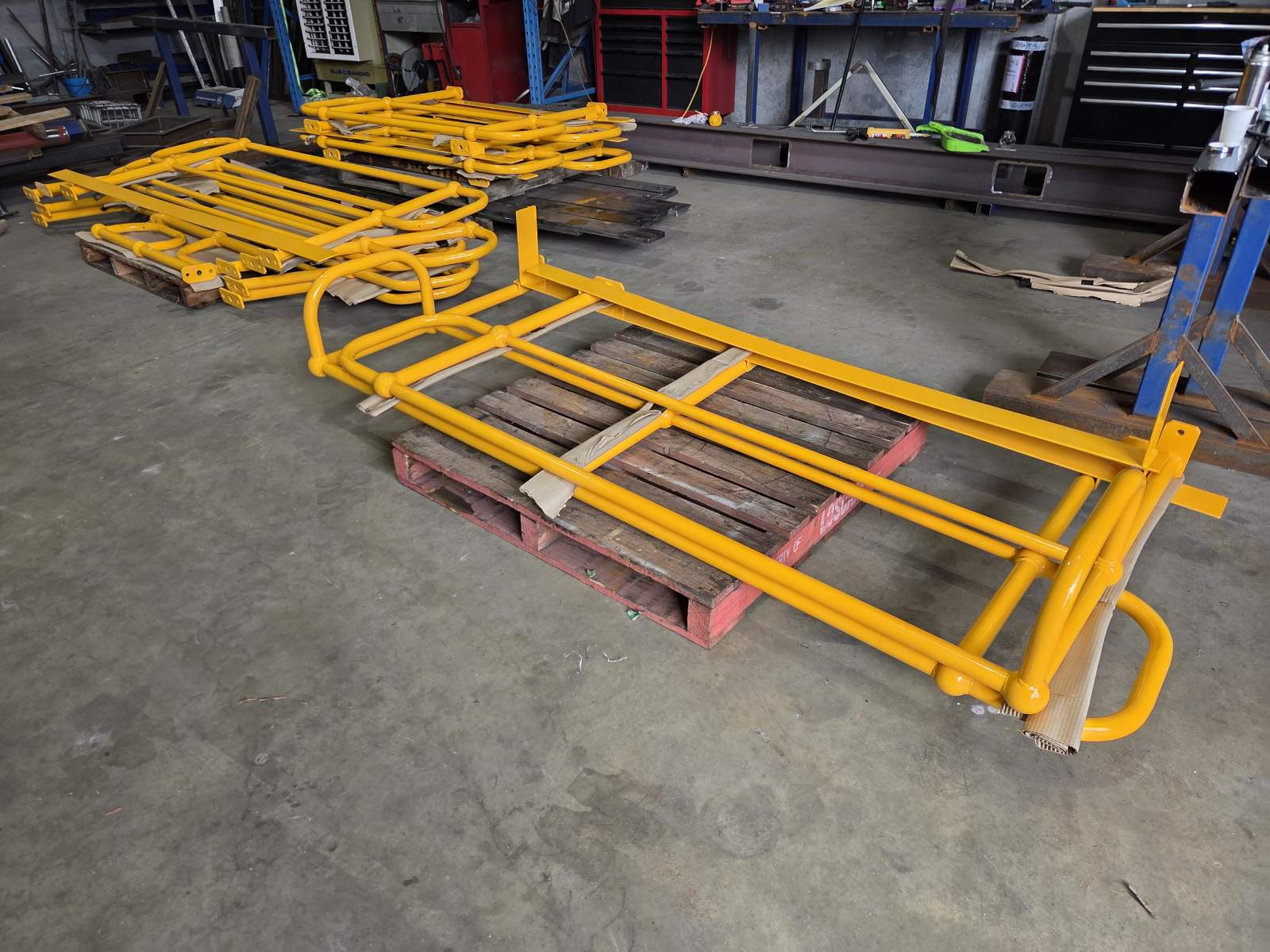
AS1657-compliant handrailing detail — top rail, mid rail and kick plate to standard specification
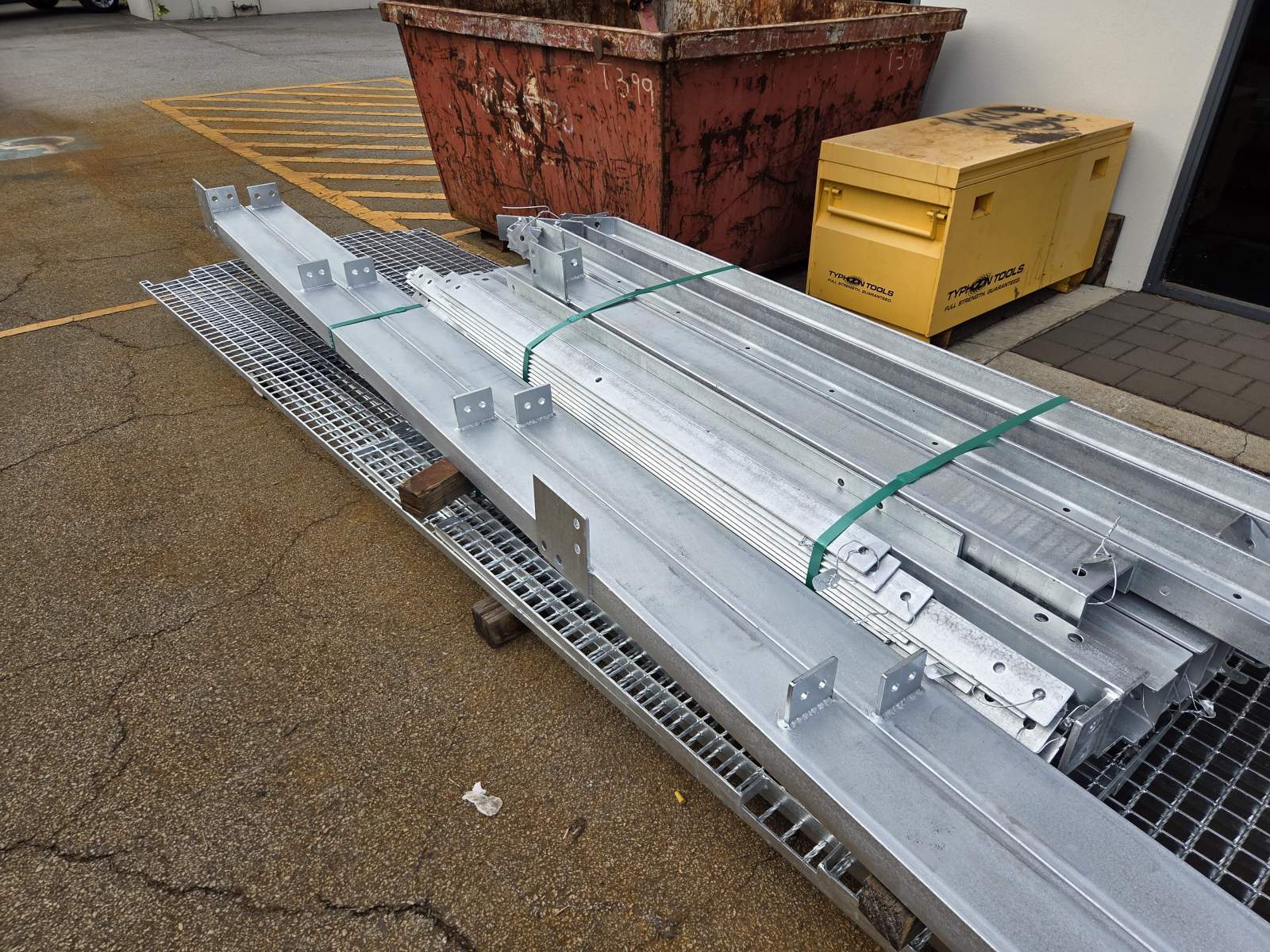
Structural support legs during fabrication — engineered to carry platform and live loads safely
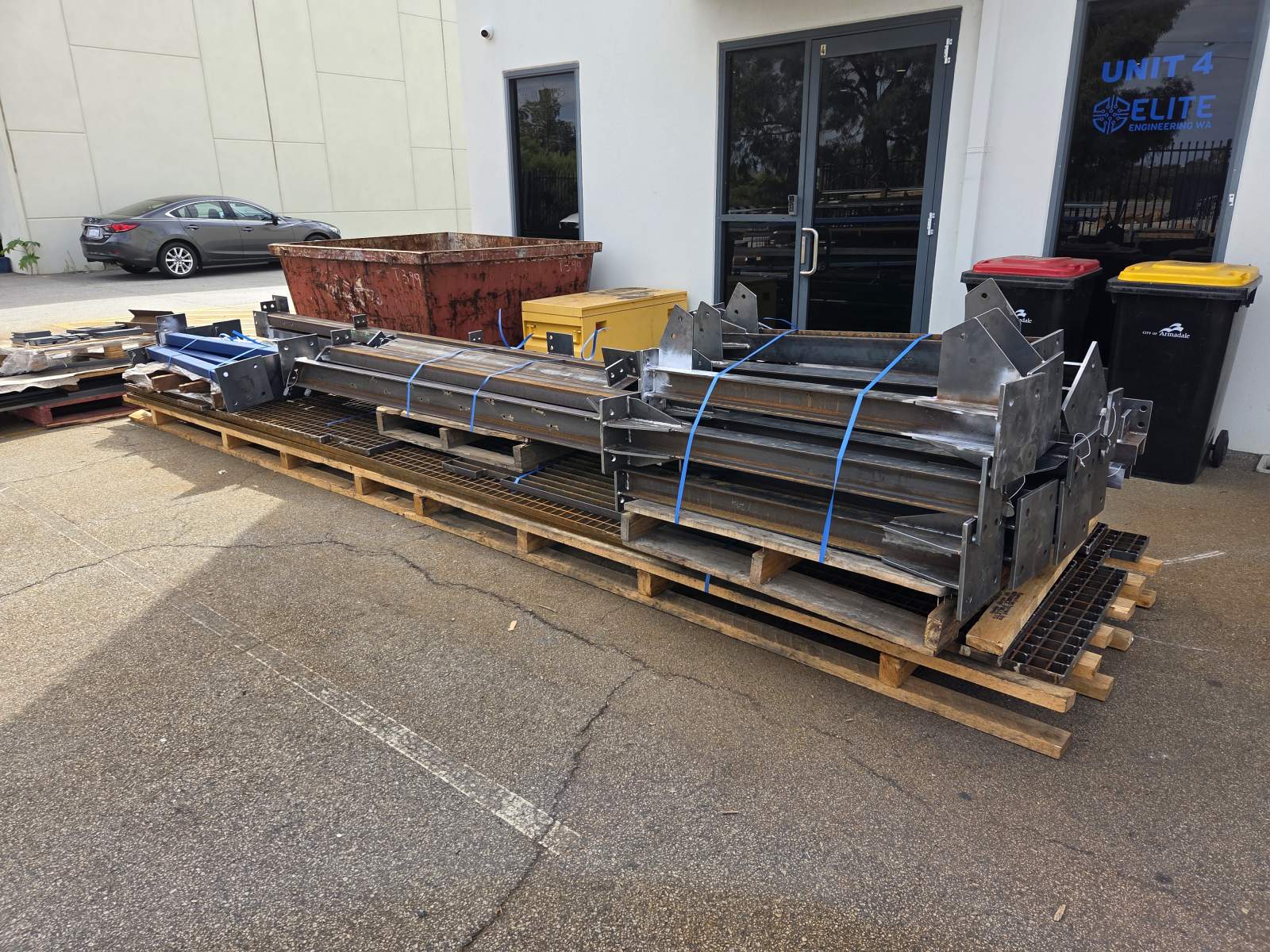
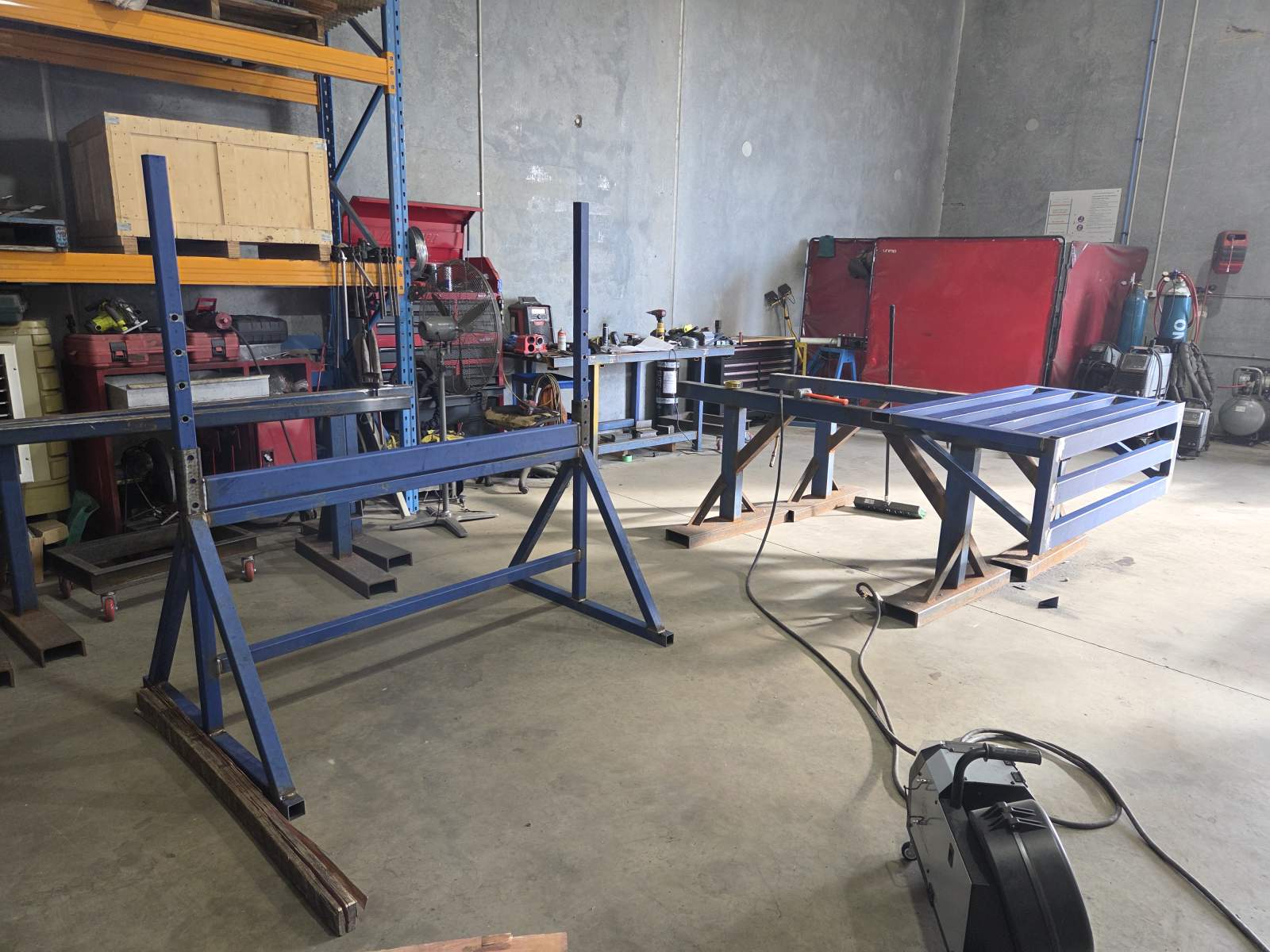
Access platform and stair assembly in the Elite Engineering WA workshop, Forrestdale
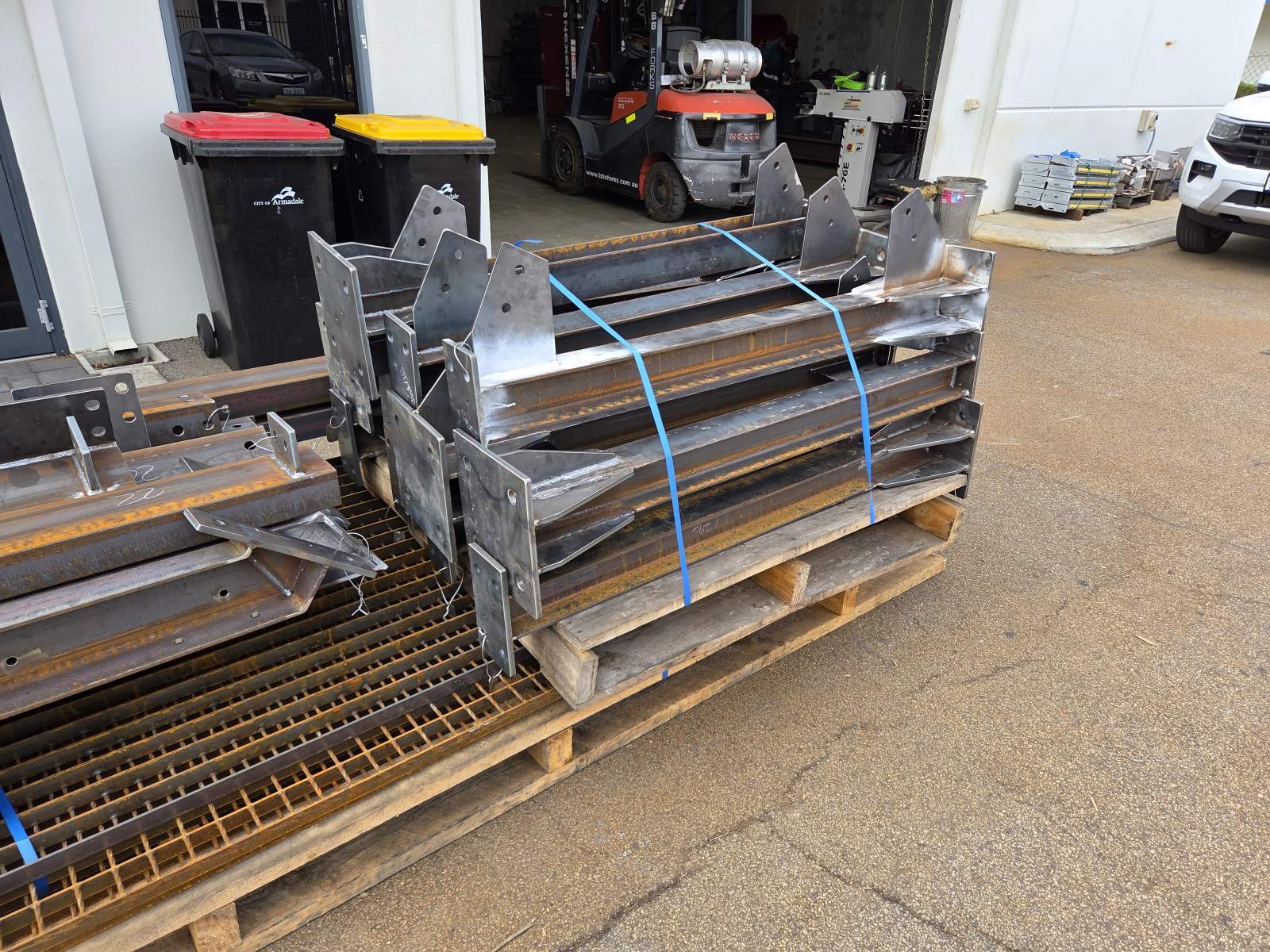
Completed access system ready for installation — all components checked against AS1657 requirements before despatch
Project Details
- Location
- Maddington, Western Australia, Australia
- Sector
- Modular Buildings / Construction / Mining
- Status
- Completed
- Project Value
- $$$$$
- Completion Date
- April 2026
- Standards
- AS1657 - Fixed platforms, walkways, stairways and ladders AS/NZS 1554.1 SP - Structural Steel Welding (Structural Purpose) WorkSafe WA requirements for safe access and egress