Bunded Hose Transport Skid
Project Summary
Industrial hoses carry fluids that can’t be allowed to leak into the environment. Hydraulic oil. Chemicals. Fuels. Other materials that require containment if spills occur—not suggestions, but regulatory requirements with serious consequences for violations. When our client needed a transport skid for 24 large hoses, they required more than just a mounting platform where you bolt things down and hope for the best — they needed purpose-built skid frame fabrication with environmental containment engineered in from the start. They needed a bunded system that would capture any fluid leakage, preventing environmental contamination while providing safe, mobile storage and transport for hoses that have been used with various fluids and might leak residual contents.
This project required both custom design work to develop fabrication drawings that would guide manufacturing and precision manufacturing to create a substantial 4-meter by 2.5-meter skid with integrated environmental protection that would actually work in real-world conditions. The bunded containment system transforms what could be a simple storage rack into environmental protection equipment where the leak-proof base captures any fluid that drips or leaks from hoses, containing it within the skid rather than allowing it to reach the ground where it could contaminate soil or waterways. This containment capability is essential for regulatory compliance and environmental responsibility, particularly when transporting hoses that have been used with hazardous or environmentally sensitive fluids that require special handling.
Engineering Design and Documentation
This project started with developing complete fabrication drawings to engineer’s specifications—not rough sketches, but detailed engineering drawings. The drawings needed to define every aspect of the skid’s construction—structural members, bund design, hose storage layout, lifting provisions, and all the details that would guide fabrication without ambiguity. This engineering phase established the foundation for successful manufacturing, ensuring the finished skid would meet all functional and regulatory requirements without expensive modifications or rework.
The bund design required particular attention because containment systems have specific regulatory requirements. The containment volume needed to be sufficient for regulatory compliance—typically calculated based on the volume of fluid that could potentially leak from the stored hoses, not arbitrary dimensions. The bund walls needed to be high enough to contain this volume while not being so high that they interfered with hose loading and unloading operations that need to happen frequently. The base needed to be absolutely leak-proof, with welded construction that would maintain integrity throughout years of service in conditions where even small leaks compromise the entire purpose.
We developed structural calculations for the loads the skid would carry because 24 large hoses represent substantial weight that needs proper engineering. Twenty-four large hoses represent substantial weight—potentially several tons when fully loaded—and the skid structure needed to support this load safely during both storage and transport without excessive deflection. The crane lifting provisions needed to be positioned for balanced lifting of the fully loaded skid without creating tipping hazards. The forklift pockets needed appropriate spacing and reinforcement for safe handling with standard equipment. All these engineering considerations were documented in the fabrication drawings that would guide manufacturing and provide a record of design decisions.
Leak-Proof Bunded Construction
The bunded base is the heart of this skid’s environmental protection capability—not an afterthought, but the primary design driver. We fabricated the base with welded steel construction that creates a completely sealed containment area where every joint is leak-proof. Every weld needed to be sound and leak-proof—this isn’t structural welding where small imperfections might be acceptable because they don’t affect strength significantly. This is containment welding where any leak path compromises the entire purpose of the bund and creates environmental liability.
The bund walls are raised around the perimeter. Containment volume. Regulatory compliance. The height is optimized to provide adequate containment while maintaining practical access for loading and unloading hoses that happens regularly during operations. The corners and joints are carefully welded to eliminate any potential leak paths that could allow fluid to escape—corners are particularly challenging because they involve three-dimensional geometry. The entire bund is designed to contain fluid indefinitely until it can be properly drained and disposed of according to environmental regulations that govern hazardous waste handling.
The base surface is designed to facilitate drainage when the bund needs to be emptied after capturing leaked fluids. Fluid that accumulates in the bund can be pumped out through drainage provisions, allowing the skid to be cleaned and prepared for continued service without requiring disassembly. This drainage capability is essential for practical operation—bunds that can’t be easily emptied become maintenance problems rather than environmental solutions, and operators find ways to avoid using them.
Organized Hose Storage System
The skid accommodates 24 large hoses in an organized layout that maximizes the 4-meter by 2.5-meter footprint without wasting space. The hoses are positioned with appropriate spacing to prevent damage from contact—hoses rubbing against each other during transport can cause wear—and to allow individual hoses to be accessed without disturbing others when specific hoses need to be removed. The layout considers how hoses will be loaded and unloaded, ensuring the process can be performed efficiently and safely without awkward maneuvering or excessive lifting.
The hose storage provisions secure hoses during transport. Preventing shifting. Preventing movement. Large hoses are substantial items that can shift significantly if not properly secured, potentially causing damage to the hoses themselves or creating unsafe conditions during transport when shifting loads can affect vehicle stability. The storage system keeps hoses positioned securely while allowing them to be removed when needed without requiring tools or complex procedures.
The organized layout also facilitates inspection that regulations require. Hoses need regular inspection for wear, damage, or leaks that could cause failures during use. The storage arrangement allows visual inspection of hoses without requiring them to be removed from the skid—important because removing and replacing hoses for inspection is time-consuming. This inspection capability supports proactive maintenance and early detection of potential problems before they cause failures.
Dual Handling Capability
The skid features both crane lifting and forklift handling provisions. Flexibility. Different operational scenarios. The crane lifting points are positioned for balanced lifting of the fully loaded skid without creating tipping moments. When the skid needs to be moved significant distances or lifted to height—loading onto trucks, positioning on elevated surfaces—crane handling provides the appropriate capability. The lifting points are engineered and rated for the total weight of the skid plus its full complement of hoses, with appropriate safety factors.
The forklift pockets enable positioning and short-distance transport using standard forklifts that are available at most industrial facilities. This handling method is practical for moving the skid around facilities, positioning it for loading or unloading, or relocating it within work areas without requiring specialized equipment. The pockets are spaced appropriately for standard forklift tines—not custom spacing that would require special equipment—and reinforced to handle the concentrated loads that occur during lifting without deforming.
This dual handling capability means the skid can be moved efficiently using whatever equipment is available and appropriate for the specific situation without requiring specialized handling equipment. The flexibility supports various operational scenarios without requiring specialized handling equipment or procedures that would limit where and how the skid can be used.
Environmental Protection in Practice
The bunded hose transport skid we created for our client demonstrates how fabrication can support environmental responsibility beyond just meeting minimum requirements. The integrated containment system prevents fluid leakage from reaching the environment, supporting regulatory compliance and responsible fluid handling practices that protect soil and waterways. The substantial 4-meter by 2.5-meter platform provides organized storage for 24 large hoses while the bunded base captures any leakage that occurs during storage or transport.
The project showcases our capability to provide complete engineering and fabrication services — from developing fabrication drawings through to delivering finished equipment that works as intended — and our quality control processes verified the bund integrity before the skid left the workshop. The skid combines environmental protection with practical hose management, creating a solution that serves both operational needs and environmental responsibility without compromise. The leak-proof bunded construction, organized hose storage, and dual handling capability create equipment that will support our client’s operations while protecting the environment from fluid contamination that could result in regulatory violations and environmental damage.
Project Gallery
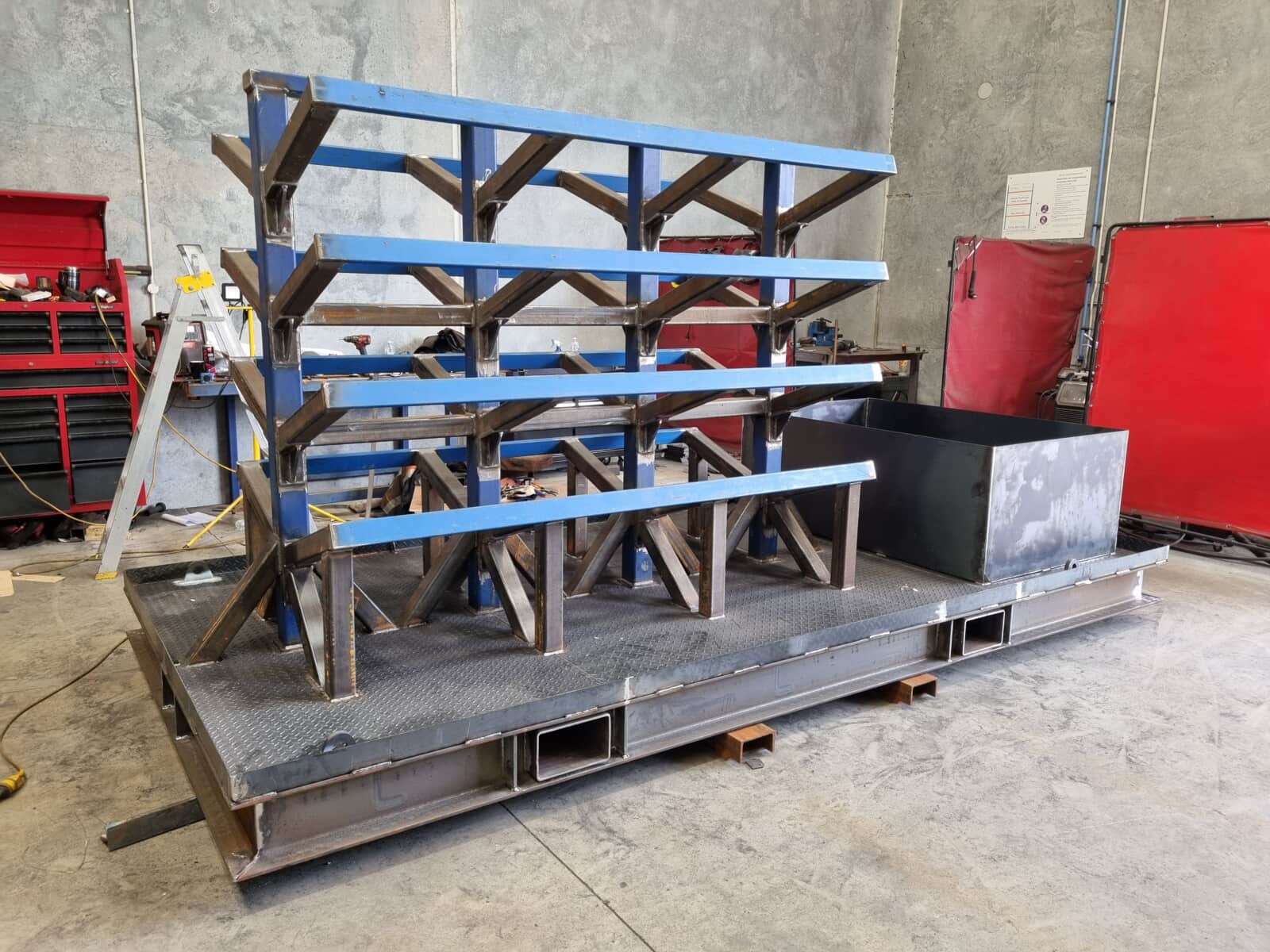
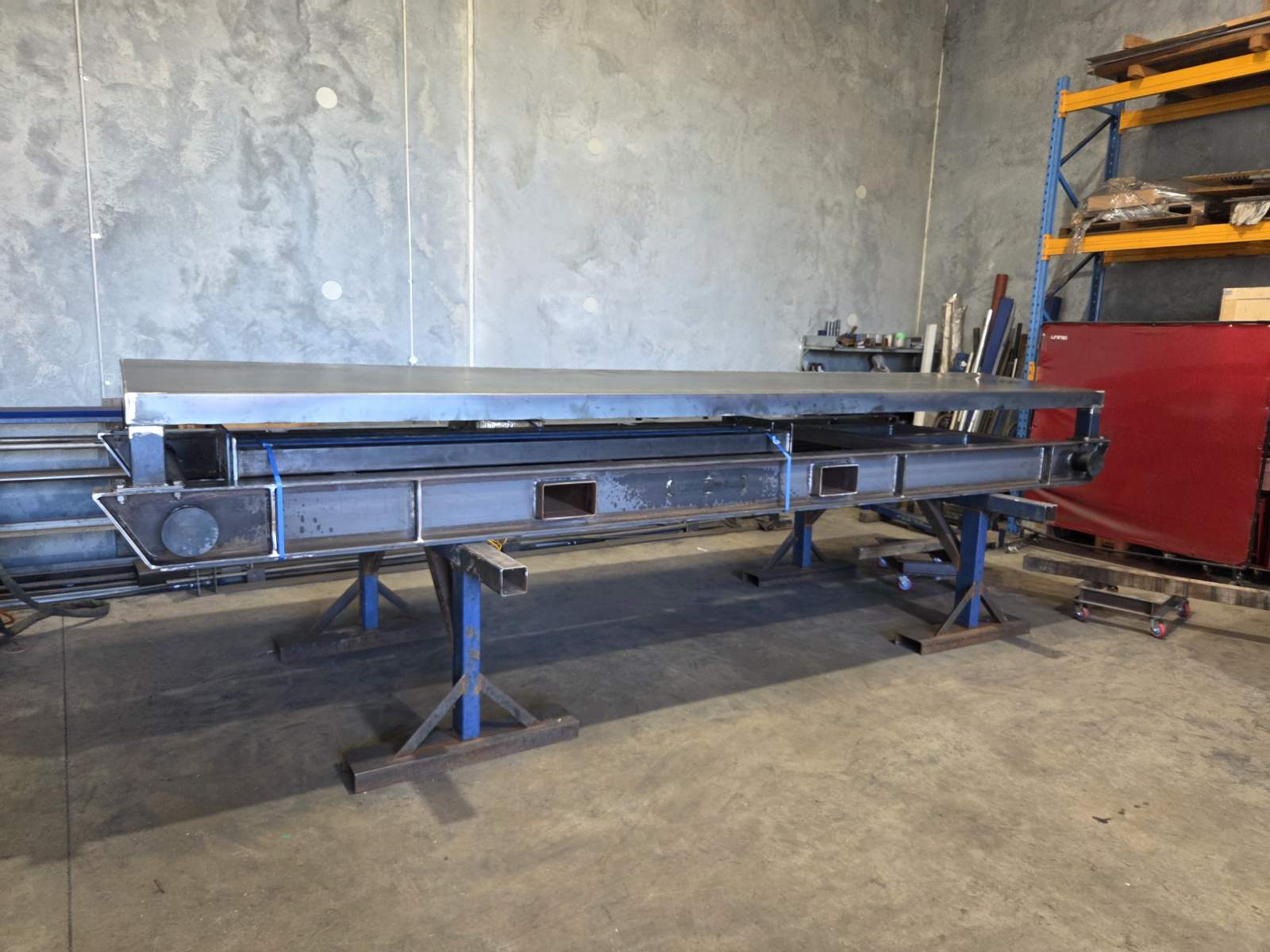
Complete bunded hose transport skid showing 4m x 2.5m footprint
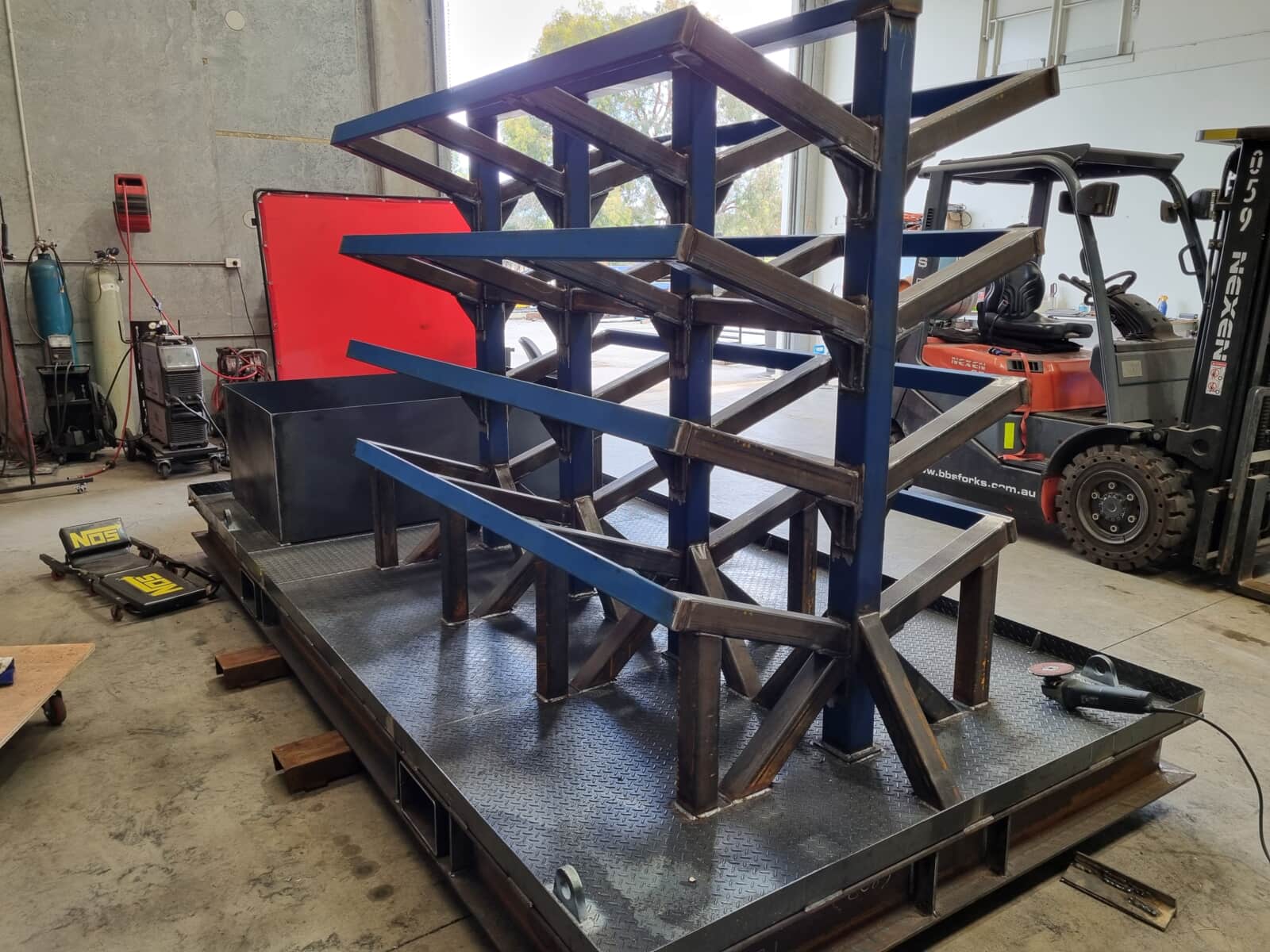
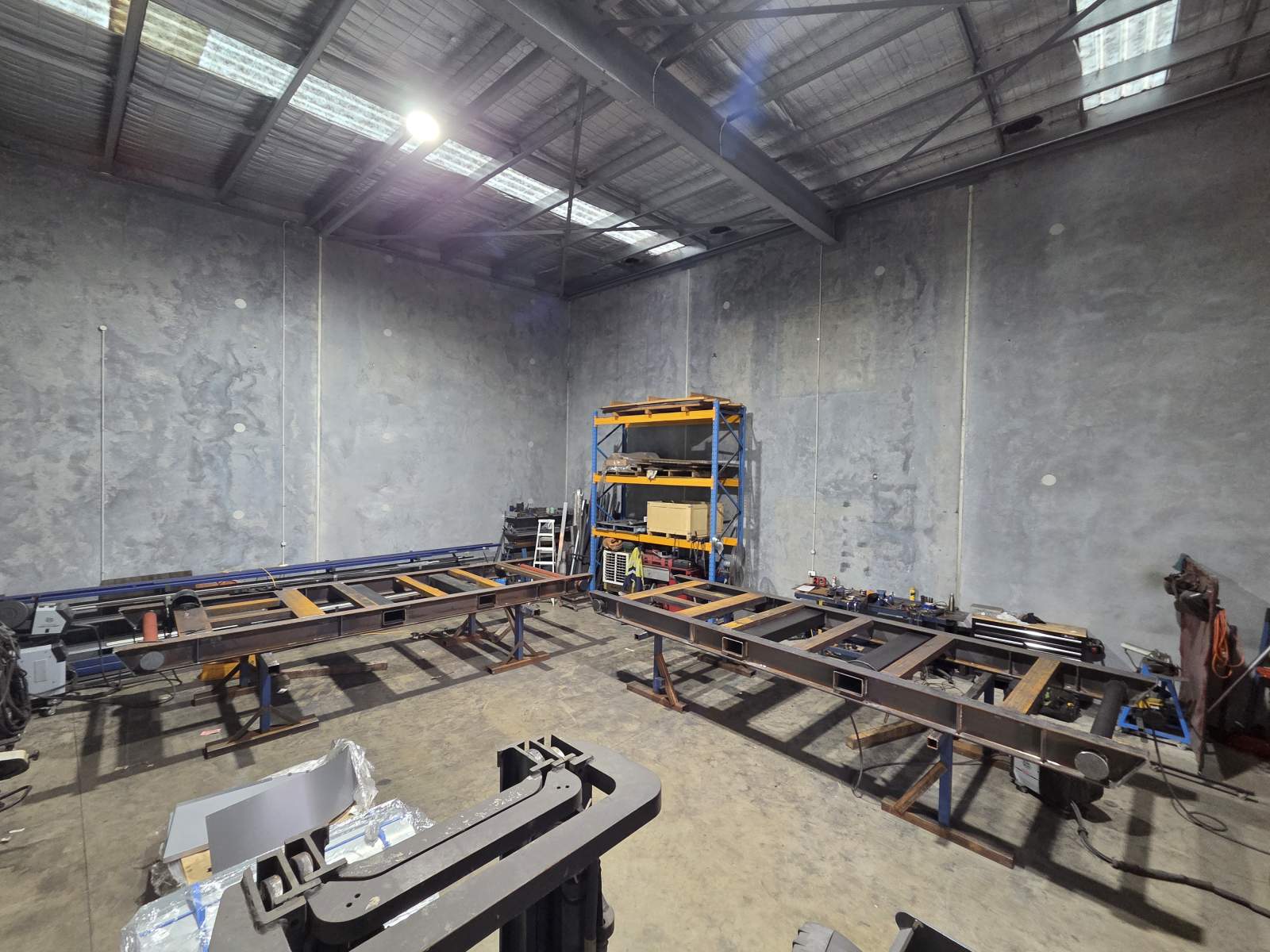
Rear view showing integrated bunded containment system
Project Details
- Location
- Perth, Western Australia, Australia
- Sector
- Fluid Handling / Hose Management / Industrial Equipment
- Status
- Completed
- Project Value
- $$$$
- Completion Date
- September 2025
- Standards
- AS/NZS 1554 - Welding standards Environmental protection requirements Bunding and containment standards Lifting equipment standards