Custom Compressor Drag Skids
Project Summary
Underground mining operations depend on compressed air. For everything. Pneumatic tools. Ventilation systems. Rock drills. And that compressed air needs to follow the mining operation as it progresses deeper into the earth, extending tunnels and extracting ore from increasingly remote locations. When our client needed custom skids for large air compressors serving underground mines, they required more than just mounting platforms—they needed robust skid frame fabrication that could be towed through mine tunnels while also being lifted by forklifts for above-ground handling, creating a dual-mobility system that would work in both surface and underground environments. The skids needed to support both the compressor and its air receiver tank, creating a complete mobile compressed air system that could withstand the demanding conditions of underground mining where equipment failures can halt operations entirely.
This project required understanding how equipment actually moves through underground mines, not just theoretical knowledge but practical experience with the realities of confined spaces and harsh conditions. Tunnels are confined spaces where traditional wheeled transport often isn’t practical—the surfaces are too rough, the grades too steep, the conditions too variable. Equipment gets dragged behind mining vehicles, sliding along tunnel floors that may be rough, wet, or uneven from blasting and excavation. The skids needed to be engineered for this harsh reality while also providing secure mounting for expensive compressor equipment and maintaining a low profile that wouldn’t interfere with tunnel clearances that are often minimal.
Engineering for Underground Mobility
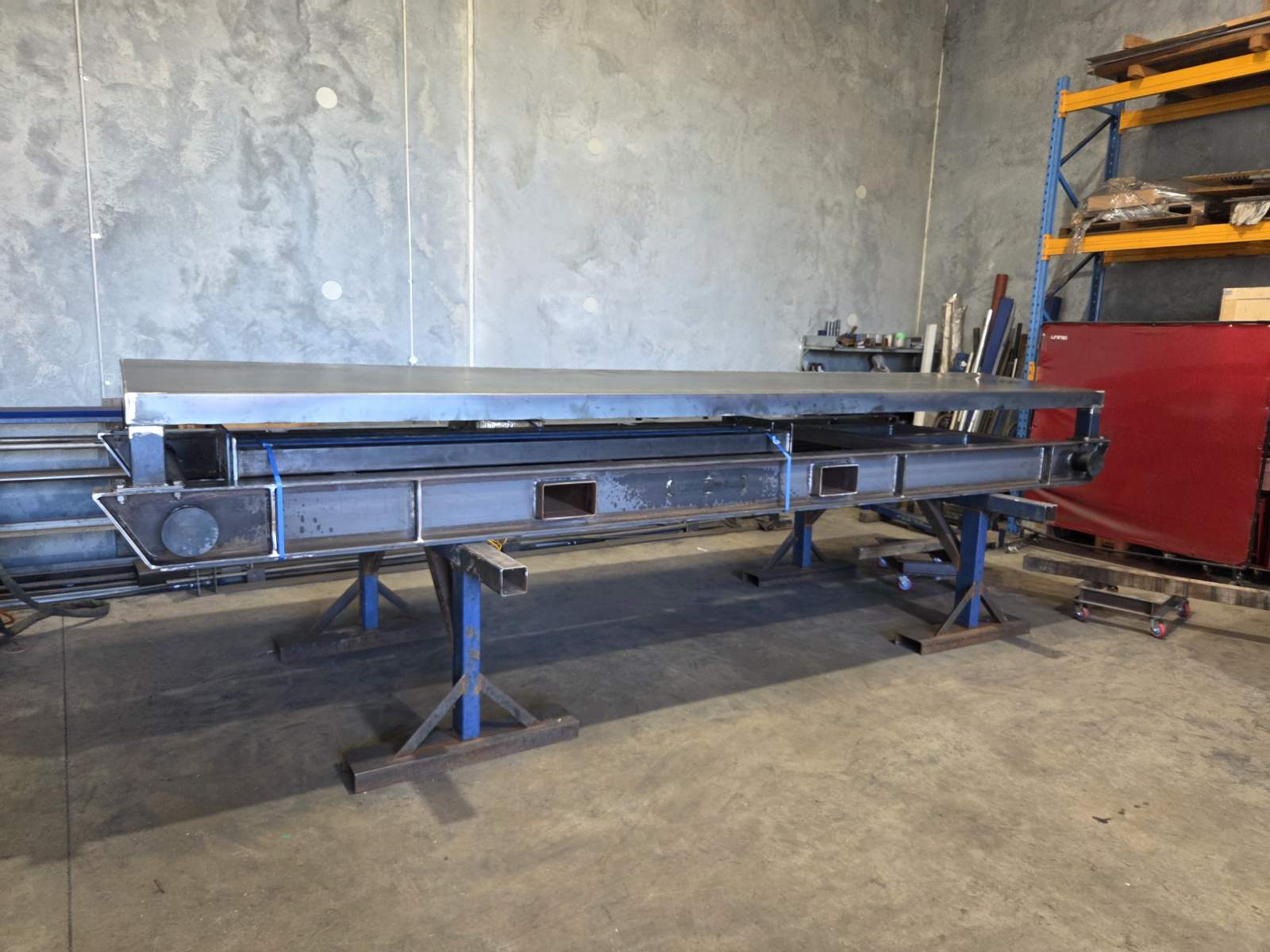
Drag skids are fundamentally different from conventional equipment mounting platforms where you just bolt things down and call it done. They’re designed to be pulled across surfaces rather than rolled on wheels, which means the entire underside becomes a wear surface that needs to withstand continuous abrasion from being dragged over rock, concrete, and whatever else exists on tunnel floors. The front of the skid needs reinforced towing points that can handle the dynamic loads of being pulled through tunnels—not just the static weight, but the shock loads from hitting obstacles and the lateral forces from turning. The structure needs to distribute weight properly so the skid doesn’t dig into soft surfaces or catch on irregularities that could damage equipment or halt transport.
We designed these skids with heavy-duty structural steel fabrication throughout. Structural members sized to handle not just the static weight of the compressor and receiver, but the dynamic loads encountered during dragging operations that can be several times the static load. When a skid is being towed through a tunnel, it experiences impacts, vibration, and twisting forces that don’t occur with stationary equipment sitting peacefully on a concrete pad. The frame needed to be rigid enough to protect the mounted equipment while being robust enough to withstand years of being dragged through underground environments where nothing is gentle.
The underside of the skid features smooth, reinforced surfaces. Reduced friction during dragging. Resisting wear. We positioned the structural members to create a stable sliding surface that won’t catch on tunnel irregularities—no protruding elements that could snag on rocks or uneven surfaces. The front drag points are heavily reinforced and positioned to distribute towing forces properly through the frame without creating stress concentrations. These aren’t just attachment points where you hook a chain—they’re engineered connections that transfer substantial forces without creating stress concentrations that could lead to fatigue failures after repeated towing operations.
The low-profile design ensures the skids fit through mine tunnels without clearance issues that would make them useless underground. Underground mines have limited vertical space—sometimes barely enough for equipment and personnel—and equipment that’s too tall simply can’t be used no matter how well it’s designed otherwise. We designed the skids to keep the compressor and receiver as low as practical while maintaining proper mounting and access for maintenance that needs to happen even in confined spaces. This low profile also improves stability during dragging—lower center of gravity means less tendency to tip or shift when being towed around corners or over uneven surfaces.
Dual Mobility Systems
While drag capability is essential for underground movement where wheeled vehicles often can’t operate effectively, the skids also needed to be handled by forklifts for above-ground operations where forklifts are the standard material handling equipment. We integrated forklift pockets on both sides of each skid, positioned and reinforced to allow safe lifting of the complete assembly including the mounted compressor and receiver. The pockets are spaced to standard forklift tine spacing—not custom dimensions that would require special equipment—and reinforced to handle the concentrated loads that occur during lifting without deforming or failing.
This dual mobility system provides operational flexibility. Above ground, forklifts can move the skids efficiently for maintenance, storage, or loading onto transport vehicles. Underground, the same skids can be dragged through tunnels to follow mining operations as they extend deeper. The equipment doesn’t need to be transferred between different mounting systems—the skid serves both purposes without modification or adaptation.
The forklift pockets are positioned to balance the load properly when lifted, because lifting an unbalanced load is dangerous and can damage equipment. With a compressor and air receiver mounted, the weight distribution needs to be considered to prevent the skid from tipping during lifting operations that could injure personnel or damage expensive equipment. We positioned the pockets to ensure stable lifting regardless of whether the compressor and receiver are mounted or if the skid is being moved empty between jobs.
Integrated Compressed Air System
The skids provide mounting for both the compressor and its associated air receiver tank. Complete compressed air system. Single mobile platform. The compressor mounting points are custom-designed for the specific compressor model our client uses, ensuring secure attachment and proper alignment that prevents vibration issues. The mounting system accounts for compressor vibration—these machines vibrate constantly during operation—providing secure fastening that won’t loosen from continuous operation over months or years of service.
The air receiver mounting integrates into the skid structure, providing secure support for the tank’s weight while maintaining proper spacing from the compressor for thermal management and maintenance access. The receiver needs to be positioned for efficient piping connections while being accessible for inspection and maintenance that regulations require. We designed the mounting to support the receiver securely during both stationary operation and mobile transport when the entire assembly is being moved.
Having both components on a single skid simplifies the compressed air system significantly in ways that reduce failure points and maintenance requirements. The piping between compressor and receiver is permanent and protected, reducing the risk of connection failures or leaks that would shut down operations. When the system needs to be relocated—and in mining operations, relocation happens frequently as work progresses—everything moves together without disconnecting and reconnecting components or worrying about maintaining proper piping between separately mounted equipment that could end up positioned incorrectly.
Mining Environment Durability
Underground mines are among the harshest environments equipment can encounter anywhere in industrial operations. Moisture is constant, whether from groundwater seepage or dust suppression systems that spray water continuously. The atmosphere can be corrosive from diesel exhaust and blasting residue that contains sulfur compounds. Equipment gets covered in mud, dust, and debris. Temperature variations stress materials through expansion and contraction cycles. Any equipment designed for underground mining needs to withstand all these conditions while maintaining reliability, because equipment failures underground are expensive and potentially dangerous.
We applied corrosion-resistant coatings to the skids. Protection throughout years of underground service. The coating system is durable enough to withstand the abrasion of being dragged while providing long-term corrosion protection that won’t fail after a few months of exposure. The finish isn’t just about appearance—it’s about ensuring the structural integrity of the skids remains intact despite constant exposure to aggressive conditions that would corrode unprotected steel rapidly.
The welding throughout the skids meets AS/NZS 1554 standards — the same standard underpinning our welding consulting and AS1554 certification work. Structural integrity. Reliability. Mining equipment failures underground can have serious consequences—trapped personnel, damaged equipment, halted production—so the fabrication quality needs to be beyond question. Every weld is sound. Every connection is properly engineered. Every structural member is appropriately sized. This level of quality ensures the skids will perform reliably throughout their service life in conditions that test equipment constantly.
Supporting Mining Operations
These compressor skids enable our client to provide reliable compressed air systems that follow mining operations as they progress into new areas of ore extraction. As mines extend deeper underground, the compressed air system can be relocated to maintain efficient air supply without excessive pressure losses from long piping runs that would reduce system efficiency and increase energy costs. The mobility of the skids means the compressed air source stays close to where it’s needed, supporting productive mining operations without the limitations of fixed installations.
The drag skid design we created demonstrates our understanding of how equipment actually functions in real-world mining environments where theory meets harsh reality. The skids aren’t just mounting platforms—they’re engineered mobility systems that enable critical equipment to operate effectively in one of the most demanding industrial environments. The combination of drag capability, forklift handling, integrated equipment mounting, and mining-grade durability creates a solution that works reliably in conditions where equipment failures aren’t just inconvenient—they can halt mining operations entirely and create safety hazards.
This project established the foundation for our ongoing work on compressed air systems for underground mining, leading to the extended skid designs that would follow later in the year as requirements expanded and evolved.
Project Gallery
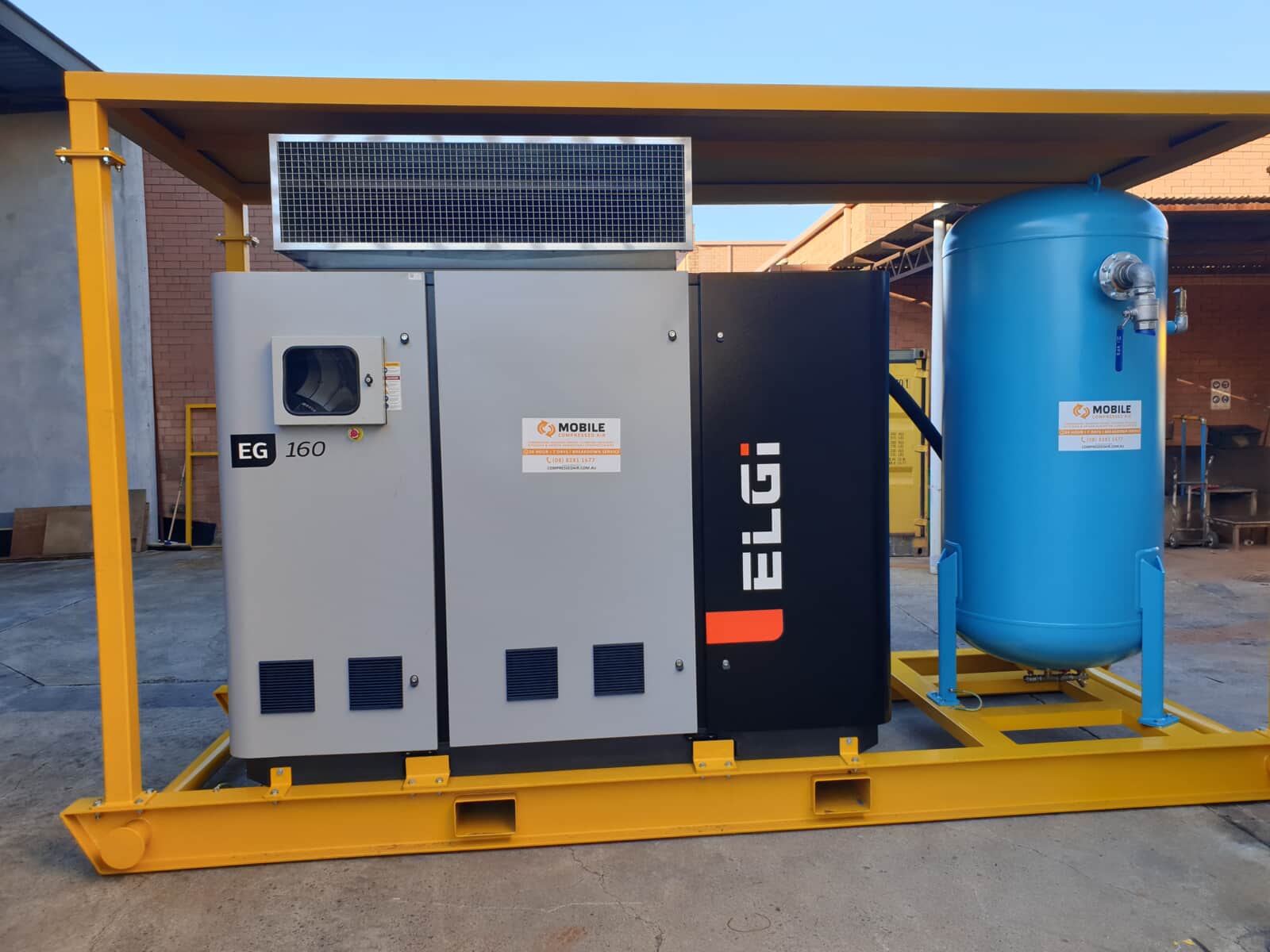
Complete drag skid with compressor and air receiver mounting provisions
Project Details
- Location
- Perth, Western Australia, Australia
- Sector
- Mining / Underground Mining / Compressed Air Systems
- Status
- Completed
- Project Value
- $$$
- Completion Date
- February 2025
- Standards
- AS/NZS 1554 - Welding standards Mining industry equipment standards Underground mining safety requirements WorkSafe WA mining regulations