Aussie Invader 5R Steering Grips — 3D Printed Carbon Fibre Nylon
Project Summary
When you are building a vehicle designed to set an Australian land speed record, every component matters — including what the driver’s hands are resting on at 1,000 km/h. Rosco McGlashan, the man behind the Aussie Invader 5R jet-powered land speed record vehicle, approached Elite Engineering WA to design and manufacture a pair of custom steering grips that needed to do two things at once: provide a secure, comfortable grip on the steering wheel, and cleanly cover the backs of the switching gear mounted behind it.
This was not a project you could solve with an off-the-shelf solution. The geometry of the grip had to be developed specifically for the steering wheel profile, the driver’s hand position, and the switch panel layout beneath it. We worked through the design in-house and manufactured the grips using 3D printing in carbon fibre reinforced nylon — a material that combines the light weight and dimensional precision of FDM printing with the rigidity and strength that a structural grip component demands.
The end result was a pair of grips that fit precisely, felt right in the hand, and gave the interior a clean, purposeful finish — exactly what a record-attempt vehicle deserves.
Project Context
The Aussie Invader 5R is a rocket-powered land speed record vehicle built in Perth, Western Australia, and aimed at breaking the world land speed record. Every element of the vehicle — from the jet engine to the cockpit controls — is engineered to perform under extreme conditions and to the highest possible standard.
The steering wheel in the cockpit carries a number of switches and controls on the back face. The requirement was to cover those switches cleanly whilst providing the driver with a well-considered grip surface — something ergonomic and secure under the physical demands of high-speed driving. No standard automotive grip product was going to work here; the geometry, function, and finish needed to be purpose-designed.
Design Requirements
The grips needed to achieve three things simultaneously. First, ergonomic function: the grip surface had to sit correctly in the hand, with enough substance to provide a secure hold without adding unnecessary bulk to the steering wheel. Second, switch integration: the rear face of each grip had to conform to the switch panel geometry, covering the backs of the switches cleanly without interfering with their operation. Third, visual finish: fitted to a purpose-built record attempt vehicle, the grips needed to look the part — precise, intentional, and finished to a standard consistent with the rest of the cockpit.
We developed the geometry through our custom design process, working from the steering wheel dimensions and switch layout to create a form that addressed all three requirements in a single part.
Fabrication Process
With the geometry resolved, we selected carbon fibre reinforced nylon (PA-CF) as the build material. This composite filament gives 3D printed parts significantly higher rigidity and tensile strength than standard nylon, with a surface finish and dimensional stability appropriate for a functional structural component. It is also lightweight — important in a vehicle where every gram is considered.
The grips were printed using FDM 3D printing at fine layer resolution to achieve a good surface finish and dimensional accuracy. After printing, each grip was checked against the steering wheel profile for fit before being handed over for installation.
The custom design and fabrication approach we applied here — working from a functional brief through to a finished part — is the same process we bring to all bespoke fabrication work, whether it involves 3D printing, machined components, or structural steel.
Applications
Custom-designed and 3D printed components suit a range of applications where standard parts don’t exist or won’t fit:
- Motorsport and performance vehicle components — where bespoke geometry, weight, and finish are all priorities
- Prototype and one-off engineering parts — brackets, covers, housings, and ergonomic components that need to be designed from scratch
- Industrial and mining equipment modifications — custom covers, guards, and interface components to suit specific machinery configurations
- Replacement components for obsolete or discontinued parts — where the original tooling no longer exists and a 3D printed solution is more practical than machining
Frequently Asked Questions
We work with engineering-grade filaments including carbon fibre reinforced nylon (PA-CF), which offers excellent strength-to-weight ratio and dimensional stability. For applications requiring more flexibility, standard nylon or PETG may be more appropriate. We select the material based on the mechanical requirements of the part.
FDM printing at fine resolution achieves dimensional tolerances in the range of ±0.2–0.5mm depending on part geometry. For fit-critical features — like a grip that needs to mate precisely with a specific steering wheel — we work iteratively, printing and checking fit before finalising the design for the production part.
Yes. For many custom component projects, we develop the design in-house based on a brief, physical samples, or measurements from the existing assembly. We can work from a sketch, a reference photograph, or a direct measurement of the component interface.
Carbon fibre reinforced nylon (PA-CF) is significantly stronger and stiffer than standard PLA or ABS, and suitable for many functional and structural applications. As with any engineering material, the suitability depends on the load case — we assess each application on its specific requirements.
We combine 3D printing with our broader [custom fabrication](/services/fabrication/) capabilities — structural steel, aluminium fabrication, and machined components — to deliver complete custom solutions. For many projects, 3D printing is one element of a larger fabricated assembly.
Project Gallery
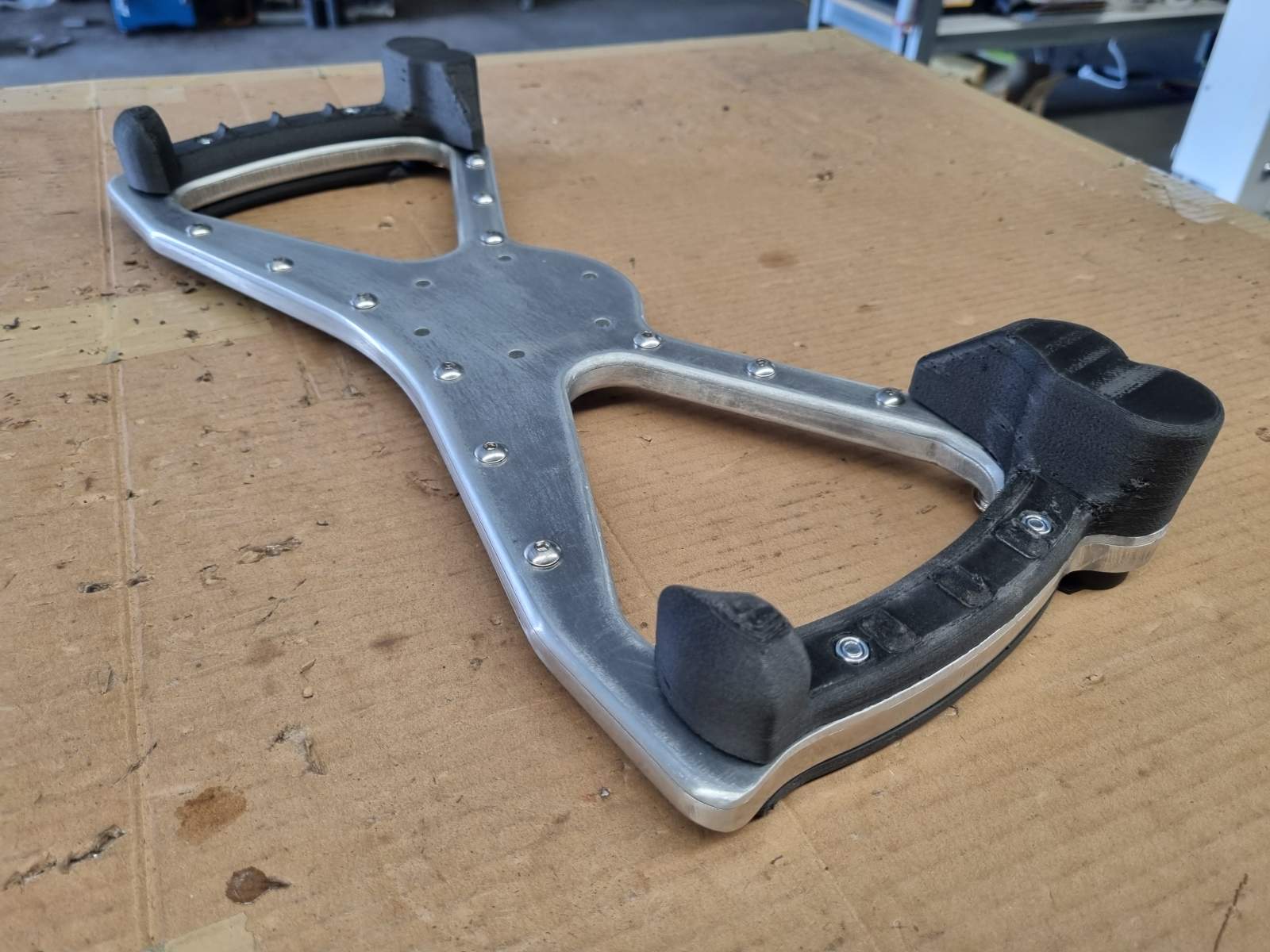
Custom 3D printed carbon fibre nylon steering grips for the Aussie Invader 5R land speed record vehicle
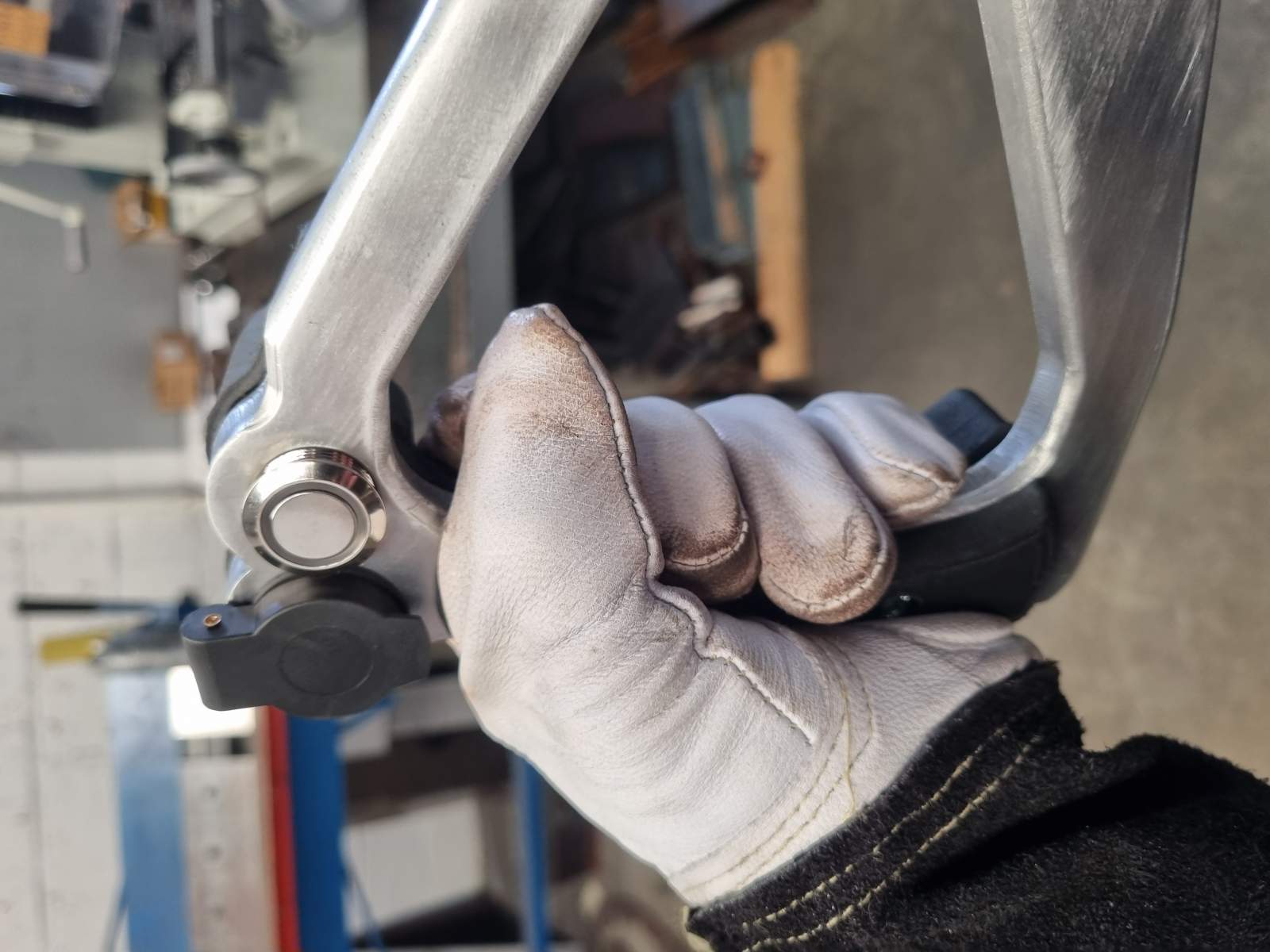
Grip design covering the backs of the steering wheel switches — ergonomic form meeting functional requirement
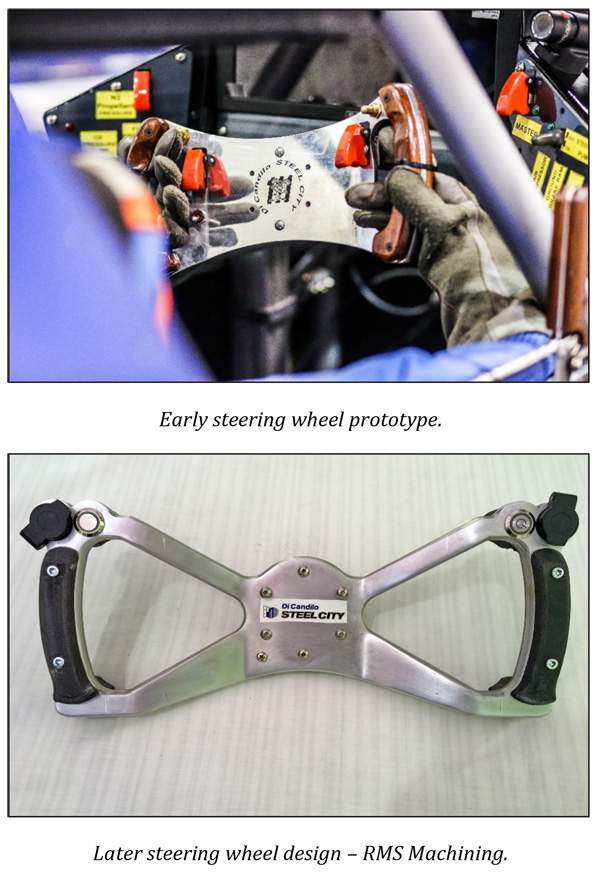
Carbon fibre nylon 3D printing — lightweight, strong, and dimensionally precise for a demanding application
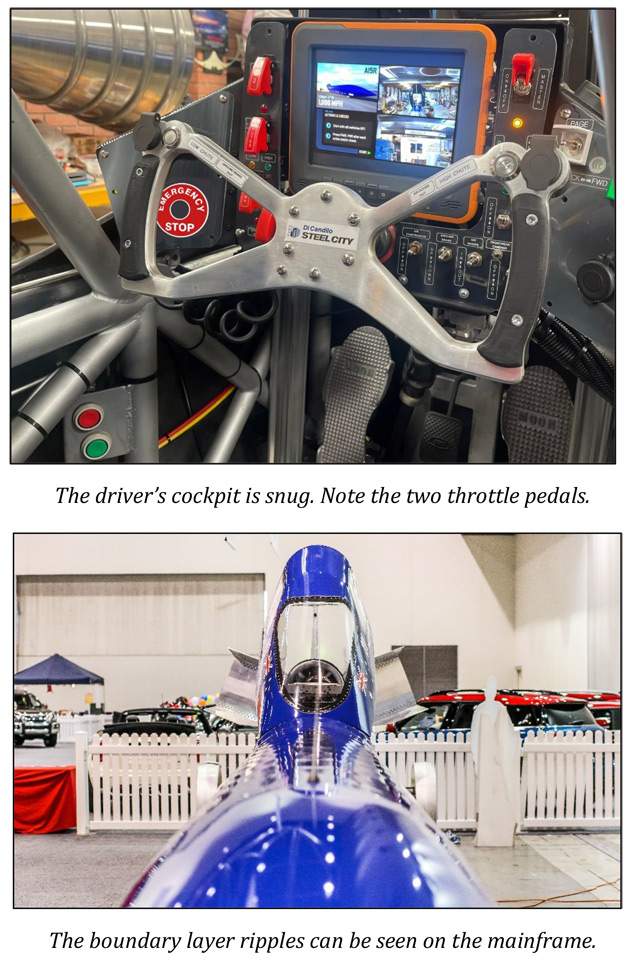
Finished grips installed on the Aussie Invader 5R steering wheel — combining grip feel with a clean cover over the switch gear
Project Details
- Location
- Perth, Western Australia, Australia
- Sector
- Commercial
- Status
- Completed
- Project Value
- $
- Completion Date
- October 2022
- Standards