Height-Adjustable Container Freezer Access Ramps
Project Summary
Efficiency in food production often comes down to eliminating unnecessary handling. Simple as that. When our client needed a way to move trolleys loaded with fresh bagels into their shipping container freezers, they faced a practical challenge that plagues many food manufacturers—how do you bridge the height gap between ground level and container floor while keeping the solution simple enough for daily use? The answer needed to be lightweight enough for staff to position by hand, adjustable enough to work with different container configurations, and robust enough to handle loaded trolleys multiple times per day without failing or requiring constant maintenance.
We designed and fabricated height-adjustable aluminium ramps that transform what could be an awkward manual handling task into a straightforward trolley roll. The ramps feature a simple adjustment mechanism that accommodates various container heights. They’re light enough that staff can move them into position without mechanical assistance. This isn’t high-tech equipment—it’s practical engineering focused on making a repetitive daily task easier and safer, because sometimes the best solutions are the simplest ones.
Understanding the Food Production Context
The client’s production process involves baking bagels throughout the day, loading them onto trolleys, and moving those trolleys into converted shipping container freezers for storage—a workflow that happens dozens of times daily during peak production. The containers sit on the ground, creating a step-up of several inches that prevents trolleys from rolling directly inside. Without ramps, staff would need to manually lift bagel-loaded trays from trolleys and carry them into the freezers. Time-consuming. Physically demanding. Creating opportunities for product damage with every transfer.
The challenge was creating ramps that would work reliably in a food production environment where cleanliness isn’t optional and equipment needs to withstand constant use without degrading. The equipment needed to be easy to clean, resistant to the moisture and temperature variations near freezer entrances, and simple enough that any staff member could position and use them without special training or complicated procedures. Most importantly, the ramps needed to be light enough for manual positioning—heavy steel ramps would solve the access problem but create a new handling challenge that would defeat the purpose.
Engineering Lightweight Adjustability
Aluminium was the obvious material choice for this application, offering excellent strength-to-weight ratio, natural corrosion resistance, and the ability to maintain its properties in cold environments where other materials might become brittle or unreliable. We designed the ramp structure to optimize strength while minimizing weight, using formed sections that provide rigidity without unnecessary material that would add weight without improving performance. The result? A ramp that one or two people can easily lift and position, yet it’s substantial enough to support loaded trolleys without flexing or shifting under load.
The height adjustment system uses a simple leg mechanism with multiple locking positions. Staff can quickly adjust the ramp height to match different container configurations without tools or complicated procedures that would slow down production. The adjustment range covers the typical variations in container positioning, ensuring the ramps work regardless of how containers are situated on the site—because containers don’t always sit at exactly the same height, and the ramps needed to accommodate that reality. The locking mechanism is positive and secure—once set, the ramp stays at the selected height until deliberately adjusted, preventing dangerous shifts during use.
We incorporated side rails and edge protection that guide trolleys onto the ramp and prevent wheels from running off the edges—a critical safety feature when staff are pushing loaded trolleys that might weigh hundreds of kilograms. These rails are particularly important when staff are moving quickly during busy production periods. The rails provide confidence that the trolley will track properly even if it’s not perfectly aligned. The non-slip surface treatment ensures trolley wheels maintain traction on the ramp, preventing slippage that could cause loads to shift or trolleys to roll backward, creating hazards for staff and potentially damaging product.
Food Production Practicality
In food manufacturing environments, equipment needs to be cleanable. Period. The ramps feature smooth surfaces without unnecessary crevices where food particles or moisture could accumulate and create hygiene issues or harbor bacteria. The aluminium construction means they can be wiped down or hosed off as part of regular facility cleaning without concerns about rust or corrosion that would plague steel ramps in similar conditions. The finish is food-safe and durable enough to withstand regular cleaning without degrading or requiring recoating.
The ramps work in the transition zone between the production area and freezer entrance, where temperature and humidity can vary significantly throughout the day. Aluminium handles these conditions exceptionally well—it doesn’t become brittle in cold temperatures like some plastics might, and it doesn’t rust when exposed to moisture from the freezer environment or condensation that forms in temperature transition zones. The material choice ensures the ramps will provide reliable service for years without requiring special maintenance or protection beyond normal cleaning.
The lightweight design means staff can reposition ramps as needed throughout the day without disrupting production flow. If containers are moved or rearranged, the ramps can be quickly relocated to match. This flexibility is valuable in a dynamic production environment where layouts may change to accommodate different production volumes or storage needs, and where rigid, permanently installed solutions would create operational constraints.
Practical Problem Solving
What makes these ramps effective isn’t sophisticated technology or complex engineering—it’s thoughtful design focused on the actual use case and the people who use the equipment daily. The client’s staff needed to move bagels from production into freezer storage efficiently and safely. The ramps eliminate the manual lifting that would otherwise be required, reducing physical strain on staff and speeding up the storage process that happens repeatedly throughout every production day. The height adjustability ensures the ramps work with their existing containers and will continue working if container configurations change in the future.
The project demonstrates how fabrication solutions don’t always need to be complex to be valuable—sometimes the best answer is straightforward equipment that does exactly what’s needed without unnecessary features or complications that would increase cost and maintenance requirements. These ramps bridge a height gap. Support loaded trolleys. Adjust to different configurations. Remain light enough for manual positioning. They accomplish these goals reliably, day after day, in a demanding food production environment where failure would disrupt operations and create safety hazards.
This kind of practical fabrication work—creating equipment that solves real operational challenges—is often more valuable than elaborate custom machinery that looks impressive but doesn’t address the actual daily needs of the operation. The ramps we built for our client improve their daily workflow, reduce physical demands on staff, and will provide years of reliable service with minimal maintenance beyond regular cleaning. That’s the kind of fabrication work that makes a genuine difference in how businesses operate.
Project Gallery
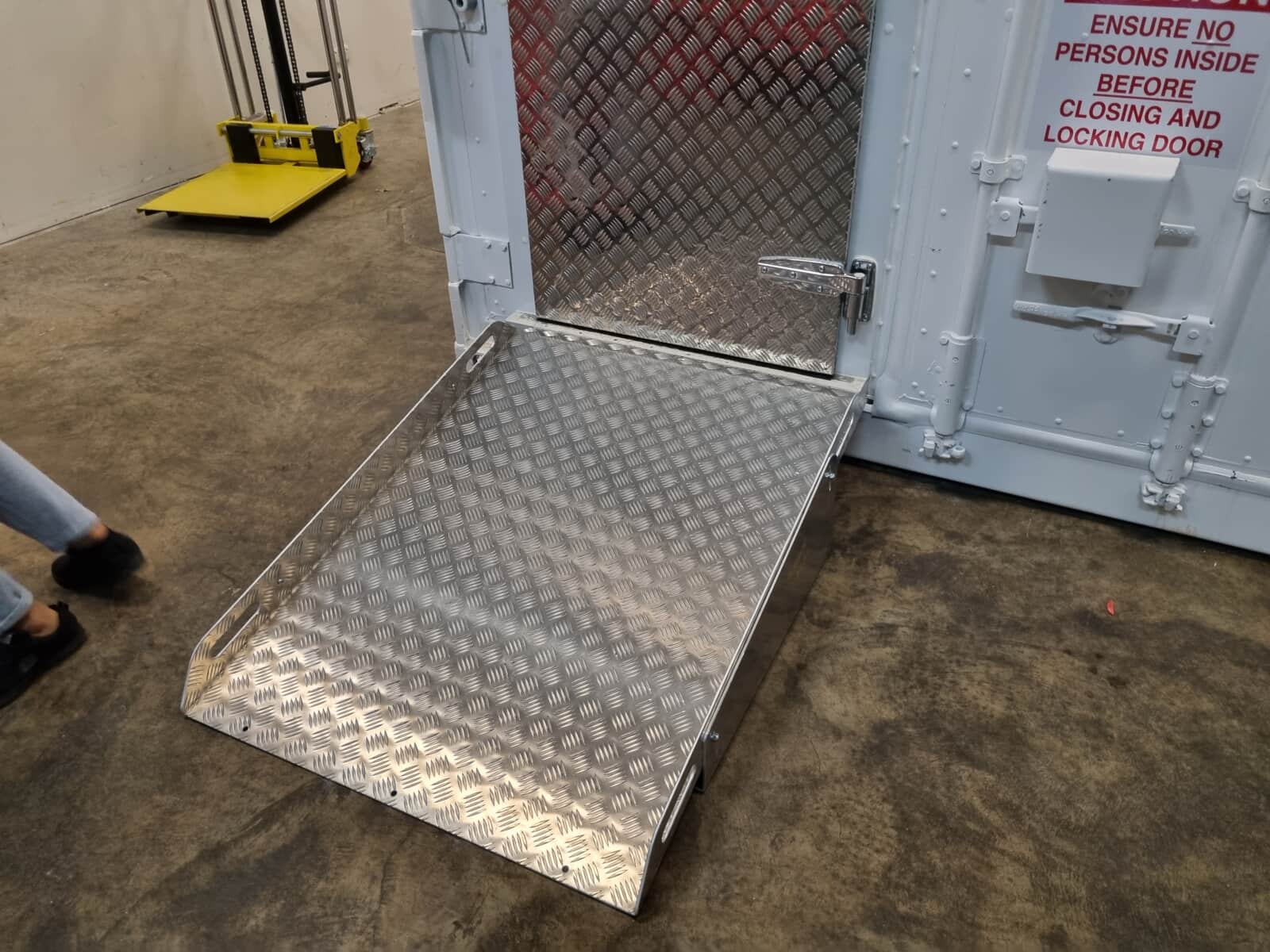
Height-adjustable aluminium ramp system for container freezer access
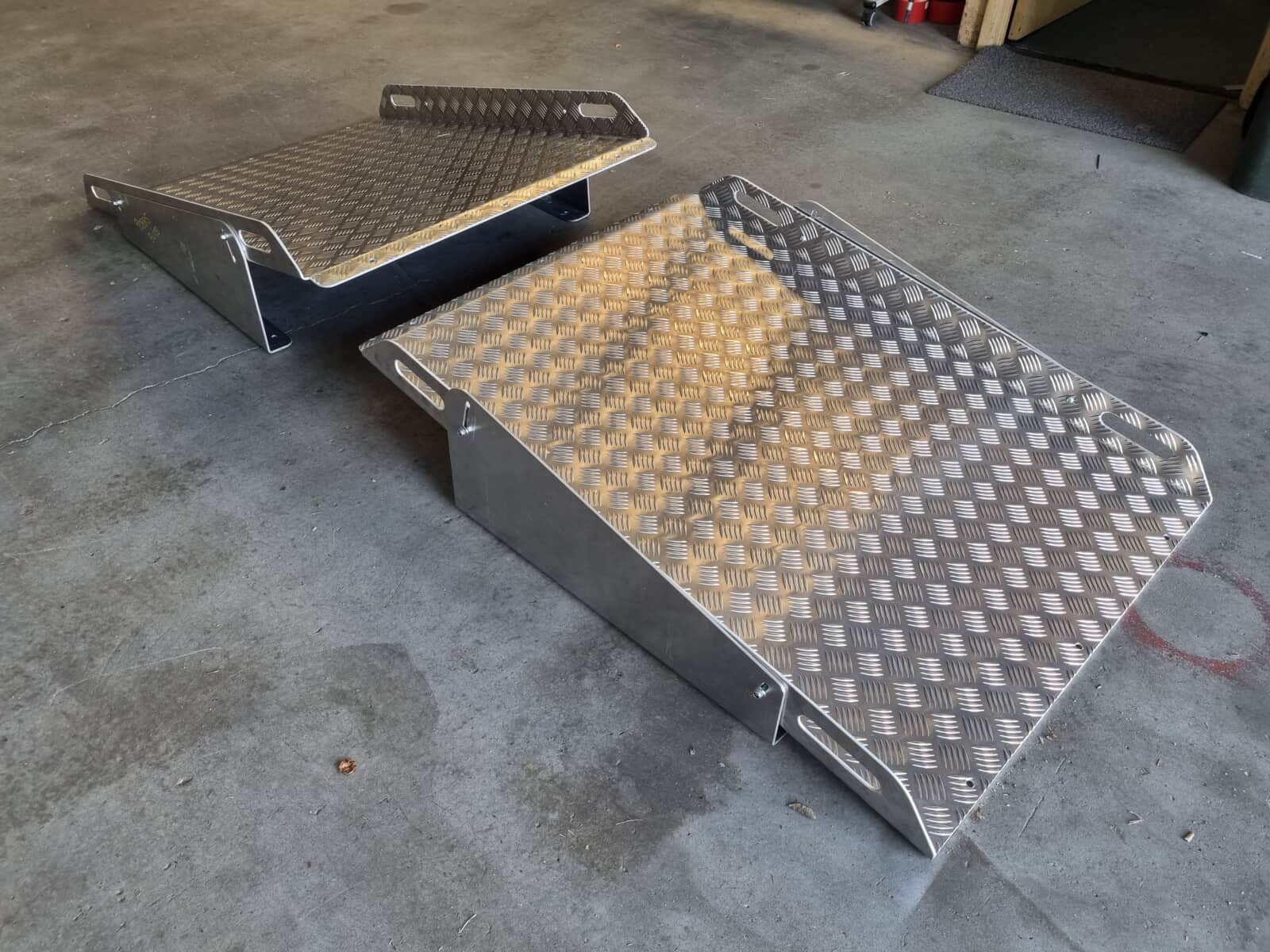
Adjustable ramp showing height adjustment mechanism
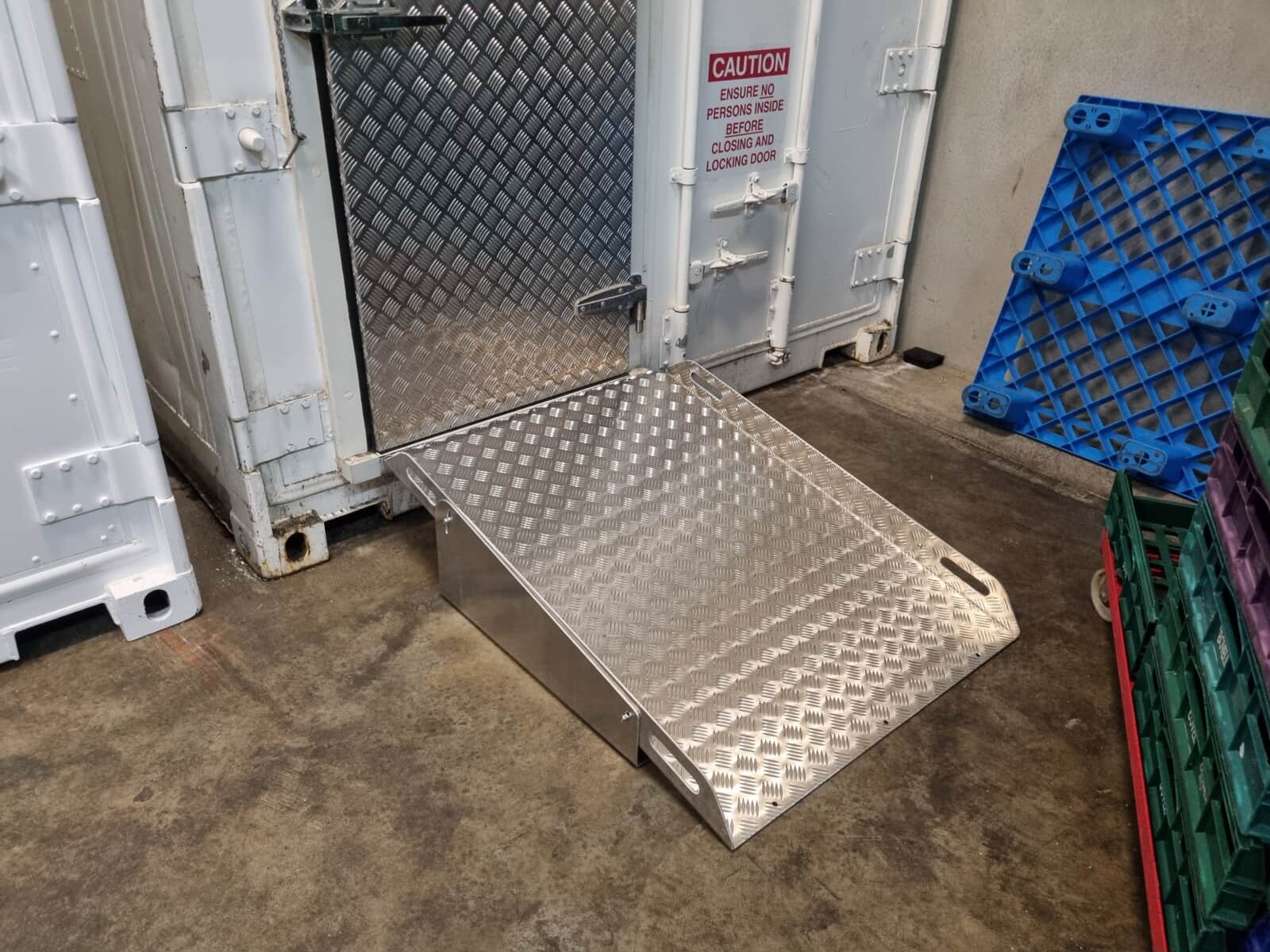
Ramp installed at container freezer providing trolley access
Project Details
- Location
- Canning Vale, Perth, Western Australia, Australia
- Sector
- Food Production / Manufacturing
- Status
- Completed
- Project Value
- $
- Completion Date
- September 2022
- Standards
- WorkSafe WA access equipment requirements Food safety and hygiene standards Manual handling guidelines