10-Tonne Rated Stainless Steel Trestles — Third-Party Certified
Project Summary
Stainless steel is expensive, it performs because of what it is — and contaminating it with carbon steel particles during fabrication or handling can trigger corrosion that defeats the entire purpose of using stainless in the first place. When a client needed large, heavy stainless steel fabrications supported in the workshop during assembly and finishing, standard carbon steel trestles weren’t an option. Placing stainless steel work on bare steel trestles risks transferring carbon steel particles to the surface — particles that embed into the passive layer and eventually rust, leaving streaks and pitting on material that should be corrosion-resistant.
The solution was a set of purpose-built stainless steel trestles: rated to carry 10 tonnes each, designed to suit the dimensions of the work being supported, and fabricated entirely from stainless steel to eliminate any risk of carbon contamination. Elite Engineering WA designed and fabricated these trestles from scratch, with all welding performed to AS/NZS 1554.6 — the Australian standard for stainless steel welding — and the completed trestles certified by a third-party structural engineer.
These are not decorative pieces. They are structural items with a specific load rating, documented weld quality, and an engineer’s certificate — the kind of assets an industrial fabrication company holds in their workshop for years and relies on every time a stainless job comes through.
Project Context
Industrial Corrosion Service undertakes large-scale stainless steel fabrication and surface treatment work. Their projects include fabrications that are too large and too valuable to rest on improvised or unsuitable supports — and the consequences of carbon contamination on finished stainless steel work can mean expensive rectification or a rejected component.
The requirement was straightforward but non-negotiable: trestles made from stainless steel, capable of supporting the loads involved, and certified so that the load rating is documented and defensible. The client needed to be confident that the trestles they were using were fit for purpose — not just fabricated to a reasonable standard, but formally assessed by a structural engineer and given a rated capacity they could rely on.
Design and Engineering Requirements
Designing a 10-tonne rated trestle involves more than building something that looks substantial. The load rating has to be derived from engineering calculations — member sizing, weld sizing, connection geometry, and load distribution all contribute to the rated capacity. Designing to a specific capacity means working backwards from the load through the structure to verify that every element is adequate.
Stainless steel has different mechanical properties to carbon steel — slightly lower yield strength in the common austenitic grades, but excellent toughness. Welding stainless steel also requires a different approach: filler materials, preheat requirements, interpass temperature limits, and post-weld handling are all specified differently under AS/NZS 1554.6 compared to the carbon steel standard. Our structural steel fabrication team works with both materials, and the welding procedure specifications for stainless work are maintained separately to prevent any mix-up in process or consumables.
Third-party certification was a specific client requirement. Rather than simply asserting a capacity, an independent structural engineer reviewed the design and issued a certificate confirming the 10-tonne rating. This gives the client a documented, auditable record of the trestle capacity — important for any business operating under a quality management system or subject to workplace health and safety audits.
Fabrication Process
The project began with designing the trestle geometry to achieve the required load capacity using appropriate stainless steel sections. Member sizes were selected based on the calculated loads, and connection details were developed to ensure that weld sizes could be achieved reliably under AS/NZS 1554.6.
Fabrication was carried out in our Forrestdale workshop with strict protocols to prevent carbon contamination — stainless steel work is kept separated from carbon steel, dedicated tools are used for cutting and grinding, and stainless consumables are stored separately. All welding was performed to a qualified AS/NZS 1554.6 welding procedure, with a current welder qualification record. You can learn more about our welding qualifications and certification process.
On completion, the trestles were submitted to a third-party structural engineer for review and certification. The engineer assessed the design against the claimed 10-tonne load rating and issued a certificate confirming compliance. This documentation was supplied to the client as part of the project handover package.
Applications
Purpose-built stainless steel trestles and support structures are needed wherever standard steel equipment would introduce contamination risk:
- Stainless steel fabrication workshops — supporting large assemblies during welding and fitting
- Food and beverage processing equipment fabrication — where hygiene standards prohibit contact with carbon steel
- Pharmaceutical and biotechnology manufacturing — handling process vessels and piping that must remain contamination-free
- Marine and offshore fabrication — stainless components for corrosive service environments
- Chemical processing — handling vessels and piping for corrosive service where contamination affects corrosion performance
Any rated lifting or support equipment used in a workplace should carry a documented load rating. Custom fabricated trestles without a formal load assessment leave employers exposed — third-party certification is the appropriate standard for any supporting structure used in a commercial environment.
Frequently Asked Questions
Paint helps but doesn't fully solve the problem. Carbon steel trestles can transfer particles to stainless work through direct contact, through abrasion as work is moved, or through weld spatter from nearby carbon steel welding. For high-quality stainless fabrication where surface integrity matters — especially for corrosive service or food-grade applications — stainless trestles are the correct solution.
AS/NZS 1554.6 covers the welding of stainless steels and nickel alloys. It specifies different requirements to AS/NZS 1554.1 (carbon steel structural welding) — including filler metal selection, interpass temperature limits, and post-weld cleaning requirements. Our welders hold current qualifications under AS/NZS 1554.6 for stainless steel welding.
A third-party structural engineer independently reviews the design of the fabricated item against the claimed capacity or specification. They assess member sizes, weld sizes, connection details, and the design basis, then issue a certificate confirming that the item meets the stated rating. This provides an independent, documented record that is separate from the fabricator's own quality records.
Yes. The same design and certification process applies to any rated structural item — lifting lugs, spreader beams, support frames, and custom handling equipment. The key inputs are the load case, the material, and the operational environment. We can design from a brief or work to your existing drawings.
We typically work with 304 and 316 grades for structural applications. Grade 316 has higher molybdenum content and better corrosion resistance in chloride environments — appropriate for marine, coastal, or chemical service. Grade 304 is suitable for general industrial applications. The grade selection depends on the service environment and client specification.
Project Gallery
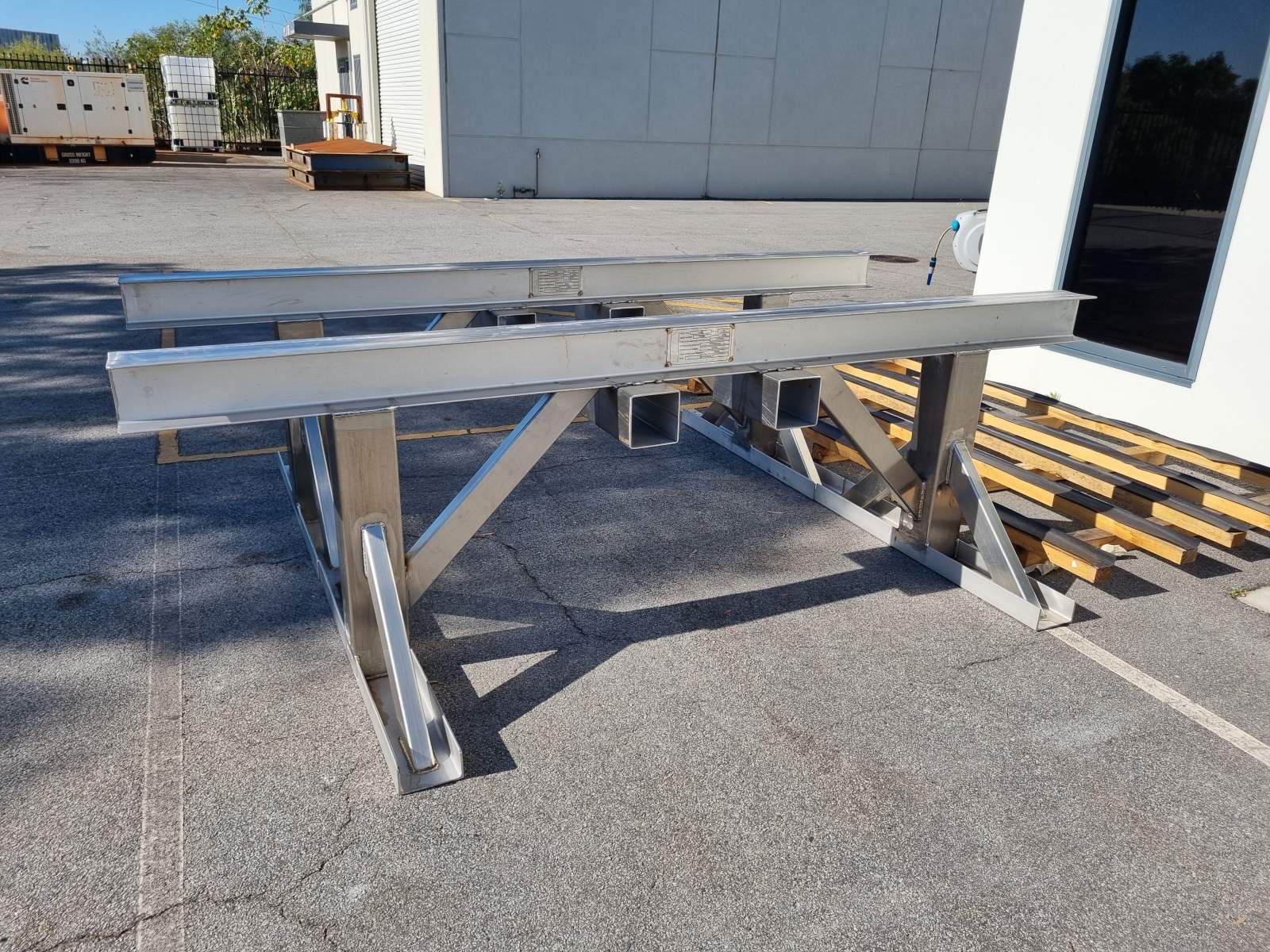
Completed 10-tonne rated stainless steel trestle — custom designed, fabricated and third-party engineer certified in Perth
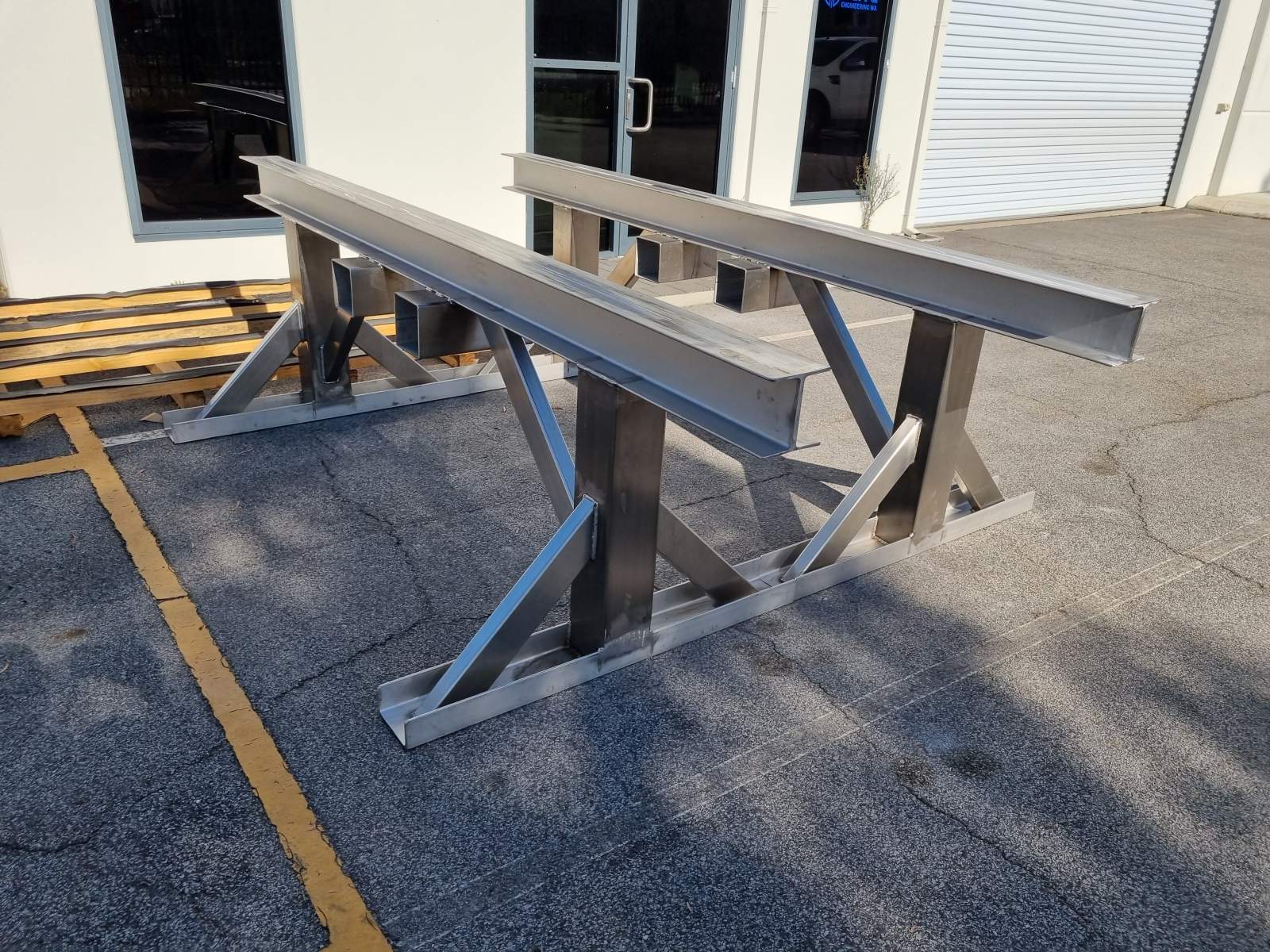
All welding performed to AS/NZS 1554.6 — the Australian standard for stainless steel welding
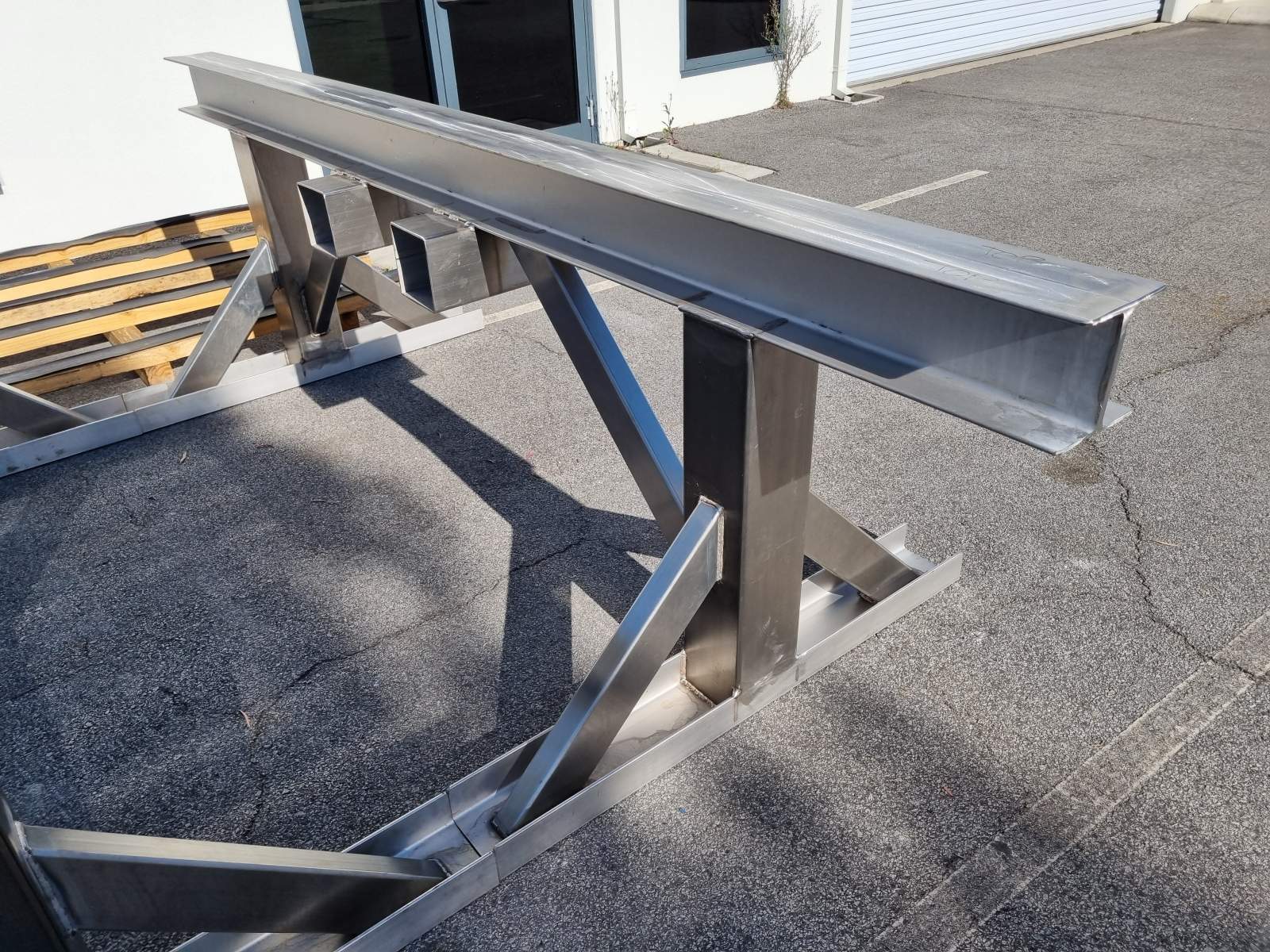
Trestles in the Elite Engineering WA workshop, Forrestdale — fabricated to prevent cross-contamination of the client's stainless steel project
Project Details
- Location
- Forrestdale, Western Australia, Australia
- Sector
- Industrial
- Status
- Completed
- Project Value
- $$$$$
- Completion Date
- August 2024
- Standards
- AS/NZS 1554.6 — Welding of Stainless Steels and Nickel Alloys