Handrailing for Osborne Park Substation
Project Summary
Cable pits in electrical substations are critical infrastructure that require regular maintenance access. Yet they present significant fall hazards for personnel working around them. When the Osborne Park Substation was upgraded with a new cable pit to accommodate incoming power distribution, the project needed handrailing that would protect maintenance crews while meeting the demanding standards required for electrical infrastructure—standards that exist because the consequences of failure in electrical facilities can be catastrophic. We fabricated and installed 20 linear meters of AS1657-compliant handrailing with hot-dip galvanized finish, creating a safety barrier that will protect workers for decades while withstanding the harsh conditions of outdoor substation service where weather, industrial atmosphere, and electrical fields all challenge materials.
This project represents the kind of infrastructure work that doesn’t make headlines but is absolutely essential to safe utility operations that keep Perth powered. Maintenance personnel work around cable pits regularly, performing inspections, cable terminations, and repairs that keep the electrical grid functioning. Without proper handrailing, these routine tasks expose workers to serious fall hazards that could result in injury or death. The handrailing we installed transforms a hazardous work area into a protected space where crews can perform their duties safely without constant awareness of the fall risk.
Cable Pit Safety Requirements
Cable pits in substations are substantial structures—deep excavations lined with concrete where high-voltage cables enter and exit the facility carrying the power that supplies entire neighborhoods. The pits provide access to cable terminations and allow routing of cables between different areas of the substation in configurations that can be modified as the electrical grid evolves. Personnel need to work around the edges of these pits, and the fall hazard is significant. A fall into a cable pit could result in serious injury from the fall itself. Plus potential contact with energized equipment. Not good.
AS1657 standards for fixed platforms and walkways apply to cable pit handrailing, specifying requirements that ensure the handrails provide genuine protection rather than merely creating the appearance of safety. The standards define handrail height. Spacing between posts. Load requirements. Construction details. These aren’t arbitrary specifications—they’re based on decades of experience with what actually prevents falls and protects workers in industrial environments where real-world conditions test equipment constantly.
The facility’s specifications add additional requirements specific to electrical infrastructure where safety standards are particularly stringent. The handrailing needs to be appropriate for installation in substations where electrical safety is paramount and any failure could have serious consequences. The materials and construction need to withstand outdoor exposure in Perth’s climate—hot summers, wet winters, salt air from the coast. The finish needs to provide long-term corrosion resistance without requiring frequent maintenance that would disrupt substation operations. The installation needs to integrate with the cable pit structure without compromising either the handrailing or the pit itself.
Precision Fabrication for Infrastructure
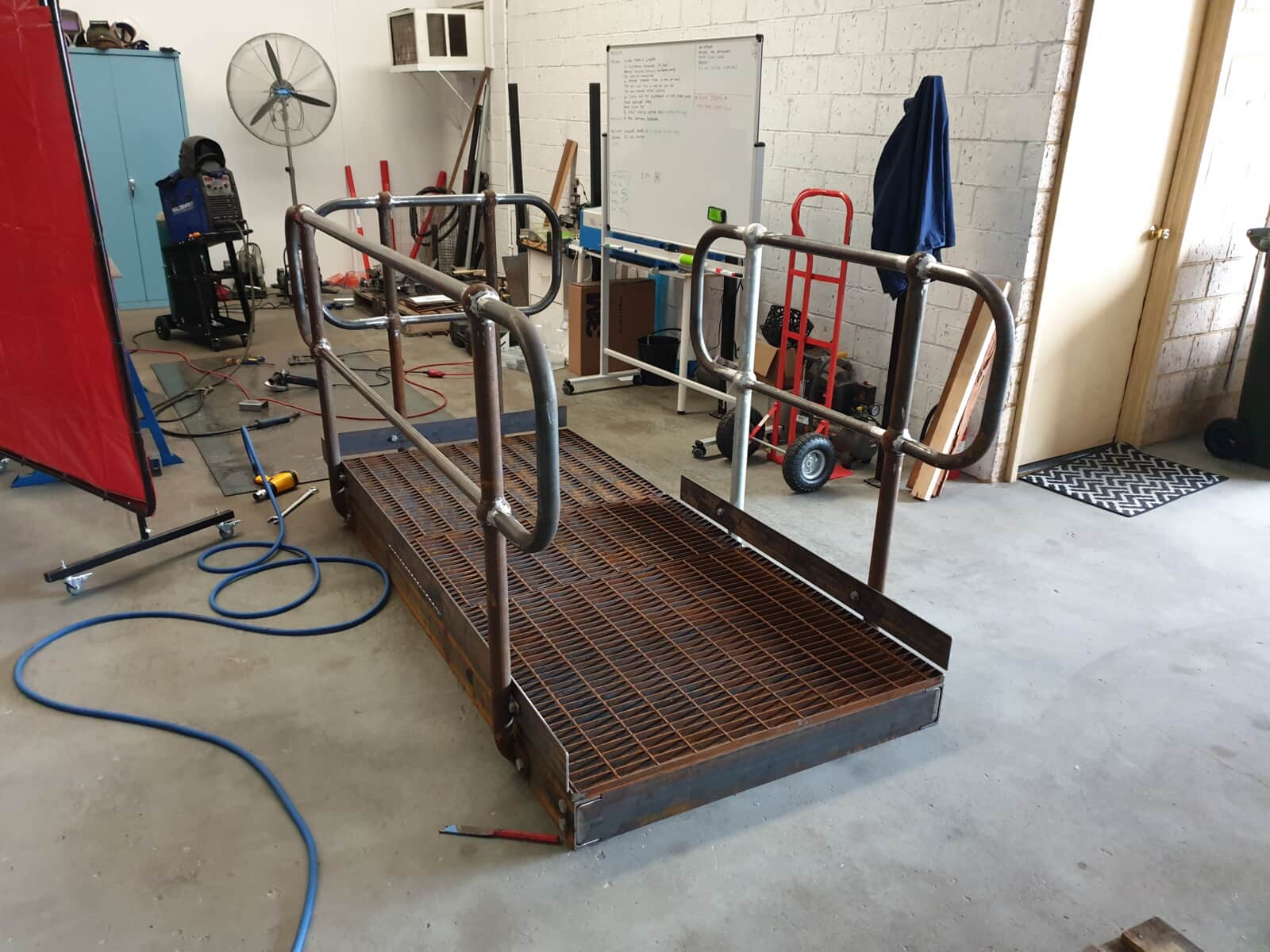
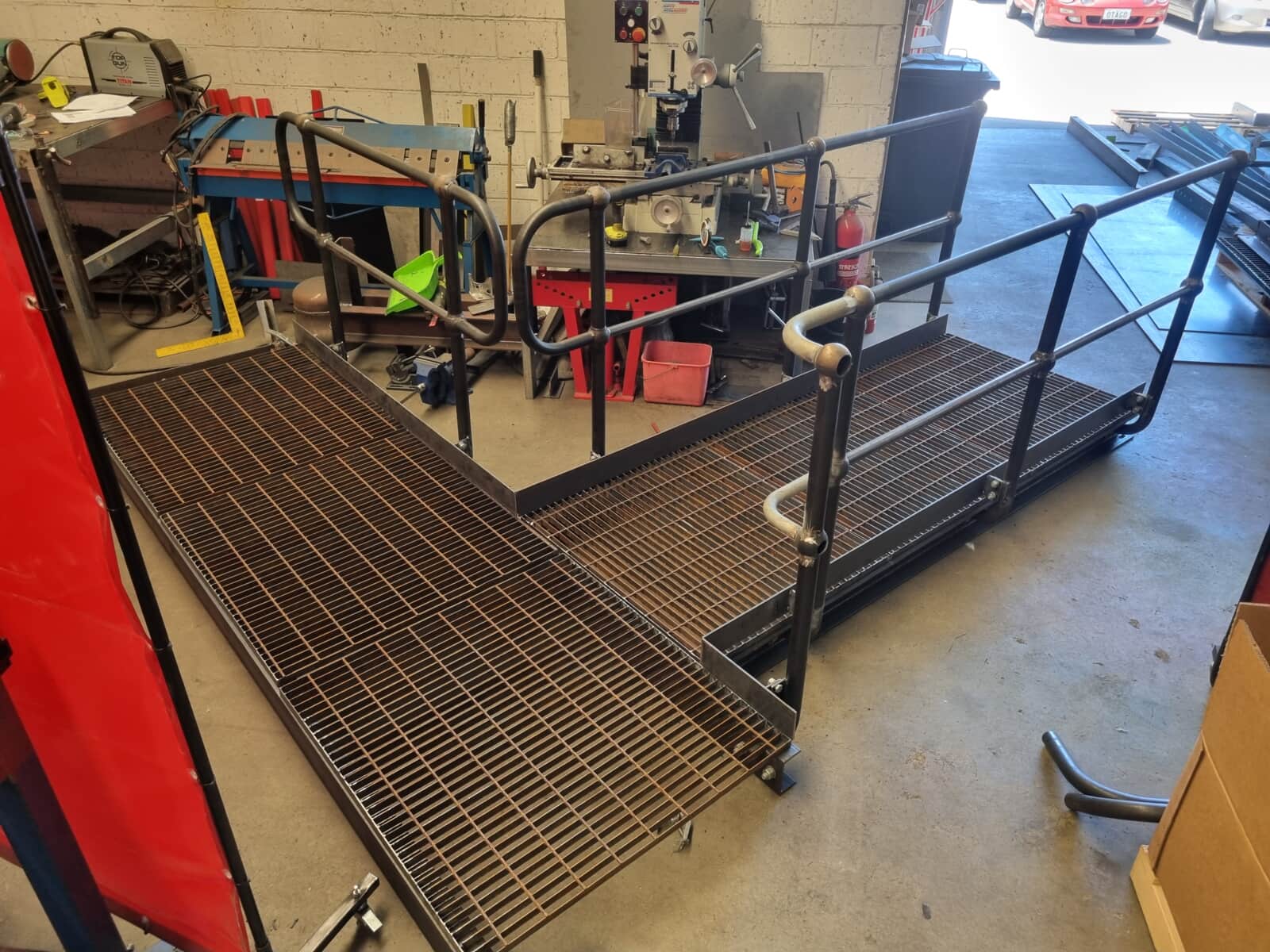
We fabricated the handrailing system with complete attention to the specifications and standards that govern electrical infrastructure where precision matters. The system includes posts positioned at appropriate intervals to provide structural support, top rails and mid rails at heights specified by AS1657, and toe boards where required to prevent tools or materials from falling into the pit where they could damage equipment or create hazards. Each component is sized and positioned to meet the standards while being appropriate for the specific cable pit configuration that exists at this particular substation.
The fabrication process started with site measurements to understand the exact dimensions and layout of the cable pit—not assumptions, but actual measurements. Cable pits aren’t standardized structures—each one is sized and configured for its specific location and function based on the electrical requirements of the area it serves. We measured the pit perimeter, identified mounting locations, and designed the handrailing to fit the actual conditions rather than trying to adapt generic components that might not work properly.
The posts are fabricated from structural steel sized to handle the loads specified by AS1657 without excessive deflection. The standards require handrails to withstand specific forces without failing or deflecting excessively—forces that represent real-world scenarios like workers leaning against rails or catching themselves during a slip. We engineered the posts and their mounting connections to meet these requirements with appropriate safety factors that account for uncertainties in loading and material properties. The posts aren’t just stuck in place—they’re properly connected to the cable pit structure through mounting details that transfer loads safely into the concrete without creating stress concentrations.
The rails themselves are continuous where possible, with connections designed to maintain strength and alignment without creating weak points. The top rail provides the primary handhold for personnel working around the pit. The mid rail provides additional protection and helps prevent personnel from falling through the handrail system if they lose their balance. The spacing between rails meets AS1657 requirements that prevent people from slipping through gaps—requirements based on human body dimensions and fall dynamics.
Hot-Dip Galvanizing for Longevity
The hot-dip galvanizing process provides corrosion protection that will maintain the handrailing’s integrity throughout decades of outdoor service in conditions that would destroy unprotected steel within years. Substations are harsh environments for steel—exposure to weather, industrial atmosphere, and temperature variations all challenge materials in ways that accelerate corrosion. Hot-dip galvanizing creates a zinc coating that protects the steel even in these demanding conditions where ordinary paint would fail.
The galvanizing process involves immersing the fabricated handrailing components in molten zinc at around 450°C, which bonds metallurgically with the steel surface through a diffusion process. This creates a coating that’s actually part of the steel, not just a surface treatment that can peel or flake off when damaged. The zinc coating provides barrier protection, preventing moisture and oxygen from reaching the steel substrate. It also provides sacrificial protection—if the coating is damaged, the zinc corrodes preferentially to the steel, protecting the base material even when the coating is compromised.
For infrastructure that needs to perform reliably for decades with minimal maintenance—and substations definitely fall into that category—hot-dip galvanizing is the appropriate choice rather than cheaper alternatives. The coating will maintain its protective function throughout the handrailing’s service life without requiring repainting or recoating that would require shutdowns and create ongoing costs. This reduces lifecycle costs while ensuring the handrailing continues protecting workers year after year without degradation.
Installation in Operating Substation
Installing handrailing in an operating substation requires careful coordination and attention to electrical safety that goes beyond typical construction work. The work needs to be scheduled around substation operations to minimize disruption while maintaining safety for both the installation crew and the facility. Installation crews need to maintain proper clearances from energized equipment—clearances that are strictly defined and enforced. The work needs to be completed efficiently to reduce the time the cable pit area is under construction and potentially creating access issues.
We coordinated with our client to schedule the installation appropriately around substation operations and maintenance schedules. The handrailing components were delivered ready for installation, with all fabrication and galvanizing completed off-site to minimize on-site work time. The installation crew positioned and secured the posts, then installed the rails and toe boards systematically. The work proceeded methodically, with each section completed and inspected before moving to the next to ensure quality throughout.
The mounting connections were designed for secure installation that wouldn’t compromise the cable pit structure or create issues for future maintenance. The connections transfer handrail loads to the pit walls without creating stress concentrations or weakening the concrete through improper fastening. The installation maintains proper clearances from electrical equipment while providing the fall protection that personnel need when working around the pit.
Long-Term Infrastructure Protection
The handrailing we installed at Osborne Park Substation will protect maintenance personnel throughout the facility’s operational life—potentially decades of service. Every time crews work around that cable pit—performing inspections, terminating cables, or conducting repairs—the handrailing provides the fall protection that keeps them safe and allows them to focus on their work rather than constantly worrying about the fall hazard. This isn’t temporary safety equipment that gets removed after construction. It’s permanent infrastructure that becomes part of the facility’s safety systems.
The AS1657 compliance ensures the handrailing provides genuine protection, not just the appearance of safety that might fail when actually needed. The hot-dip galvanized finish ensures it will maintain its integrity and function throughout decades of service without requiring ongoing maintenance. The precision fabrication and proper installation ensure it performs as designed, protecting workers reliably every time they work around the cable pit without creating new hazards.
This kind of infrastructure work—fabricating and installing safety equipment for critical utility facilities—requires understanding the standards, the environment, and the real-world requirements of the people who will depend on the equipment daily. The handrailing we delivered for the Osborne Park Substation demonstrates our capability to meet these requirements, providing infrastructure that protects workers while meeting the exacting standards expected of electrical utility facilities where safety and reliability are paramount.
Project Gallery
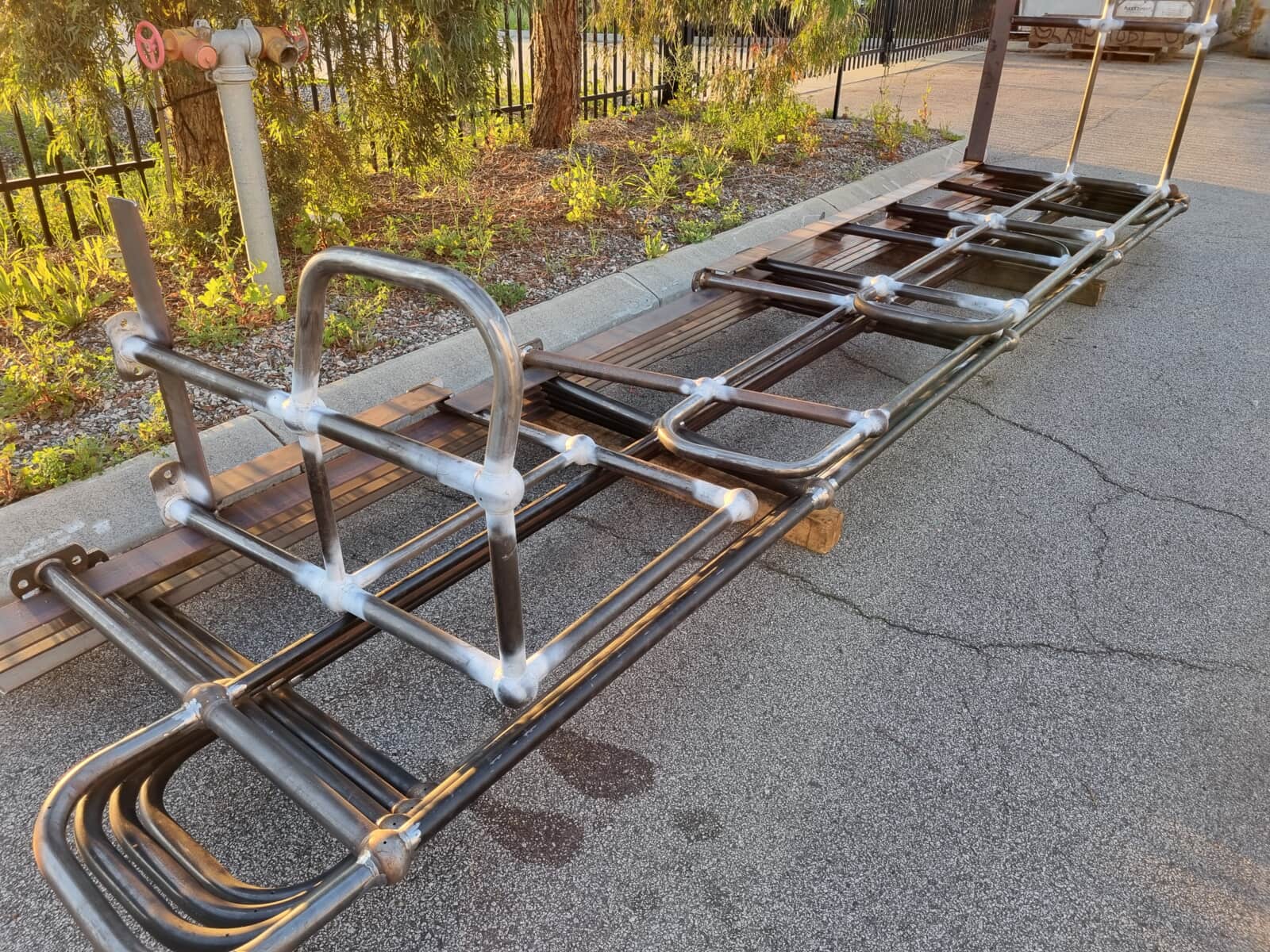
Handrailing during fabrication showing construction detail
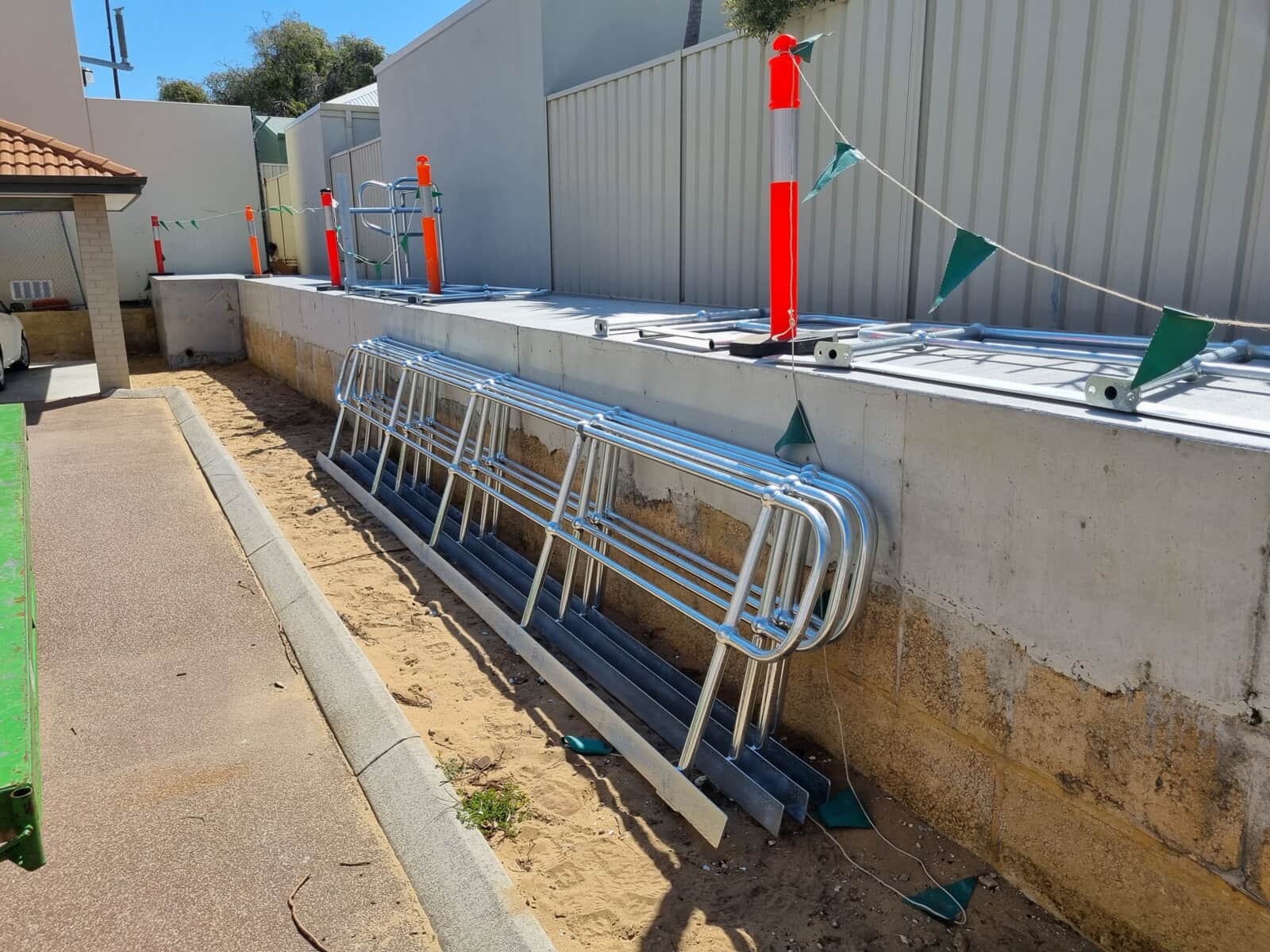
Completed handrailing with hot-dip galvanized finish
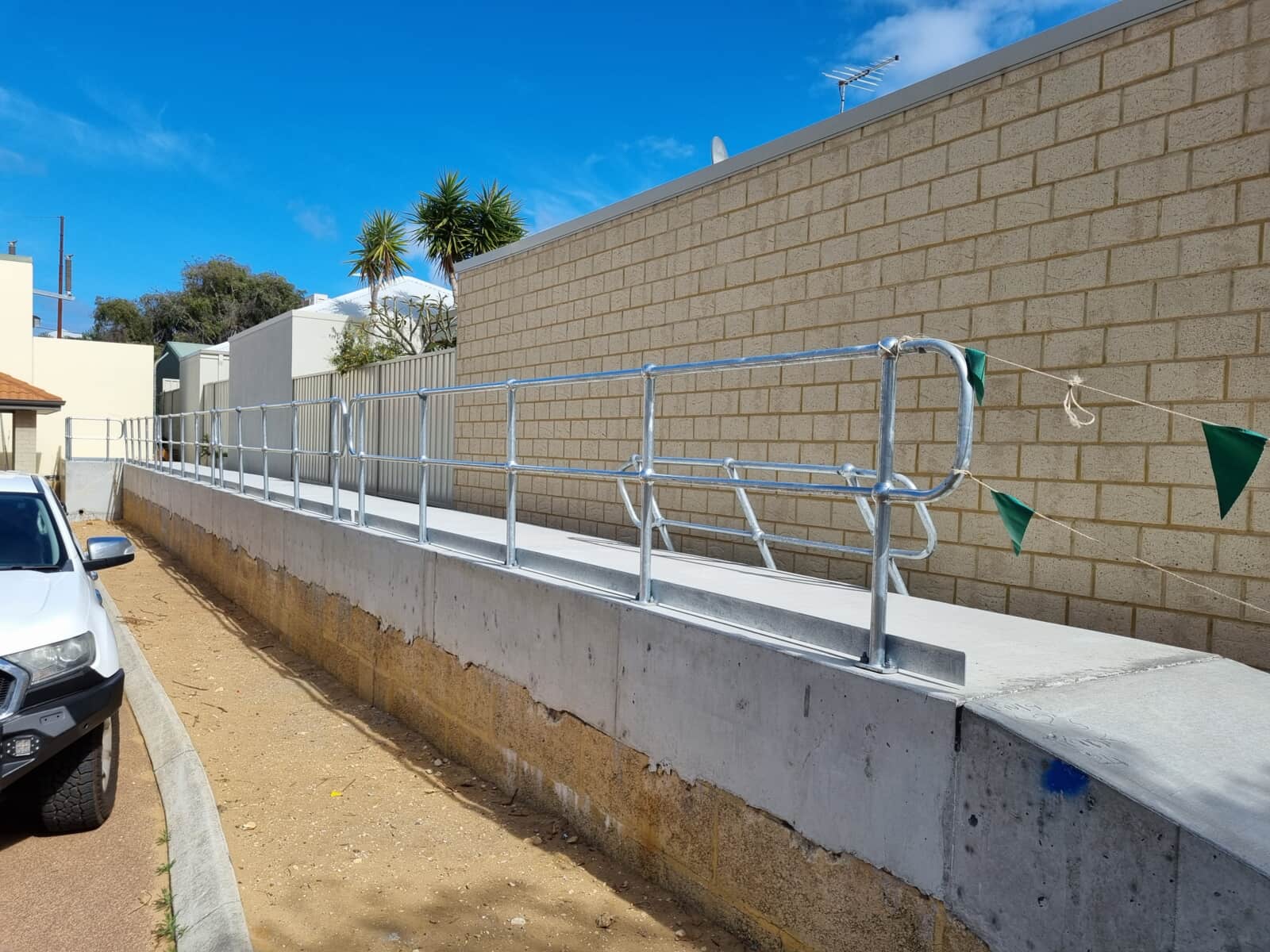
Installed handrailing at Osborne Park Substation
Project Details
- Location
- Osborne Park, Perth, Western Australia, Australia
- Sector
- Electrical Infrastructure / Utilities
- Status
- Completed
- Project Value
- $$
- Completion Date
- September 2024
- Standards
- AS1657 - Fixed platforms, walkways, stairways and ladders Electrical infrastructure technical specifications WorkSafe WA requirements Electrical safety standards