Modular Transformer Access Platforms - Milligan Street Substation
Project Summary
Installing access platforms on top of electrical transformers inside an energized substation presents challenges that would make most fabricators reconsider their approach. Seriously. When our client needed two platforms for the Milligan Street Substation, the constraints seemed almost impossible—the platforms had to be carried through narrow transformer bay doorways, lifted manually to the top of transformers, and assembled on-site without crane access, all while maintaining full AS1657 compliance and working around live electrical equipment that could kill instantly if safety protocols were violated.
This project required us to completely rethink how platforms are designed and constructed, because conventional approaches simply wouldn’t work in this environment. We couldn’t simply scale down a conventional platform and hope it would fit through doorways. We needed to engineer modular systems where every component could be manually handled by a two-person crew, fit through restricted doorways that weren’t designed for large fabricated structures, and still create robust, code-compliant platforms once assembled. The solution demanded precision engineering that balanced weight constraints, dimensional limitations, structural requirements, and safety standards simultaneously—a juggling act that required careful analysis and innovative thinking rather than simply applying standard solutions.
Understanding the Installation Environment
Transformer bays in substations aren’t designed for easy access. The doorways are sized for personnel and equipment that needs to fit through them, not for large fabricated structures that would normally be lifted into place by crane. The transformers themselves sit in confined spaces with limited clearance around them—spaces designed to house transformers, not to provide generous working room for installation crews. There’s no room for cranes, forklifts, or other lifting equipment inside the bays, because the bays simply weren’t designed to accommodate such equipment. Everything that goes in must be carried by hand. Everything that gets installed on top of transformers must be lifted manually by installation crews working in confined spaces.
The platforms needed to provide safe access for maintenance personnel working on transformer tops, because transformers require regular inspection and maintenance that can’t be performed safely without proper access. Transformers require regular inspection. Maintenance. Testing. Workers need secure footing and fall protection while performing this work, which often involves working with tools and equipment while standing on top of large electrical equipment. The platforms had to meet AS1657 standards for fixed platforms, including proper handrailing, non-slip surfaces, and structural integrity that would protect workers even under adverse conditions. These aren’t negotiable requirements—they’re fundamental safety standards that protect workers in industrial environments where falls can be fatal.
Working around energized electrical equipment adds another layer of complexity that can’t be ignored or minimized. Installation crews need to maintain safe clearances from live components that carry thousands of volts. The work needs to be coordinated with substation operations to minimize disruption to power service. Every aspect of the installation process needs to account for the electrical hazards present in the environment, because mistakes around high-voltage equipment don’t offer second chances.
Engineering Modular Platform Systems
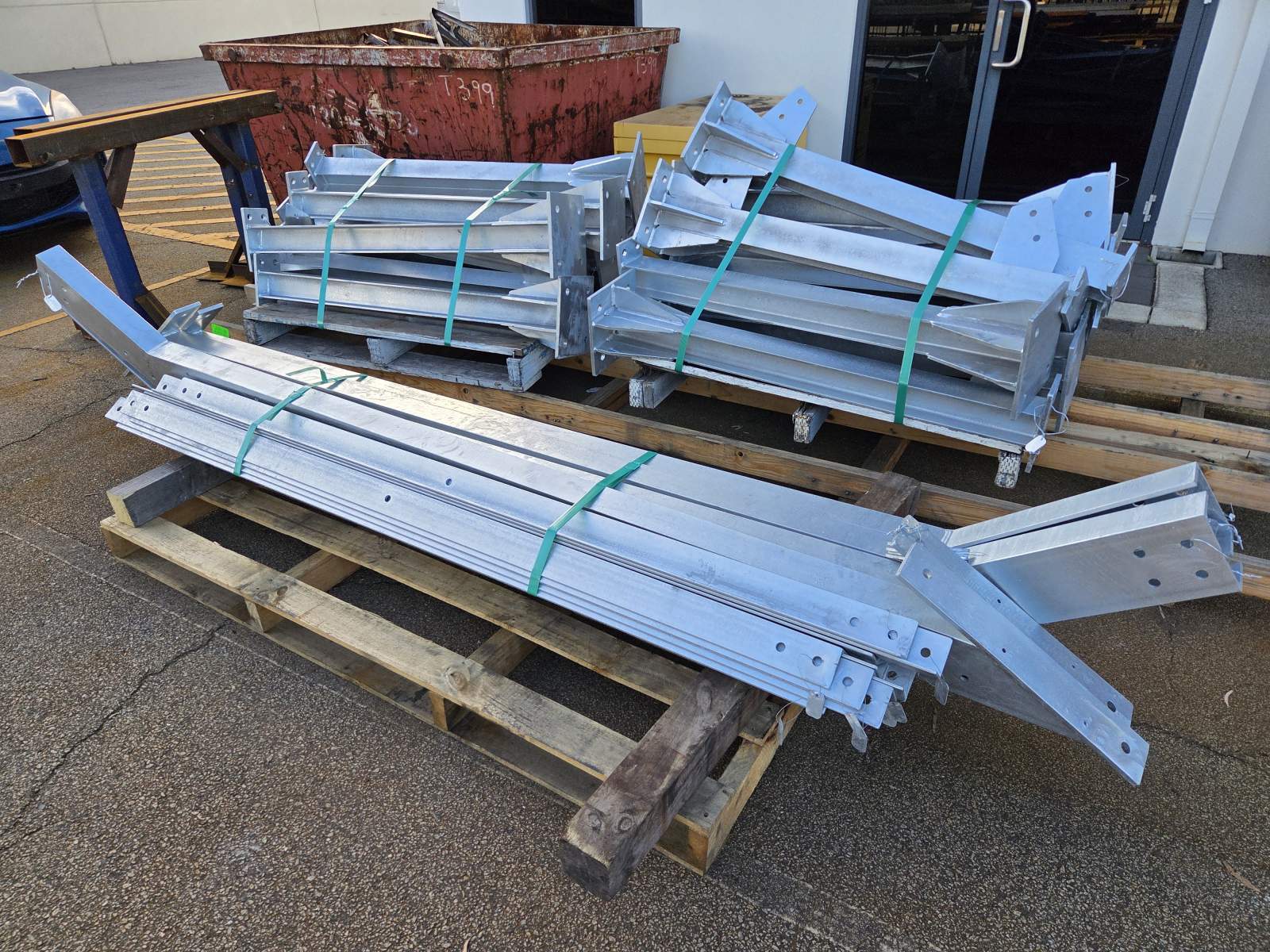
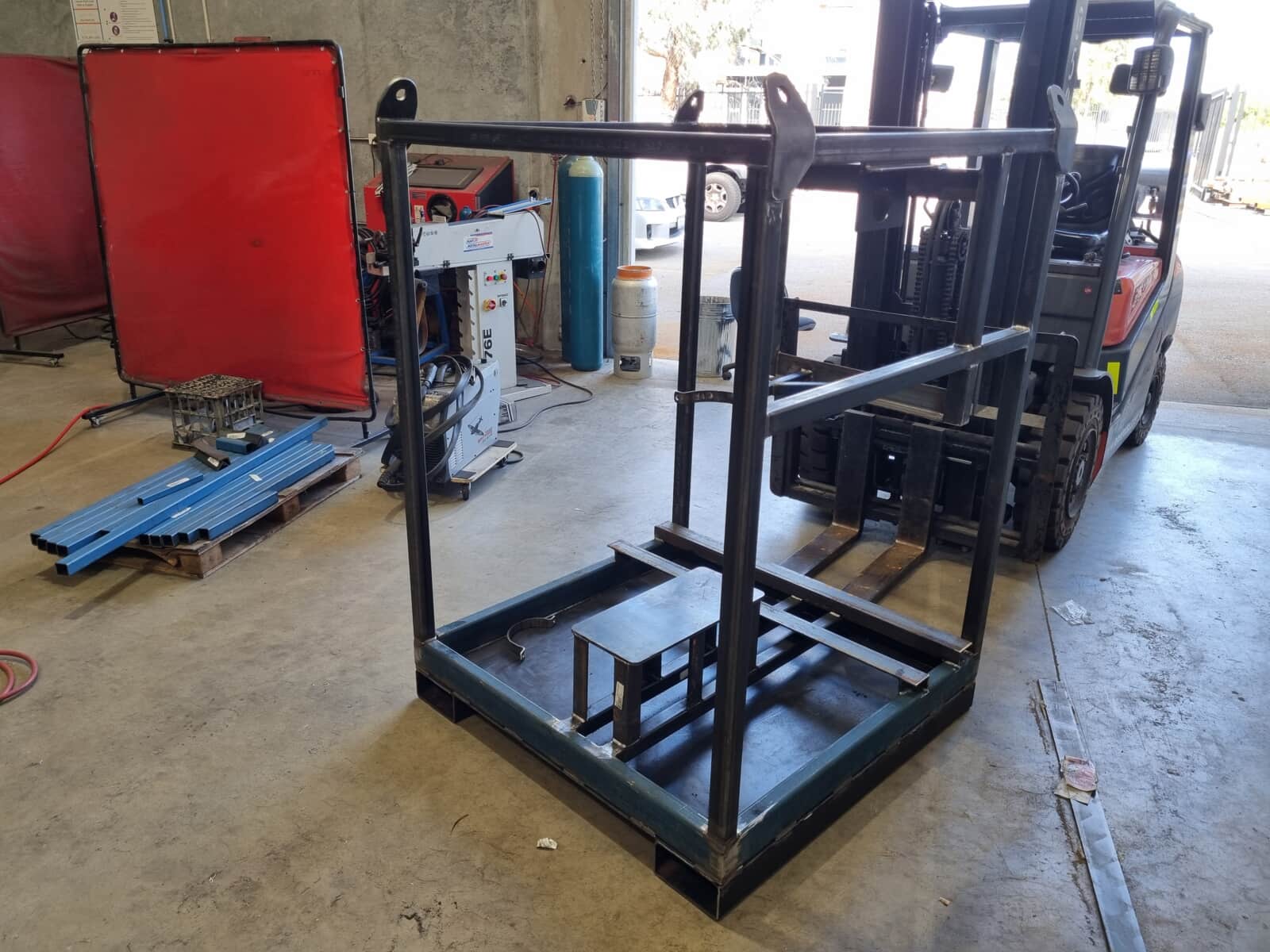
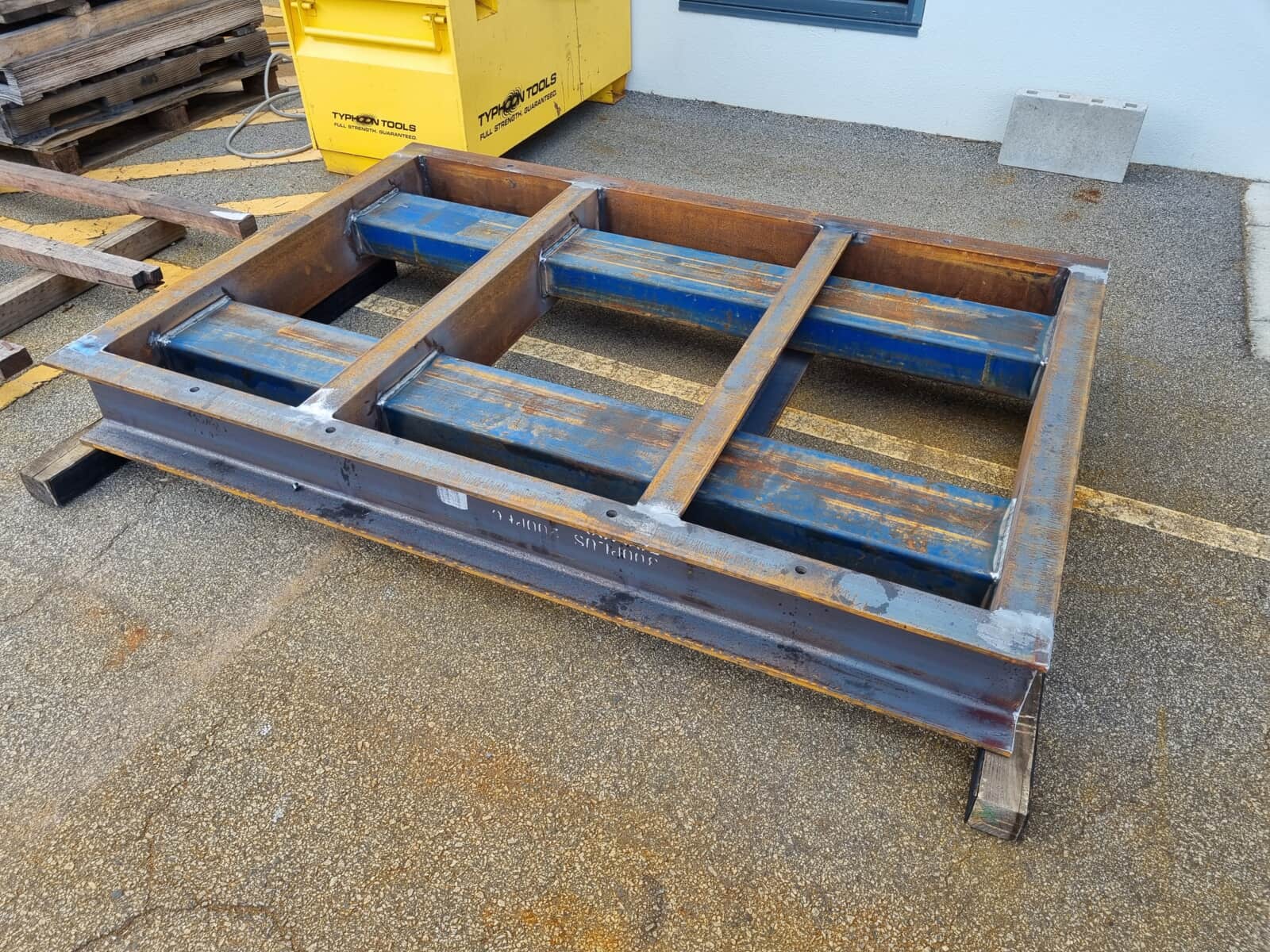
We designed two complete access platform and handrail systems, each broken down into modules that could be carried through the transformer bay doorways and lifted to transformer tops by two-person crews working in confined spaces. The key was determining the maximum size and weight for each module—large enough to minimize the number of pieces that would need to be handled and assembled, but small enough to fit through doorways and light enough for safe manual handling by crews who would be working in awkward positions.
Each module weighs less than 50 kilograms. This weight target drove every design decision we made throughout the engineering process. We optimized the structural members to provide necessary strength with minimal material, because every gram of unnecessary material would make the modules heavier and harder to handle. We positioned connection points to distribute loads effectively while keeping the modules manageable for two-person crews. We designed the geometry to maximize platform area while staying within dimensional constraints imposed by doorways and working spaces.
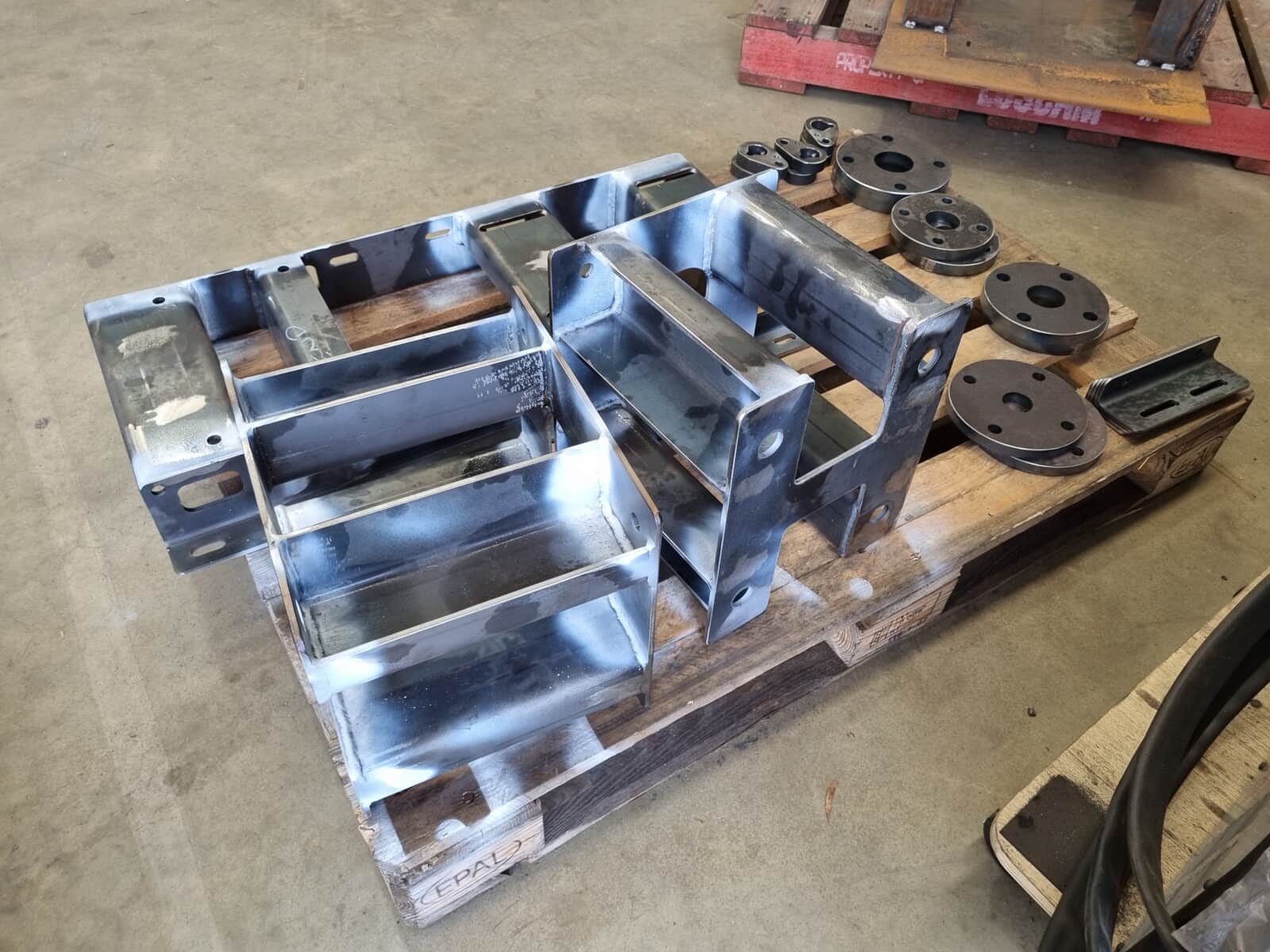
The bolt-together connection system creates structural joints that perform as well as continuous construction—not almost as well, but actually as well. The connections aren’t just mechanical fasteners holding pieces together. They’re engineered to transfer loads properly and maintain platform integrity under all operating conditions, including the dynamic loads created when workers move across the platform carrying tools and equipment. The bolt holes are precision-drilled so modules align naturally during assembly, eliminating the frustration and wasted time that comes from trying to force misaligned connections together. When two modules come together, the holes line up if the modules are positioned correctly—a self-aligning feature that makes installation practical rather than an exercise in frustration.
The handrailing system integrates into the modular design rather than being added afterward as an afterthought. Specific modules include handrail sections that meet AS1657 requirements for height, strength, and positioning—requirements that exist because they’ve been proven to prevent falls and save lives. As platform modules are assembled, the handrails come together with them, reducing the number of separate components installers need to manage and ensuring the handrails are properly integrated into the platform structure rather than being loosely attached additions.
Sequential Installation Process
The installation sequence was carefully planned to ensure each step could be completed safely and efficiently, because improvising installation procedures around high-voltage equipment is a recipe for disaster. Modules are carried through the transformer bay doorway one at a time, then positioned near the transformer where they’re staged for lifting. Two-person crews lift each module to the transformer top, where it’s positioned and connected to previously installed modules using the bolt-together connection system. The process builds progressively, with each module adding to the growing platform structure in a logical sequence.
The first module establishes the foundation—it needs to be positioned accurately because subsequent modules align to it, and errors in positioning the first module compound as additional modules are added. Once the first module is secure, additional modules bolt on in sequence, each one guided into proper alignment by the precision-drilled connection holes. The connection system guides the modules into proper alignment, and the bolts secure them firmly once alignment is achieved. The process continues until the complete platform is assembled, with integrated handrails providing fall protection throughout the assembly process.
This sequential approach means the platform is never in an unsafe intermediate state where workers are exposed to fall hazards. Each module that’s installed contributes to the growing structure, and the handrails are integrated as the platform develops rather than being added at the end. Workers always have secure footing and fall protection as they assemble subsequent modules, because safety can’t be compromised during installation any more than it can be compromised during operation.
Hot-Dip Galvanized Durability
The hot-dip galvanized finish provides comprehensive corrosion protection that will maintain platform integrity throughout decades of service in Perth’s climate. Consistent weld quality throughout is fundamental to this kind of work — our structural steel fabrication standards ensure every joint performs as designed under both static and dynamic loading. Substations are harsh environments. Moisture. Industrial atmosphere. Temperature variations. All of these factors challenge materials and accelerate corrosion in unprotected steel. The galvanized coating protects the steel from corrosion, ensuring the platforms will maintain their structural integrity and appearance over their entire service life rather than degrading and requiring replacement after a few years.
The non-slip surface treatment ensures safe footing in all weather conditions, because transformer tops can be exposed to rain and workers need secure footing regardless of conditions. The surface treatment provides traction without creating horizontal surfaces where water could pool or debris could accumulate and create slip hazards.
Practical Innovation for Critical Infrastructure
What makes these platforms particularly effective is how they solve real-world installation challenges without compromising on safety or compliance—a balance that’s harder to achieve than it might seem. Our client needed platforms installed in locations where conventional installation methods were impossible due to access restrictions and the presence of energized equipment. Rather than accepting that limitation as insurmountable, we developed an approach that made the installation practical while maintaining every safety standard and structural requirement that applies to fixed platforms.
The two platforms we delivered enable safe maintenance access to transformers that previously required workers to use less secure methods that increased risk. The modular design that made installation possible doesn’t compromise the platforms’ performance—once assembled, they provide the same safety and functionality as conventionally installed platforms that were lifted into place by crane. The difference is that these platforms could actually be installed in the restricted environment of the transformer bays, making them practical rather than merely theoretical solutions.
This project demonstrates how fabrication expertise extends beyond welding and cutting metal to encompass understanding the complete project context—from custom design and engineering through installation to long-term service in demanding environments. Understanding the complete project context enables us to develop solutions that work in the real world rather than just looking good on paper. The modular platforms we created for this substation prove that thoughtful engineering can overcome constraints that initially seem insurmountable, delivering infrastructure that meets every technical requirement while being practical to install and maintain in challenging environments.
Project Gallery
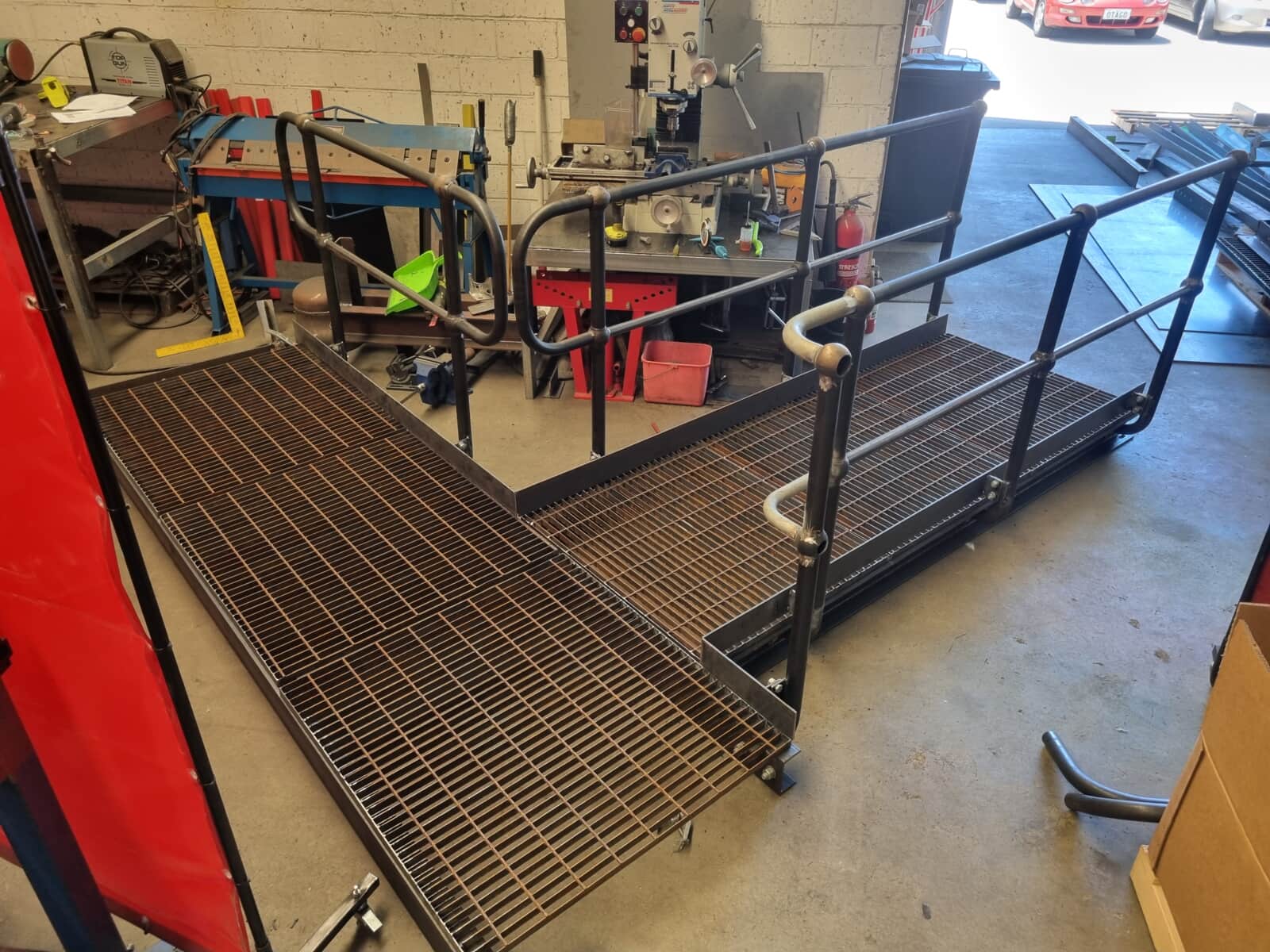
First transformer platform - front view showing modular design
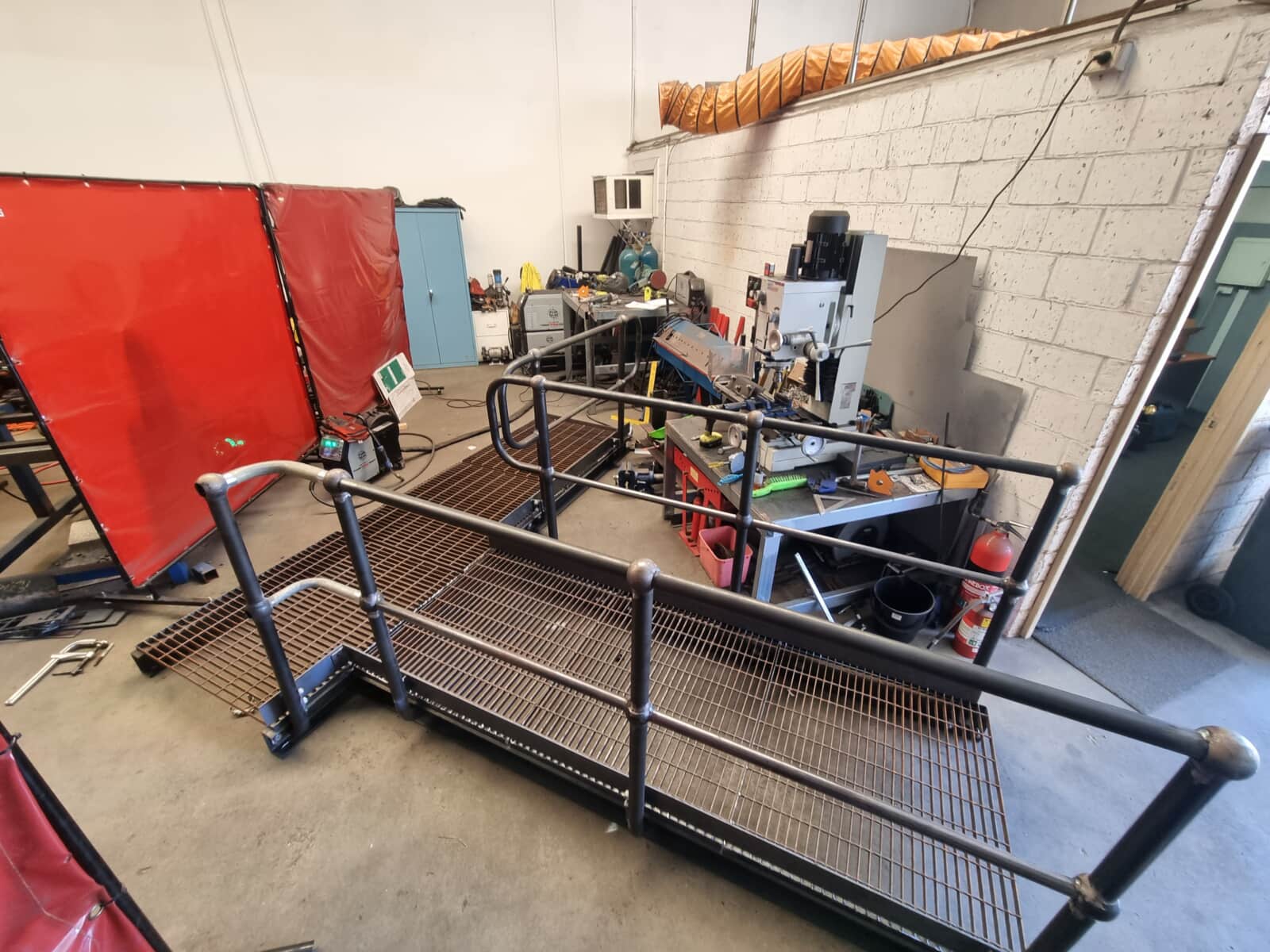
First transformer platform - side view
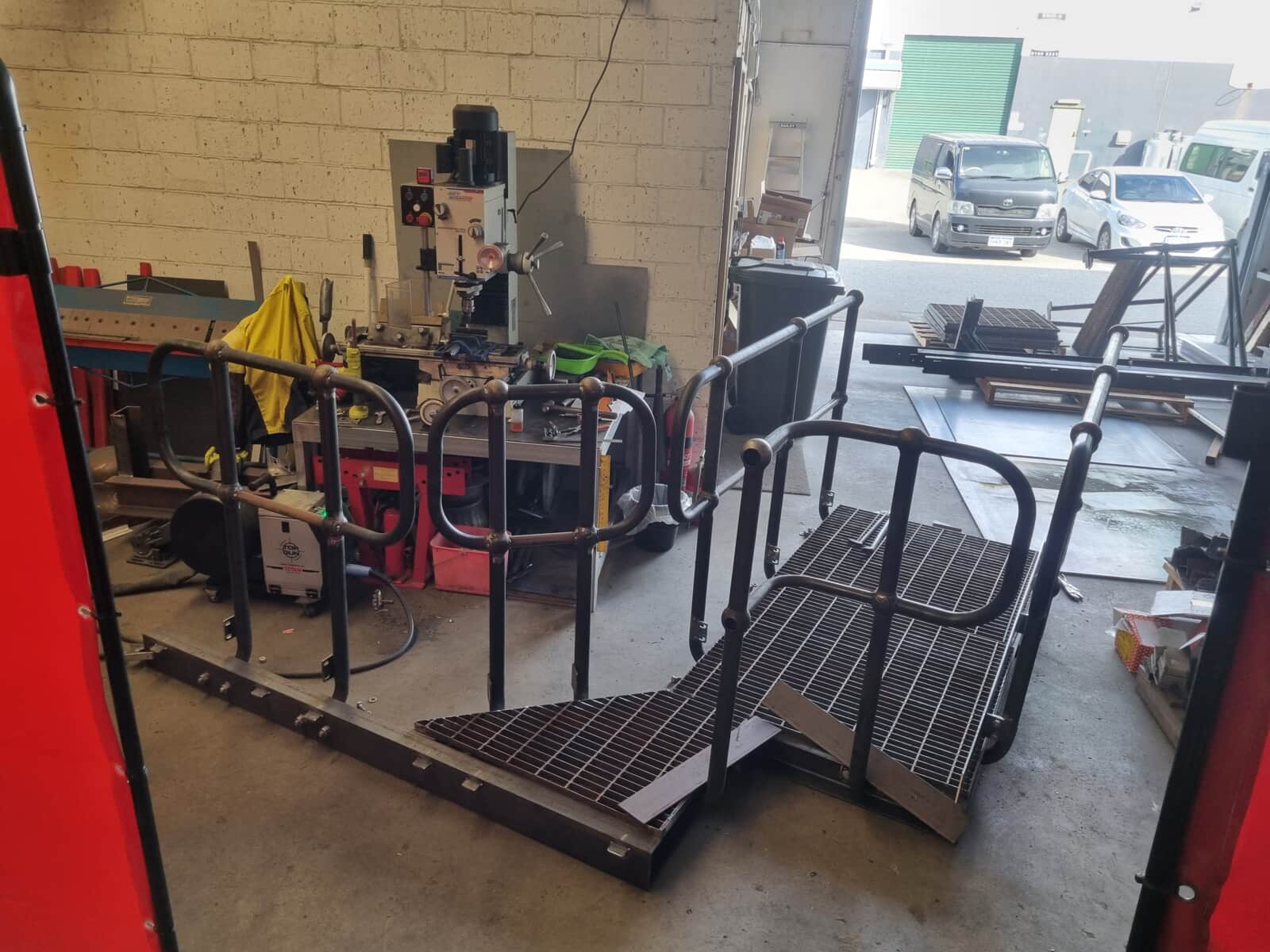
Second transformer platform - front view
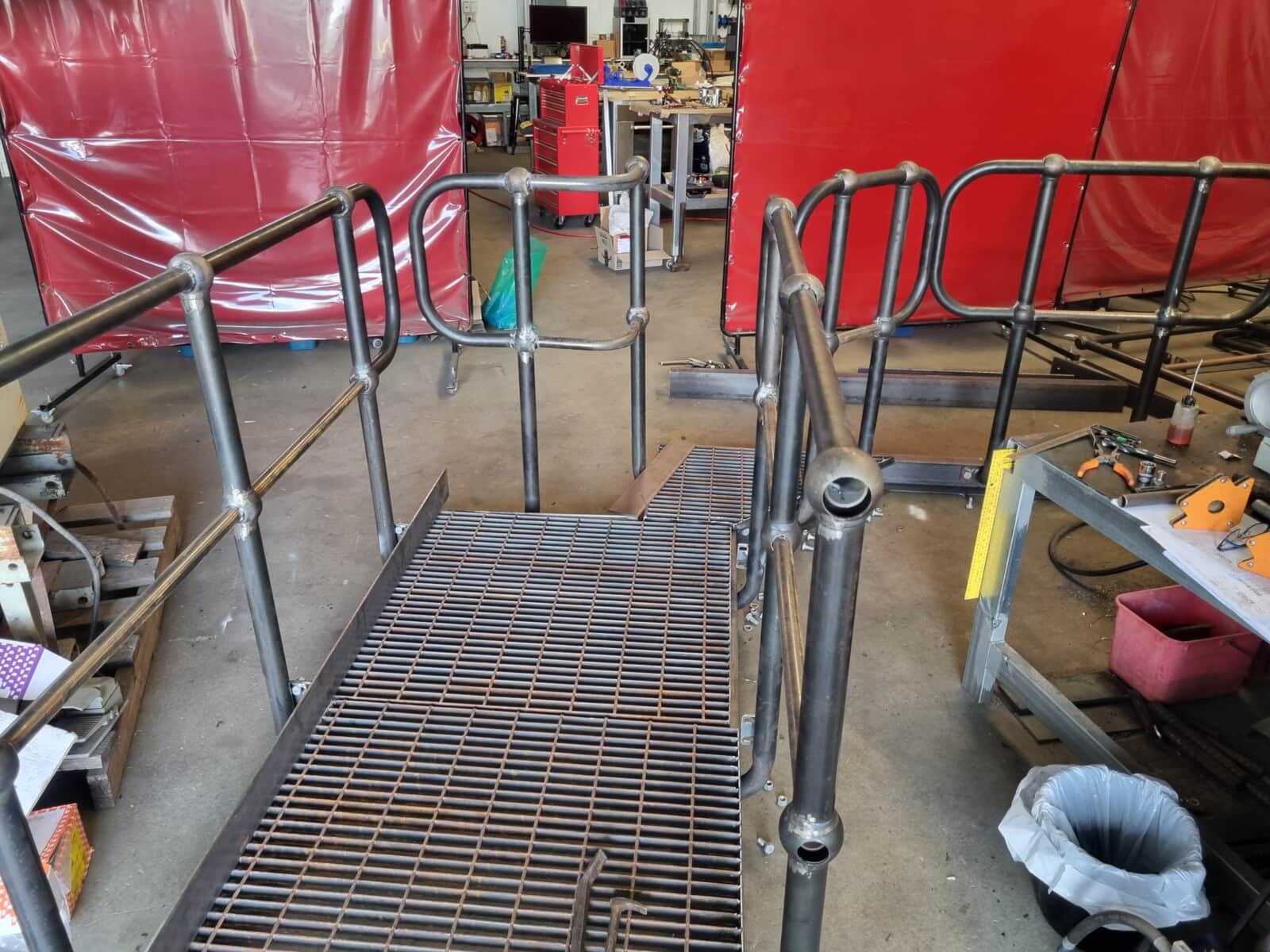
Second transformer platform - side view providing safe access
Project Details
- Location
- Milligan Street, Perth, Western Australia, Australia
- Sector
- Electrical Infrastructure / Utilities
- Status
- Completed
- Project Value
- $$$
- Completion Date
- November 2023
- Standards
- AS1657 - Fixed platforms, walkways, stairways and ladders AS1428 - Design for access and mobility WorkSafe WA requirements Electrical infrastructure technical specifications
Project Referee
Farhan Arif
Senior Project Engineer
Westforce Construction
Client Project Manager - Oversaw the transformer platform design, fabrication and installation