Industrial Mezzanine Access Stairway
Project Summary
Food production facilities face a unique challenge when it comes to access equipment. Everything needs to meet industrial safety standards. But also support stringent hygiene requirements that prevent contamination. When our client needed a stairway to their new mezzanine packing area, they required more than just AS1657 compliance—the stairway needed to be designed from the ground up to minimize dust and debris accumulation, facilitate regular cleaning, and integrate seamlessly into their food production environment where hygiene isn’t just important, it’s fundamental to their operation and their reputation for quality products.
Traditional industrial stairways with solid treads and enclosed risers create horizontal surfaces where flour dust, debris, and moisture can accumulate like snow on a roof. In a bagel production facility where flour is constantly in the air and cleanliness is critical to preventing contamination, these horizontal surfaces become contamination risks that require constant attention and create ongoing maintenance burdens. We needed to design a stairway that would provide safe, compliant access while minimizing the surfaces where contaminants could collect—not just making cleaning easier, but fundamentally reducing what needs cleaning in the first place.
Designing for Food Production Hygiene
The key to hygiene-focused stairway design is understanding how contaminants behave in food production environments where the physics of particles and moisture create predictable patterns. Flour dust settles on horizontal surfaces. Moisture from cleaning operations can pool in corners and crevices. Debris from packaging materials can accumulate in joints and gaps. A stairway designed for a typical industrial environment would create dozens of locations where these contaminants could collect, requiring extensive cleaning to maintain hygiene standards that food production demands.
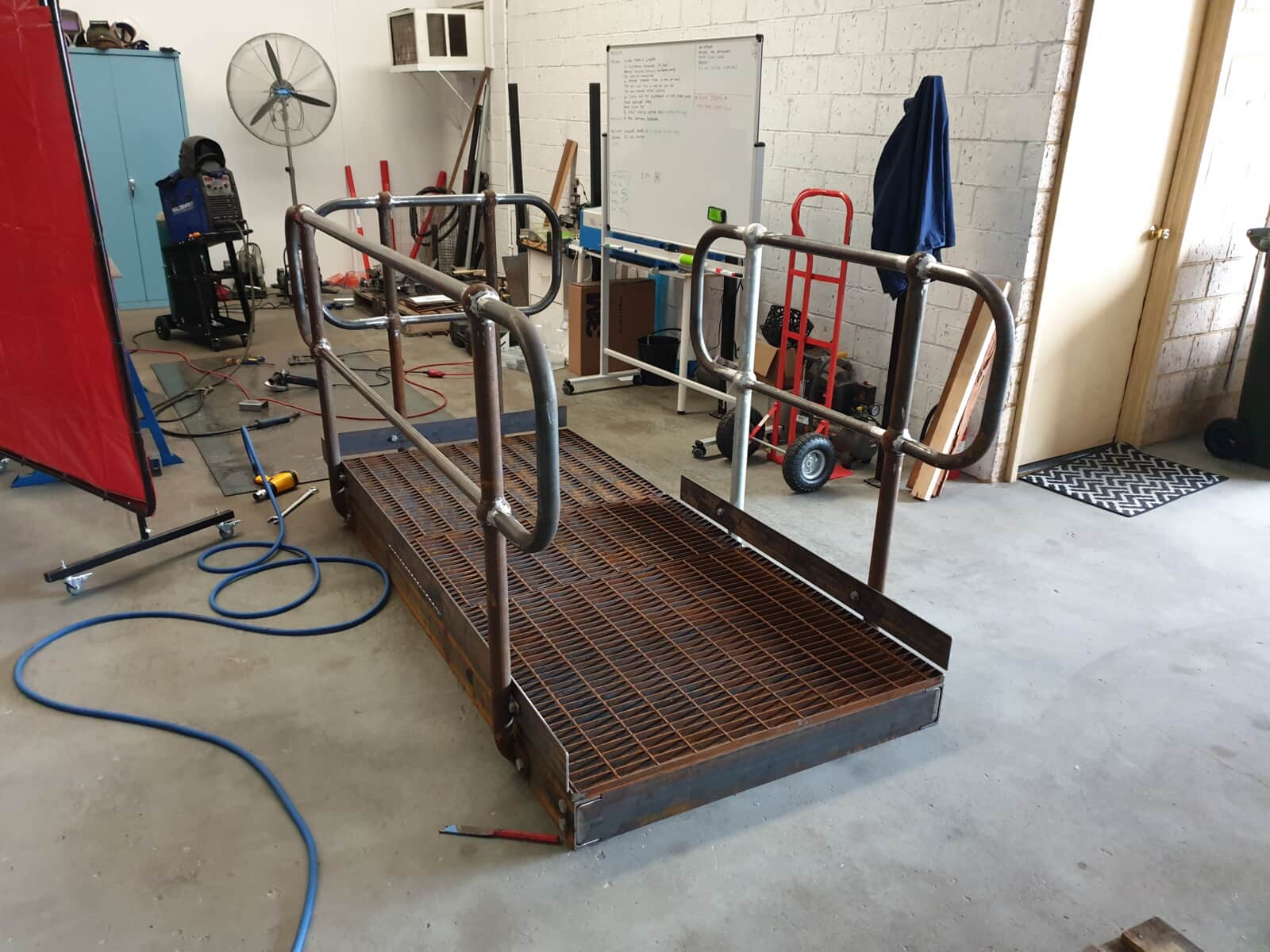
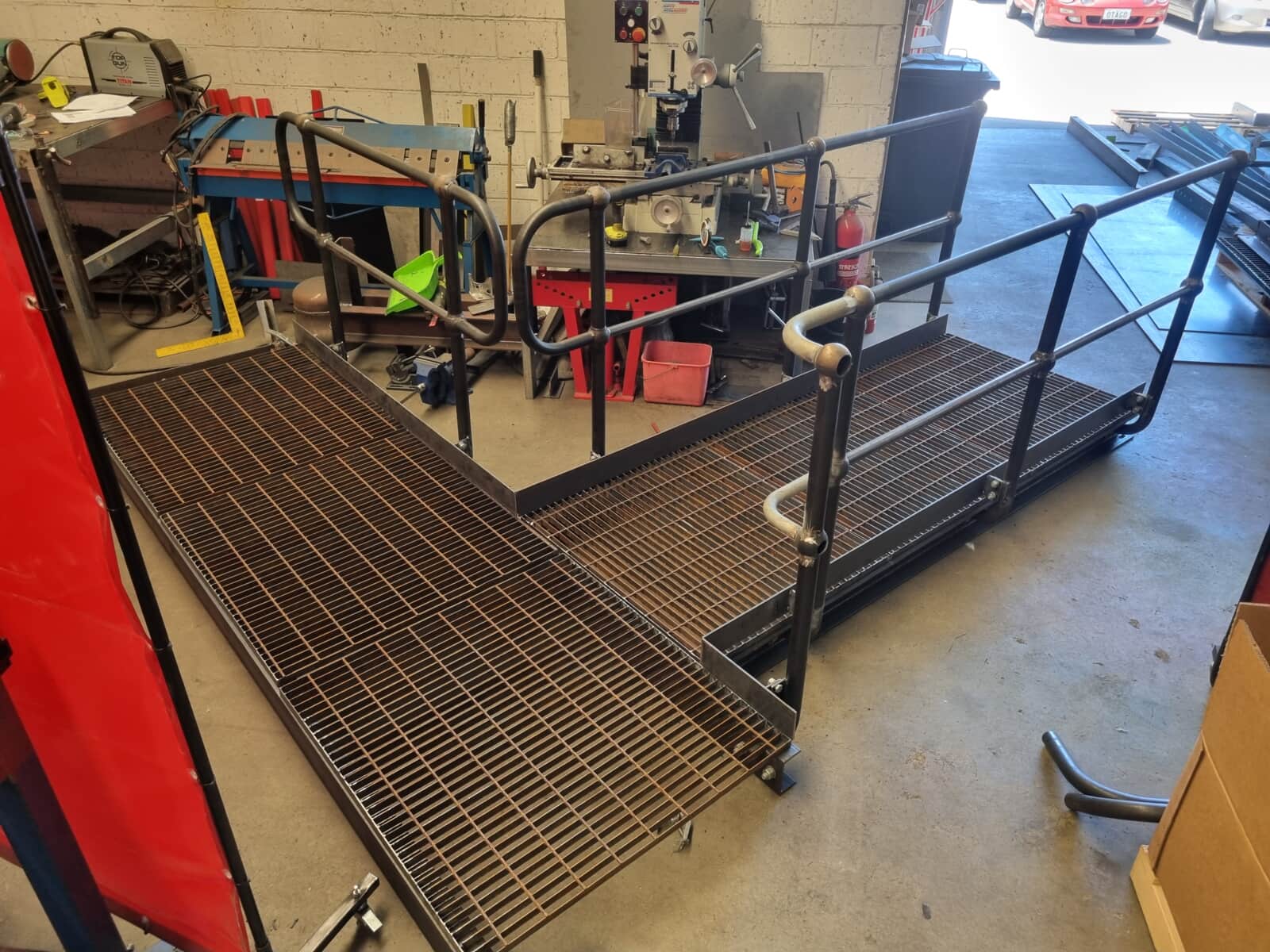
We designed the stairway with open treads that eliminate the horizontal surfaces where dust and debris typically accumulate in traditional stair construction. Instead of solid treads that catch everything that falls on them like shelves collecting dust, the open design allows particles to fall through rather than collecting—a simple principle that dramatically reduces contamination risk. This isn’t just about making cleaning easier. It’s about fundamentally reducing the surfaces that need cleaning in the first place.
The tread design uses perforated or grated construction. Secure footing. Open character that prevents accumulation. The perforations are sized to prevent debris buildup while ensuring the treads remain comfortable and safe for staff using the stairs multiple times per day during production shifts. The non-slip surface treatment provides traction without creating texture that could trap contaminants in microscopic crevices.
We minimized horizontal surfaces throughout the stairway structure wherever possible. Where horizontal members are necessary for structural integrity—and some are unavoidable in stair construction—we angled them or designed them to shed debris rather than collecting it like gutters. The connections between components are designed to eliminate gaps and crevices where contaminants could lodge and become difficult to remove. Every aspect of the design reflects an understanding that in food production, surfaces that don’t collect contaminants are better than surfaces that need frequent cleaning, because cleaning takes time and creates opportunities for contamination during the cleaning process itself.
AS1657 Compliance in Hygiene Design
Meeting AS1657 standards while maintaining hygiene-focused design required careful engineering that balanced competing requirements. The standard specifies requirements for tread depth, riser height, handrail positioning, and structural strength—all of which need to be met regardless of the hygiene considerations that food production demands. The challenge was achieving compliance while maintaining the open, easy-to-clean design that food production requires, because the standard wasn’t written specifically for food production environments.
The stairway dimensions follow AS1657 requirements for rise and going, ensuring comfortable and safe use by staff who climb these stairs dozens of times per shift. The handrails on both sides meet height and strength requirements, providing secure support while being designed for easy cleaning without crevices where contaminants could hide. The handrail construction uses smooth, continuous surfaces without unnecessary joints or crevices that would create cleaning challenges. The mounting brackets are designed to minimize horizontal surfaces and facilitate cleaning around connections where dirt typically accumulates.
The structural framework provides the strength required by AS1657 while maintaining the open design philosophy that hygiene demands. The stringers are sized appropriately for the loads they’ll carry—not just static loads but dynamic loads from staff traffic. The connections between treads and stringers are engineered to transfer loads properly while being accessible for cleaning without disassembly. The entire structure is designed to handle the dynamic loads of staff traffic while maintaining its integrity throughout years of service in a demanding food production environment.
Food-Safe Materials and Finishes
The materials and finishes we selected reflect the food production environment where chemical compatibility and cleanability are critical. The steel construction provides the strength and durability needed for industrial stairs that will see heavy use, while the finish ensures compatibility with food safety requirements that govern what materials can be used near food products. We applied food-safe coatings that protect the steel from corrosion while being appropriate for use in food production areas where contamination must be prevented.
The powder coat finish provides a smooth, cleanable surface that resists moisture and can withstand regular cleaning with food-safe sanitizers that would damage ordinary paint finishes. The finish is durable enough to handle the wear of daily traffic without degrading or creating rough spots where contaminants could accumulate in damaged areas. The color and finish quality contribute to the professional appearance expected in a modern food production facility where customers sometimes tour.
The non-slip tread surface provides safety without creating texture that traps contaminants in microscopic pockets. The treatment is durable enough to maintain its effectiveness throughout years of use while remaining cleanable with standard food production cleaning protocols that use specific chemicals and procedures.
Integration with Production Workflow
The stairway provides access to the mezzanine packing area, where finished bagels are packaged for distribution to customers throughout Perth. Staff use the stairs frequently throughout production shifts, moving between the production floor and packing area as products flow through the facility. The stairway needed to support this traffic flow efficiently while maintaining the hygiene standards critical to food production—no bottlenecks, no contamination risks, no safety compromises.
The positioning and width of the stairway accommodate the traffic patterns without creating bottlenecks during busy production periods when multiple staff members need to move between levels. Staff can move up and down safely even during peak times. The handrails on both sides provide support regardless of which direction staff are traveling—important when carrying items or moving quickly. The open tread design means staff aren’t tracking accumulated debris between levels—particles fall through rather than being carried on shoes from one level to another.
The stairway integrates with the existing mezzanine structure through connections designed for both structural integrity and hygiene considerations. The mounting points are sealed properly to prevent gaps where contaminants could accumulate and become difficult to clean. The transition from stairway to mezzanine floor is smooth and cleanable, without creating trip hazards or contamination risks that would compromise either safety or hygiene.
Practical Hygiene Engineering
What makes this stairway effective isn’t complex technology or expensive materials. It’s thoughtful design that understands the real-world requirements of food production. Our client needed safe access to their mezzanine that wouldn’t create ongoing hygiene challenges requiring excessive maintenance attention. The open tread design, minimal horizontal surfaces, and easy-to-clean construction deliver exactly that.
The stairway requires less cleaning time than traditional designs because there are fewer surfaces where contaminants can accumulate—a direct cost saving in labor. When cleaning is performed, the open design makes it easier to reach all surfaces and verify cleanliness visually without disassembly. The food-safe finishes withstand regular cleaning without degrading or requiring recoating. The result is access equipment that supports both safety and hygiene without requiring excessive maintenance attention that would burden staff.
This project demonstrates how fabrication expertise extends beyond simply meeting codes and standards that represent minimum requirements. Understanding the specific requirements of food production environments—the hygiene challenges, the cleaning protocols, the contamination risks—enables us to design solutions that work in the real world rather than just on paper. The stairway we created provides safe, compliant access while supporting the hygiene standards that are fundamental to food production operations and a commitment to quality.
Project Gallery
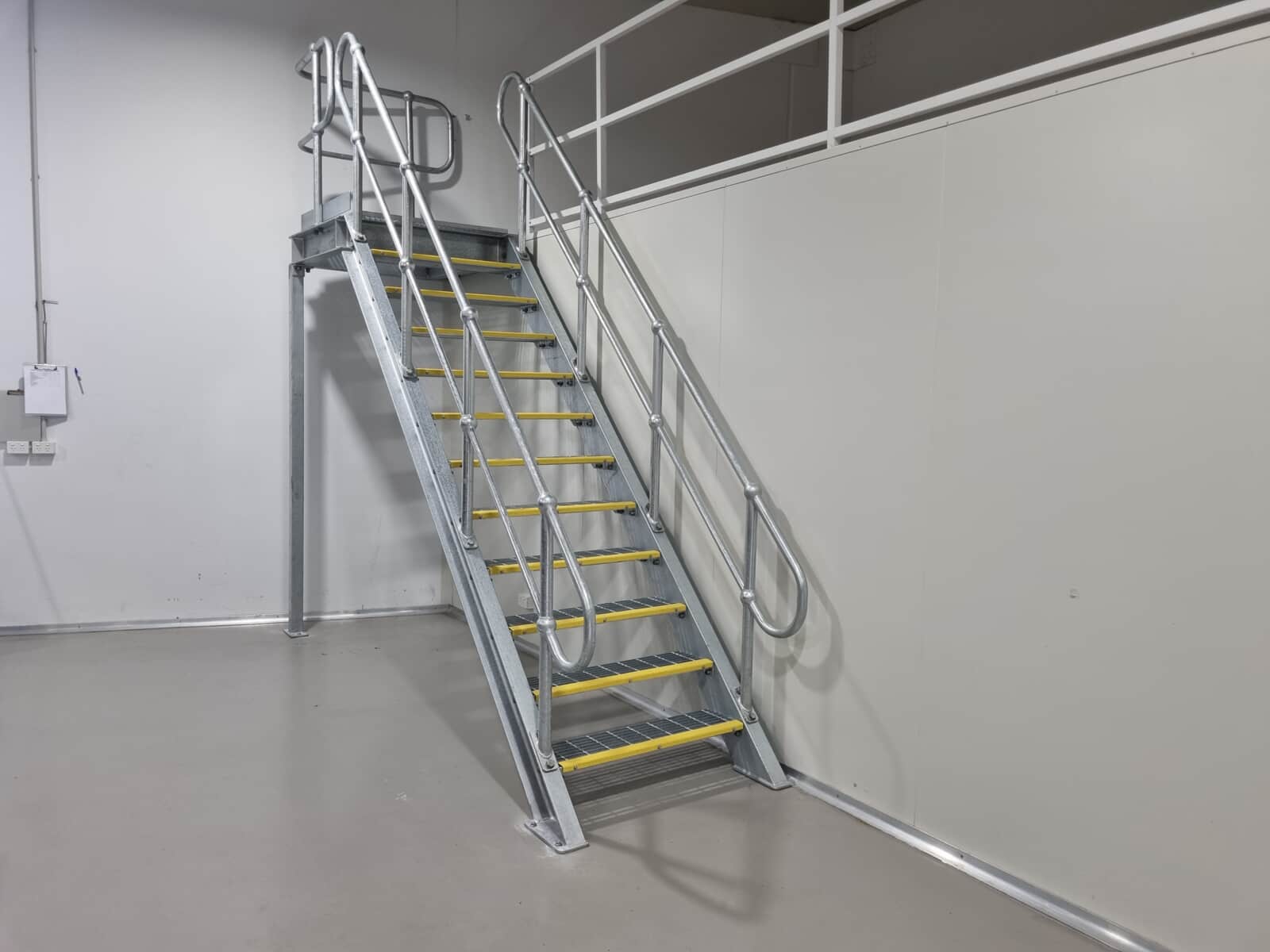
Completed mezzanine access stairway with hygiene-focused design - front view
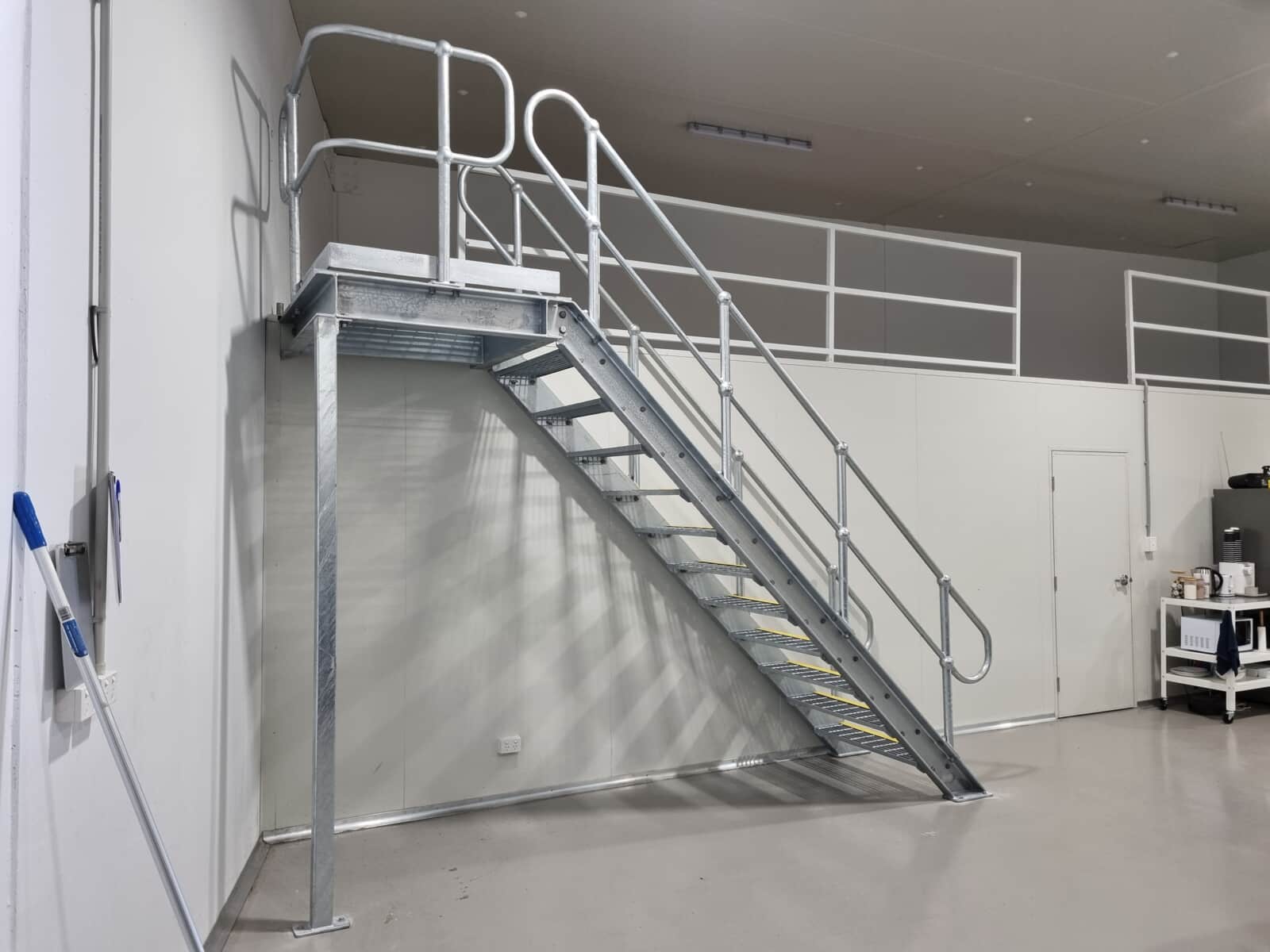
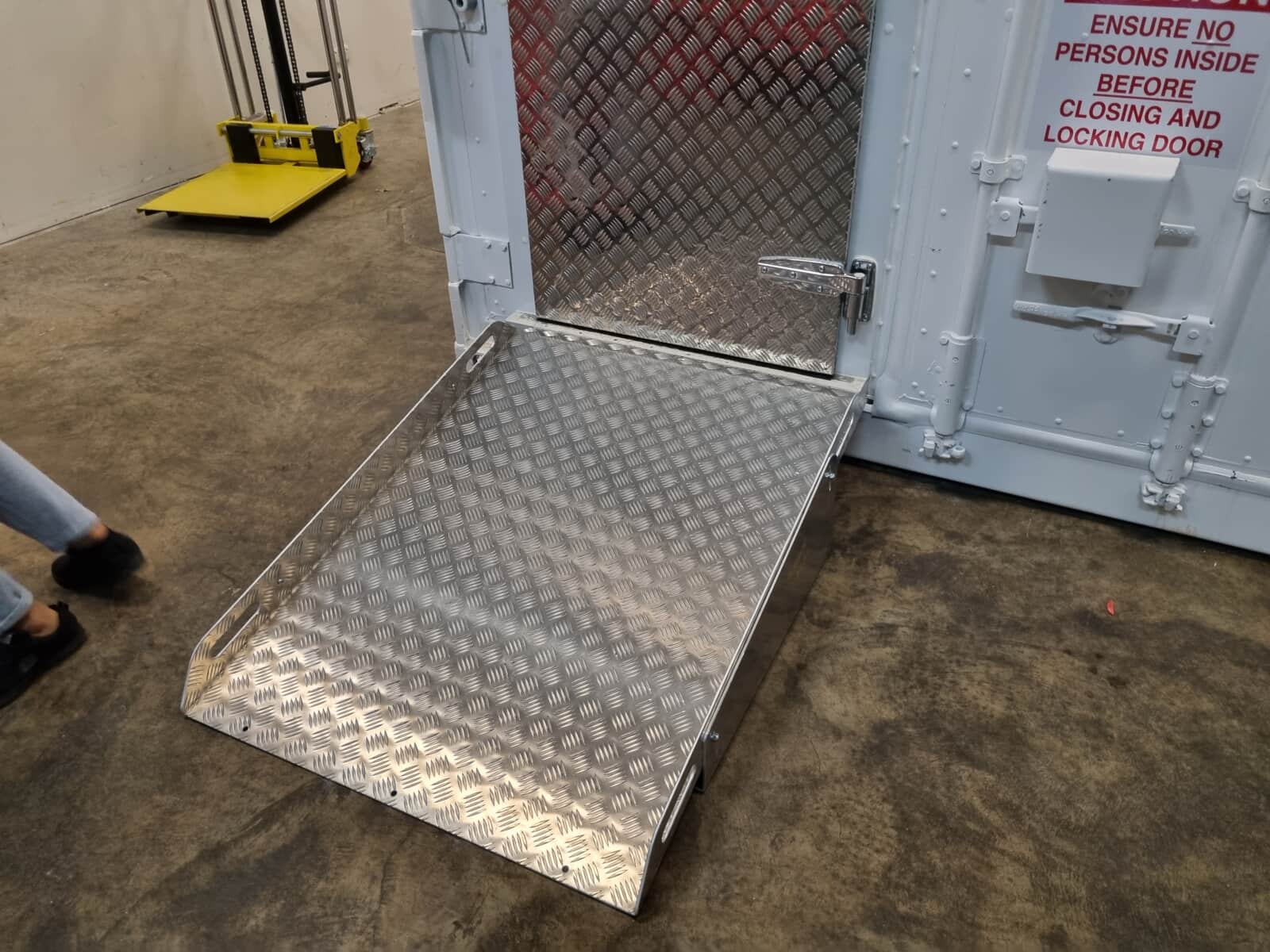
Side view showing open tread design for hygiene
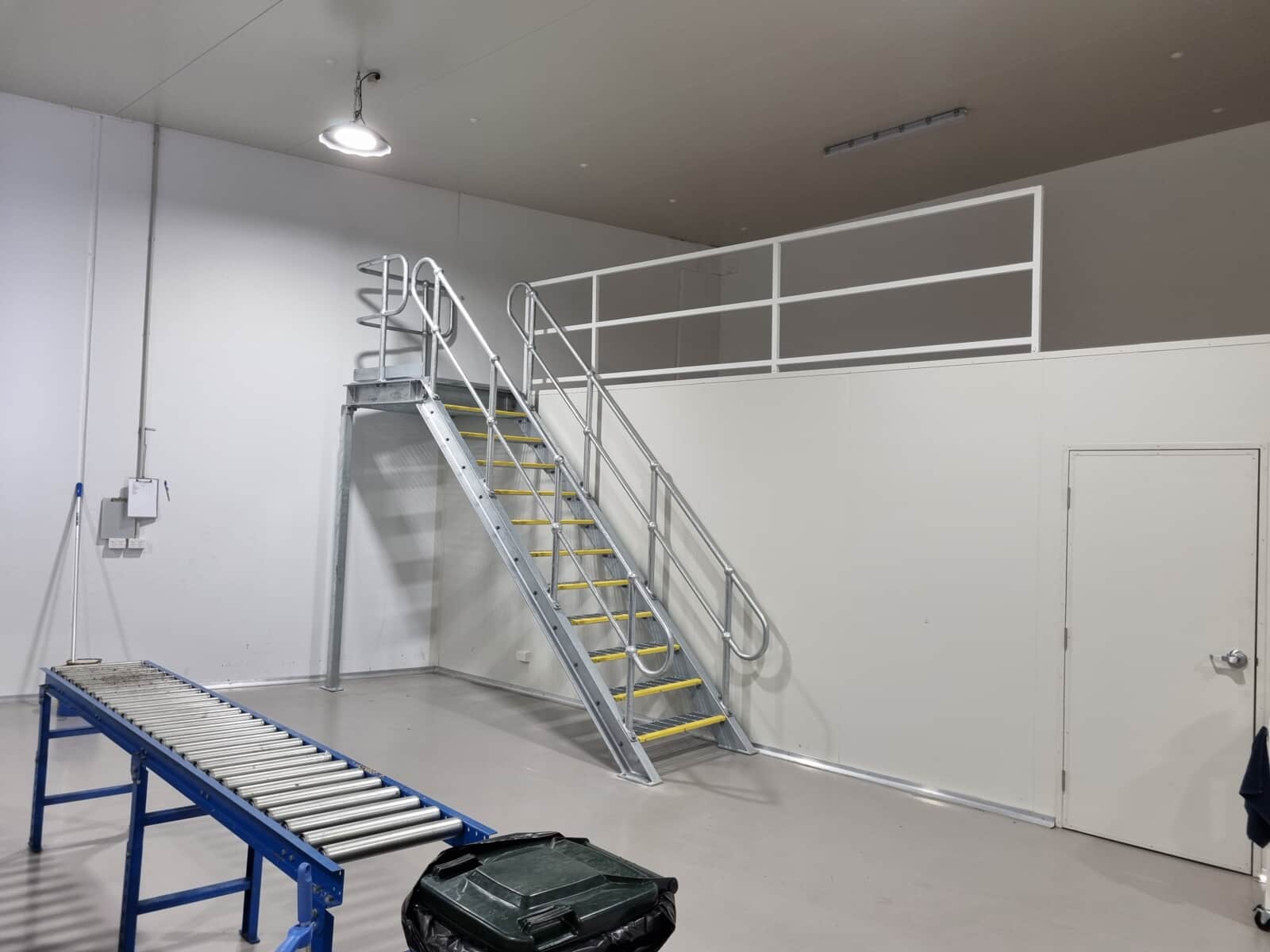
Installed stairway at food production facility
Project Details
- Location
- Canning Vale, Perth, Western Australia, Australia
- Sector
- Food Production / Manufacturing
- Status
- Completed
- Project Value
- $$$
- Completion Date
- July 2024
- Standards
- AS1657 - Fixed platforms, walkways, stairways and ladders AS1428 - Design for access and mobility Food safety and hygiene standards WorkSafe WA requirements Building Code of Australia