Diesel Welder Roll Frame Fabrication Perth — AS1554 Certified
Project Summary
Diesel welders are among the most expensive and frequently used pieces of equipment on a mine site. They travel constantly between work fronts, and the transport cycle is where most of the damage happens — shifting loads, crane lifts, and the general rigours of getting a heavy machine around a site. Diesel welder roll frame fabrication is how we address that problem: a purpose-built structural steel frame that protects the machine while giving the fitters, riggers, and operators safe lifting and handling provisions.
Elite Engineering WA designed and fabricated a batch of roll frames for a mining and industrial client. Each frame was built around the specific footprint of a diesel welder, with forklift pockets integrated into the base and lifting lugs on top. The roll frames are not a generic cage around the machine — the geometry was worked out so the welder sits securely, stays accessible for daily checks, and can be lifted safely with a crane or moved with a forklift without needing to be unpacked first.
Project Context
Mine sites use diesel welders on everything from routine maintenance to emergency breakdown response. The machines see constant movement — driven to one front, then lifted onto a truck, then lifted off, then moved again. Every lift and every move is a chance for impact damage to the machine housing, the engine enclosure, or the welder internals. Without a dedicated transport frame, the alternative is makeshift solutions: timber blocks, chain wraps, or bolting the machine to the back of a tray. Those work once or twice, but they damage the machine over time and create a safety risk whenever the riggers have to lift an awkward, unbalanced load.
The client needed a solution that could be used repeatedly, lifted safely, and protect the machine through a long service life on site. The brief was straightforward: build a roll frame that gives the operator the same peace of mind every time the diesel welder gets moved.
Design Requirements
A roll frame for a diesel welder has to balance protection with practicality. If the machine can’t be checked easily, if the fuel filler is hidden, or if the operator has to undo six bolts just to check the oil, the frame won’t get used. The design had to satisfy three things:
- Machine protection — the roll frame had to absorb impacts and prevent contact damage to the welder’s housing, engine enclosure, and control panel
- Lifting and handling provisions — forklift pockets on the base for yard and site movement, top-mounted lifting lugs rated for the full combined weight of the frame and the machine
- Access and visibility — the operator still needs to see the engine bay, reach daily service points, and get the machine in and out of the frame without special tools
The lifting provisions are the critical engineering point. Lifting a loaded roll frame puts much higher forces through the lugs than lifting an empty frame, and the lugs need to be sized and positioned so the load is balanced. Off-centre lifting lugs create a tilt, which puts eccentric loads through the welds and makes the rigging crew’s job harder. The lugs on these frames were positioned based on the actual centre of gravity of the diesel welder inside the frame.
Solution
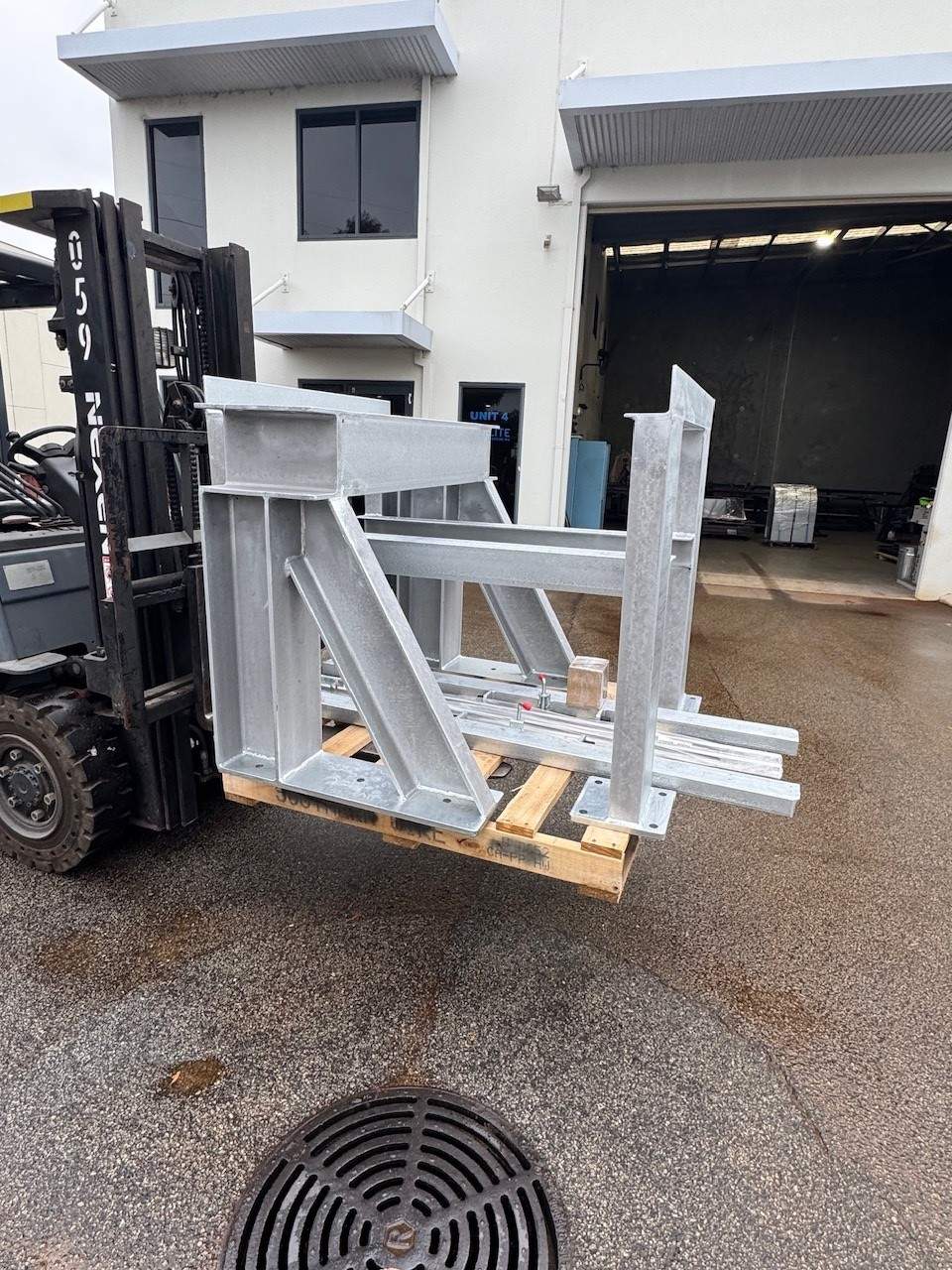
The solution was a modular roll frame design built from structural steel tube and plate, designed and detailed in our Forrestdale workshop so the fabrication team could work efficiently on a batch of identical units. The base frame incorporates forklift pockets — the same configuration used on skid frames and plant transport units we’ve built for similar applications. The top section is a roll cage arrangement that wraps around the diesel welder without enclosing it completely. Every side stays open enough for the operator to see in and reach service points, while the top and corners take the impact loads.
Because this was a batch production job, we set up the fabrication so each frame came out the same. The tubes were cut and bent to a pattern, the lifting lugs were jiggled into position, and every frame was welded to the same AS/NZS 1554.1 Category SP standard. After fabrication, the batch was subjected to NDT inspection on all structural welds to make sure each unit met the specification before it left the workshop.
Technical Specifications
Each roll frame was fabricated from mild steel rectangular and circular hollow section, sized to carry the weight of a fully fueled diesel welder plus the dynamic loads from lifting and transport. The forklift pockets were spaced for standard counterbalance forklift carriages. The lifting lugs were calculated for the combined weight with an appropriate safety factor, and positioned so the frame lifts level when loaded.
The structural welding and NDT testing followed the same process we use on all safety-critical fabricated items: WPS-controlled welding by qualified personnel, followed by weld testing to confirm the integrity of every structural joint before the frame goes into service.
Manufacturing Process
The batch was produced in our Forrestdale workshop. The key steps were:
- Cutting and bending — structural tube and plate cut to pattern, including the forklift pocket sleeves and lifting lug gussets
- Frame assembly — the base frame jigged up first, then the roll cage sections tacked and welded in sequence so the whole assembly stays square
- Lifting lug welding — full penetration welds on all lug-to-frame connections, sized for the rated load
- Dimensional checks — each frame checked against the diesel welder footprint to confirm the machine will fit and the lifting lugs are in the correct position
- Weld preparation and NDT — welds dressed, cleaned, and tested to AS/NZS 1554.1 Category SP requirements
- Final inspection and paint — each frame inspected, touched up where needed, and prepared for despatch
Standards Compliance
All structural welding on this project was completed to AS/NZS 1554.1 Category SP. NDT testing was completed on the structural welds, including the lifting lug connections and forklift pocket attachments. The documentation package supplied to the client included the welding records and test reports that confirm each frame meets the specification.
Project Benefits
Machine protection — the roll frame is doing its job when it takes the impact instead of the welder. Every time the crane hook comes down, the frame carries the load, not the machine housing.
Safe handling — the forklift pockets and lifting lugs mean the riggers and operators are lifting a balanced, engineered load rather than improvising with chains and timber.
Batch consistency — every frame in the batch is identical, which means the client has a standard solution that can be swapped between machines, and any fitter on site knows how to use it.
Long service life — these frames will be in use for years. The structural steel is sized for fatigue, the welds are qualified to Australian standards, and the corrosion protection will hold up in the conditions the client operates in.
Applications
Diesel welder roll frames are used on mine sites and heavy industrial operations where these machines need to be transported regularly:
- Underground and open cut mining operations where diesel welders travel between work fronts daily
- Processing plants and refineries where welders need to be moved in and out of confined areas
- Remote construction and maintenance camps where the welders are critical plant
- Oil and gas facilities where diesel welders are used for shutdown and turnaround work
- Large industrial sites where the welders serve multiple buildings or work shops
Project Gallery
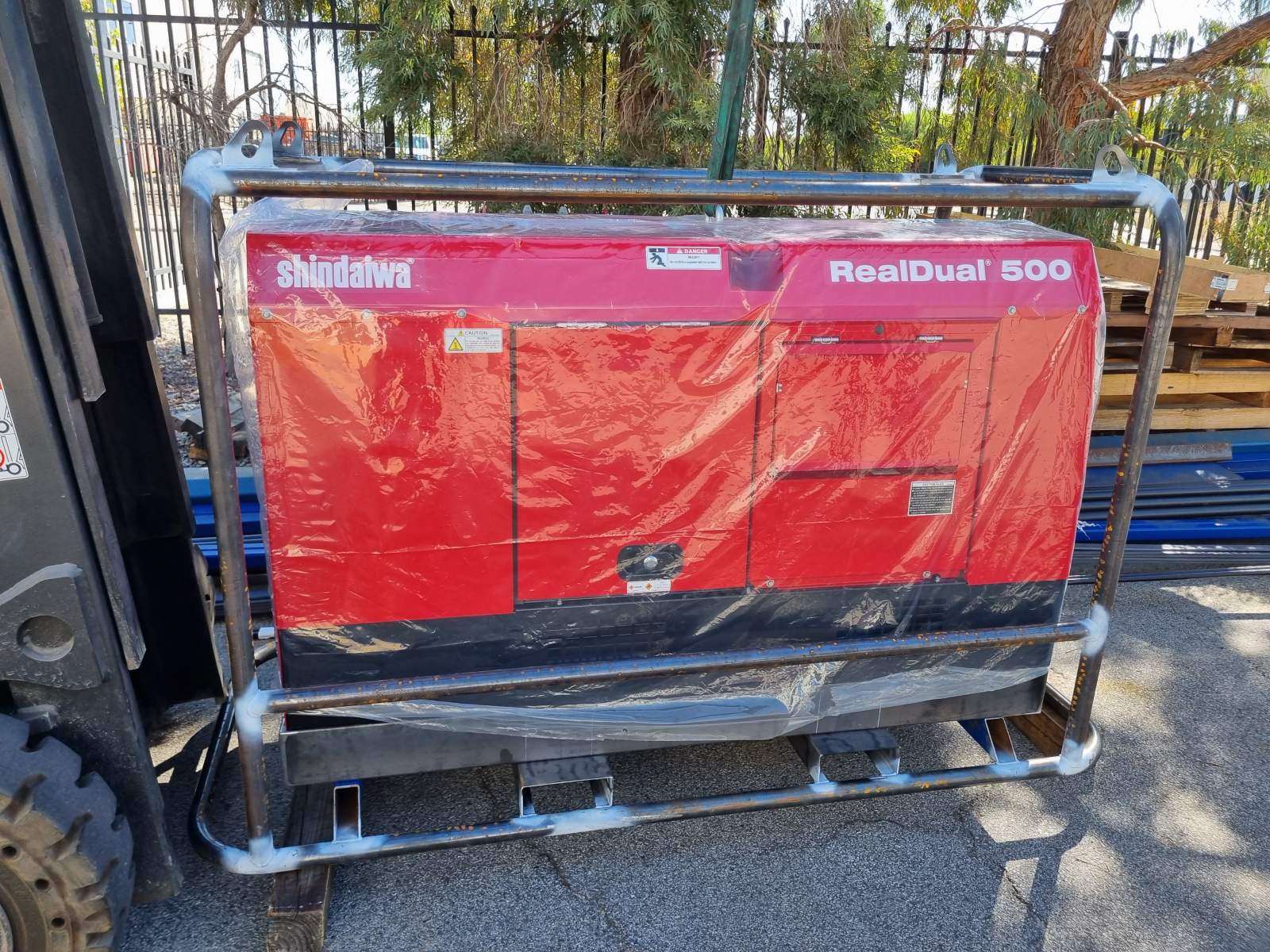
Completed diesel welder roll frame, ready to protect the unit and allow safe lifting on site
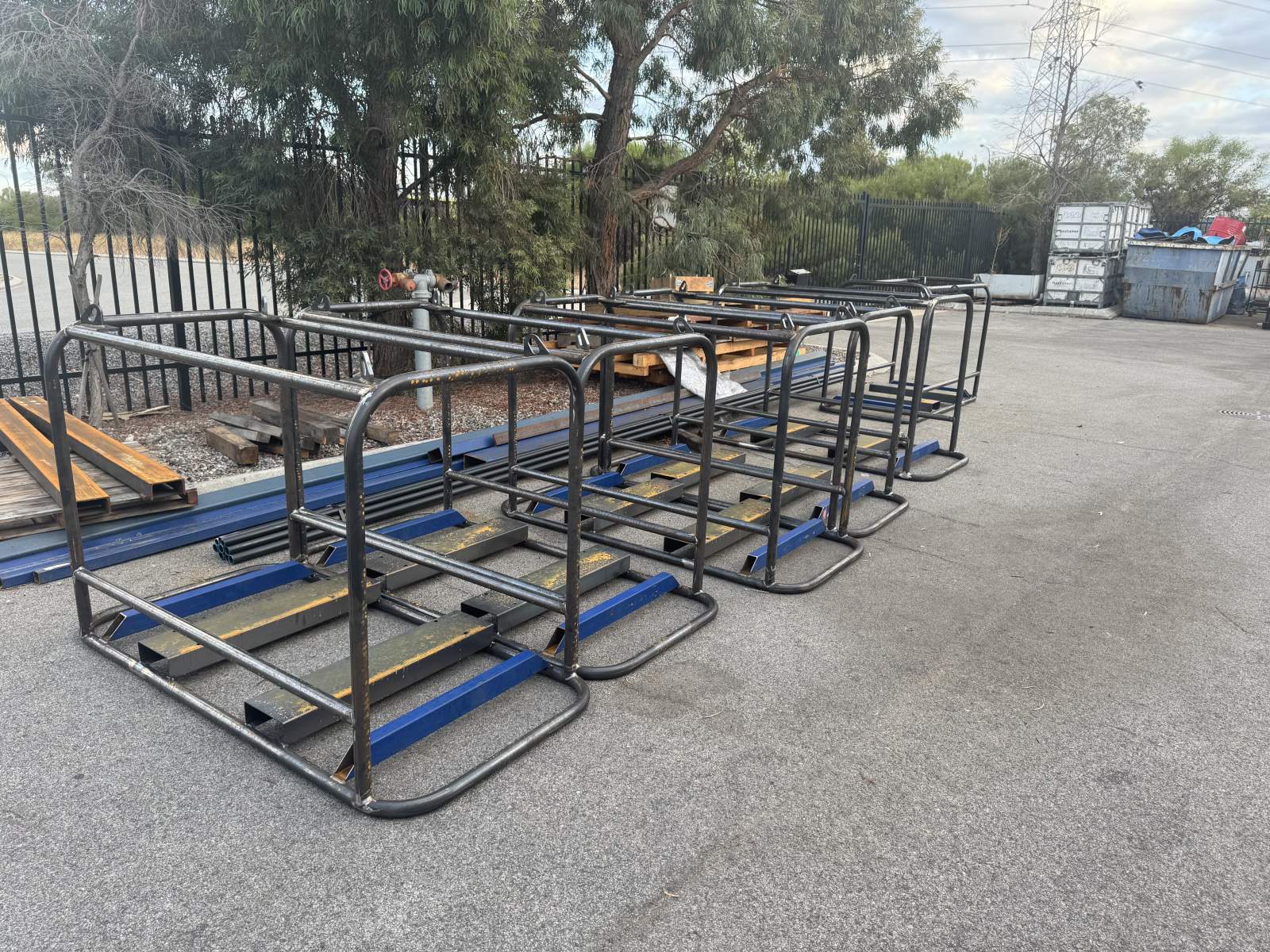
Batch of roll frames during production — multiple units fabricated to the same specification
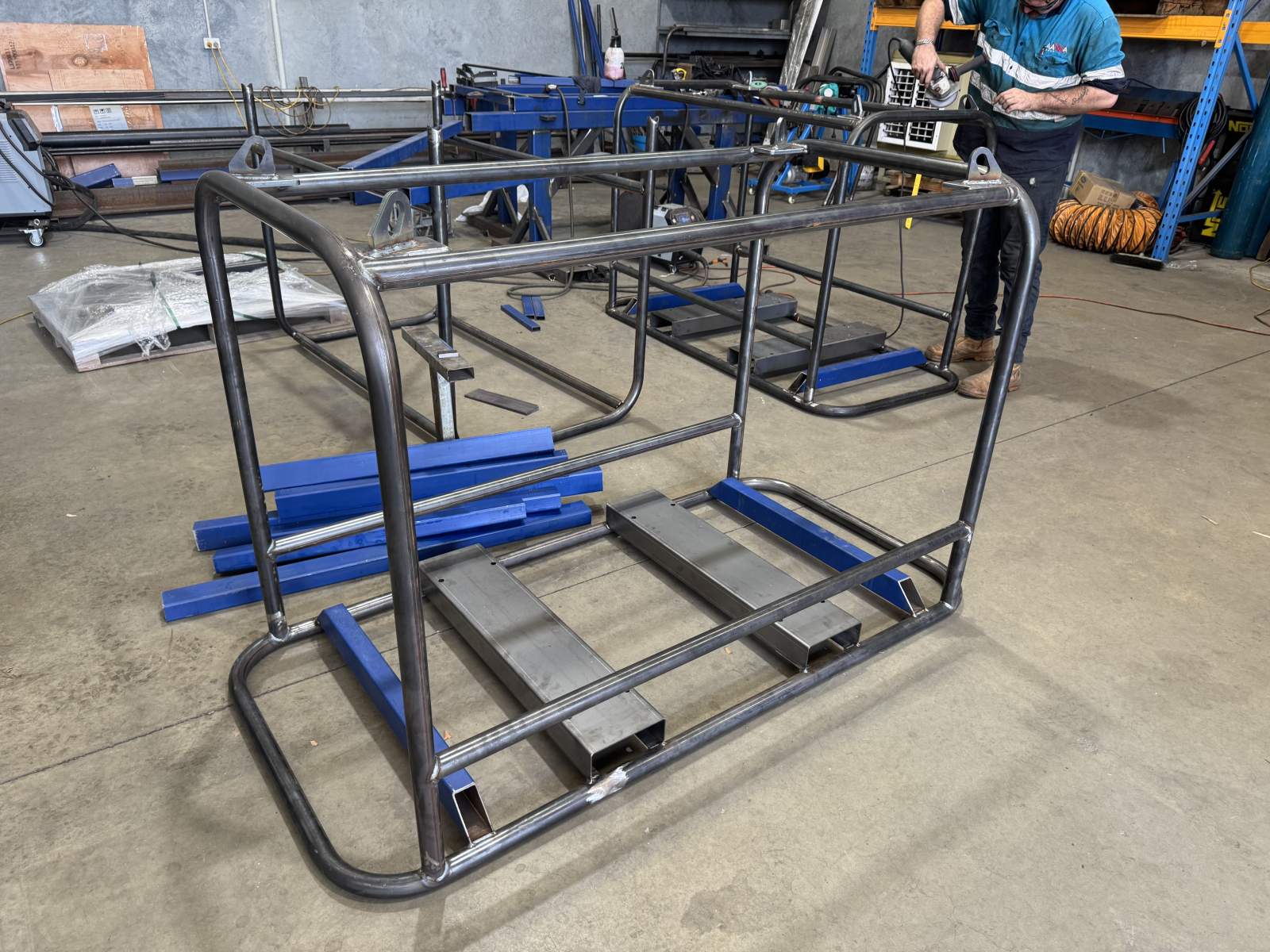
Roll frame fabrication in progress — structural welding to AS/NZS 1554.1 Category SP
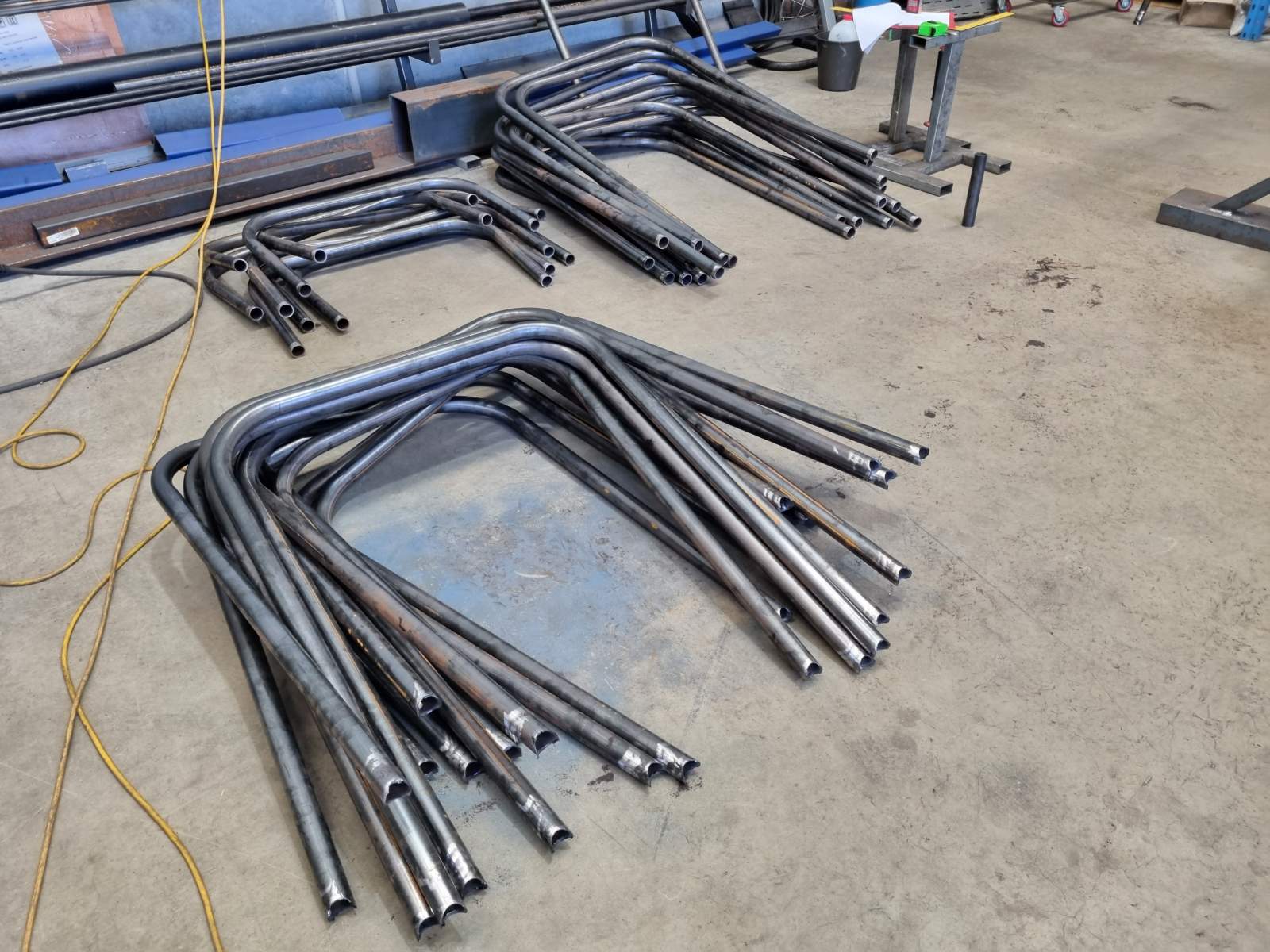
Pre-cut and pre-bent steel tube components awaiting assembly
Project Details
- Location
- Forrestdale, Western Australia, Australia
- Sector
- Mining / Industrial Equipment
- Status
- Completed
- Project Value
- $$
- Completion Date
- July 2026
- Standards
- AS/NZS 1554.1 SP - Structural Steel Welding (Structural Purpose)