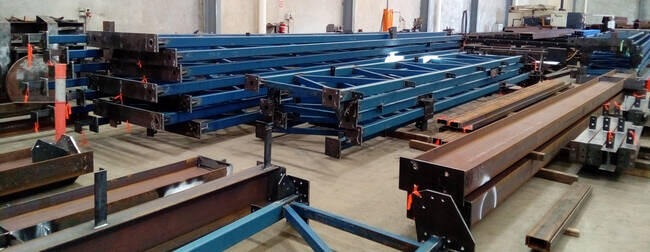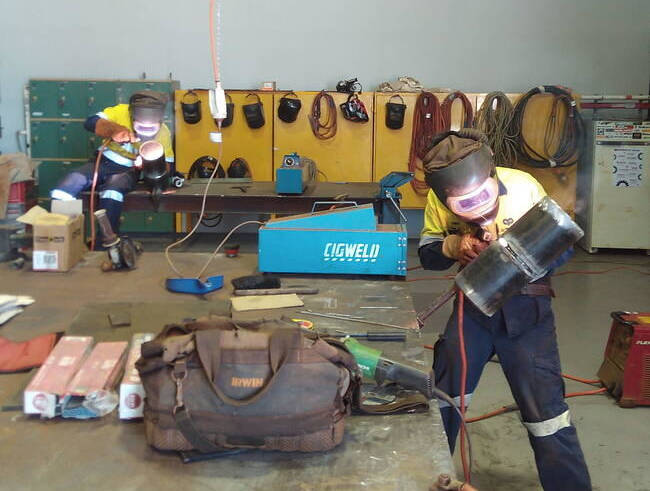
In Perth’s demanding industrial landscape—where mining infrastructure, commercial construction, and marine fabrication converge—welding quality isn’t just a preference. It’s a regulatory requirement. AS/NZS 1554, Australia and New Zealand’s definitive welding standard, establishes the framework that ensures structural integrity, regulatory compliance, and long-term safety across every sector from Pilbara iron ore facilities to Fremantle harbour installations.
Understanding AS/NZS 1554 certification means more than checking compliance boxes. It represents a competitive advantage that opens tender opportunities, reduces liability exposure, and builds client confidence in an environment where welding failures can result in catastrophic consequences—structural collapses, equipment failures, production shutdowns, and significant financial losses.
What is AS/NZS 1554 and Why It Matters
AS/NZS 1554 is the joint Australian/New Zealand standard for structural steel welding. First published by Standards Australia and Standards New Zealand, this comprehensive specification defines requirements for welding procedure qualification, welder performance testing, quality control protocols, and inspection criteria across multiple steel types and applications.
The standard isn’t simply technical guidance. For Perth businesses involved in structural fabrication, mining equipment manufacture, or construction projects, AS/NZS 1554 compliance is frequently mandated by:
- Building codes and construction permits
- Mining sector safety regulations
- Engineering specifications and contract requirements
- Insurance policies and liability coverage terms
- Client quality management systems
Non-compliance creates serious business risks. Projects can face stop-work orders. Completed welds may require costly rework or replacement. More critically, inadequate welding certification perth exposes organizations to legal liability if structural failures occur.
The standard protects everyone in the supply chain—from fabricators and contractors to end clients and the general public who depend on structural integrity. In Western Australia’s resource-driven economy, where equipment operates under extreme loads, harsh environmental conditions, and continuous duty cycles, proper certification isn’t bureaucratic overhead. It’s essential engineering practice.
Understanding the AS/NZS 1554 Series
AS/NZS 1554 isn’t a single document. It’s a comprehensive series, each part addressing specific steel types and welding applications. Perth businesses need to understand which part applies to their specific work scope.
Part 1: Structural Steel Welding (Most Common)
AS/NZS 1554.1 governs welding of structural steel—the foundation of commercial buildings, mining infrastructure, process plant structures, and fabricated equipment frames. This part addresses:
- Carbon steel welding procedures
- Fillet and butt weld requirements
- Weld acceptance criteria and defect tolerances
- Welder qualification testing protocols
- Quality control and documentation standards
For Perth’s construction and manufacturing sectors, Part 1 represents the most frequently specified standard. Most structural steel welding perth projects—from high-rise frameworks to conveyor support structures—require Part 1 compliance.
Part 2: Stainless Steel Welding
AS/NZS 1554.2 addresses stainless steel welding, critical for applications demanding corrosion resistance, hygiene, or aesthetic finish. Perth industries utilizing Part 2 include:
- Marine fabrication (saltwater exposure environments)
- Food processing equipment and facilities
- Chemical processing plants and storage systems
- Architectural features requiring durability and appearance
Stainless steel welding requires different procedures, consumables, and techniques compared to carbon steel. Part 2 certification ensures welders understand metallurgical considerations like heat input control, carbide precipitation prevention, and contamination avoidance.
Part 4: High Strength Quenched and Tempered Steel
Part 4 covers welding of high-strength structural steels (typically over 450 MPa yield strength) that have undergone quenched and tempered heat treatment. These materials appear in:
- Mining equipment subject to extreme mechanical loads
- Crane boom sections and lifting equipment
- Excavator buckets and earth-moving components
- Impact-resistant structures and components
High-strength steels present unique challenges. Improper welding procedures can destroy the heat-treated properties, creating brittle zones susceptible to cracking. AS1554 certification perth under Part 4 verifies that welders possess the specialized knowledge to maintain material properties throughout the welding process.
Part 5: Welding of Steel Structures Subject to High Levels of Fatigue Loading
AS/NZS 1554.5 focuses on structures experiencing cyclic loading—repeated stress that can initiate fatigue cracks even when loads remain well below the material’s ultimate strength. Applications include:
- Crane runways and rails
- Vibrating equipment foundations and supports
- Hoisting and lifting machinery
- Mining equipment with repetitive loading cycles
Fatigue-critical welds demand exceptional quality. Seemingly minor defects—small undercuts, poor weld profiles, or microscopic inclusions—become crack initiation sites under cyclic loading. Part 5 imposes stricter acceptance criteria and more rigorous inspection protocols than general structural welding.
Part 6: Welding of Reinforcing Steel
Part 6 addresses reinforcing bar (rebar) welding in concrete construction. While less common than tie-wire or mechanical splicing methods, welded rebar connections appear in:
- Heavy industrial concrete foundations
- Precast concrete element manufacturing
- Structural concrete repairs and modifications
- Special seismic-resistant concrete structures
Welding certification perth for reinforcing steel requires understanding concrete embedment effects, load transfer mechanisms, and heat-affected zone considerations in high-carbon steels.
The Certification Process: What Perth Businesses Need to Know
AS/NZS 1554 certification operates on two parallel tracks: welder qualification (proving individual competency) and procedure qualification (validating specific welding methods). Both components work together to ensure consistent, reliable weld quality.
Welder Performance Qualification (WPQ)
Welder Performance Qualification testing evaluates an individual welder’s ability to produce acceptable welds under controlled conditions. The process involves:
Test Preparation: A qualified welding supervisor or inspector prepares test pieces according to the specific AS/NZS 1554 part requirements. Test parameters include material type, thickness range, welding process, position (flat, horizontal, vertical, overhead), and joint configuration.
Practical Testing: The welder executes the prescribed weld using approved procedures and specified consumables. Testing organizations or independent inspection bodies observe the welding process to verify compliance with prescribed parameters.
Non-Destructive Testing: Completed test welds undergo visual inspection according to standard acceptance criteria. Depending on the application and standard part, additional NDT methods may include radiographic testing, ultrasonic examination, or magnetic particle inspection.
Destructive Testing: Many qualifications require destructive testing—bending tests, tensile tests, or macro-etch examinations that reveal internal weld structure, fusion quality, and potential defects not visible through NDT alone.
Qualification Certificate: Upon successful completion, the welder receives a qualification certificate valid for specific ranges of materials, thicknesses, positions, and welding processes. Qualifications typically remain valid for three years, provided the welder continues working within their qualified range and maintains documented evidence of welding activity.
WPQ testing validates practical skill. A welder might hold multiple qualifications covering different processes (GMAW, FCAW, SMAW), positions, and material types. Perth employers should verify that certified welders perth hold current qualifications matching their assigned work scope.
Welding Procedure Specification (WPS) Development
While WPQ certifies individual welders, Welding Procedure Specifications document exactly how specific welds should be executed. A WPS defines every critical parameter:
- Base material specifications and thickness ranges
- Welding process and equipment settings
- Filler metal (consumable) specifications
- Preheat and interpass temperature requirements
- Joint design and preparation methods
- Welding technique and pass sequences
- Post-weld heat treatment requirements
Each WPS must be qualified through procedure qualification testing, creating a Procedure Qualification Record (PQR) that documents test results and validates the procedure’s acceptability.
Procedure Qualification Record (PQR)
The PQR provides objective evidence that a specific welding procedure produces acceptable results. Creating a PQR involves:
- Welding test coupons using the exact parameters specified in the proposed WPS
- Conducting comprehensive testing—visual inspection, NDT, and destructive tests
- Recording all results including mechanical properties, defect evaluations, and metallurgical characteristics
- Having the documentation reviewed and approved by a qualified welding engineer or inspector
One PQR can support multiple WPSs, provided all procedures fall within the qualified parameter ranges. Organizations performing welding procedures for AS/NZS 1554 work must maintain current PQR documentation demonstrating procedure validity.
Quality Documentation Requirements
AS/NZS 1554 compliance demands rigorous documentation throughout fabrication:
- Current welder qualification certificates for all personnel
- Approved WPS documents covering all joint configurations
- Supporting PQRs validating each procedure
- Welding consumable material certificates and traceability
- Inspection and testing records (NDT reports, dimensional checks)
- Non-conformance reports and corrective action documentation
For Perth businesses pursuing quality control certification or working on projects with stringent quality requirements, maintaining comprehensive documentation systems is non-negotiable. Many mining and construction clients conduct regular audits to verify fabricator compliance.
Industry Applications in Perth
AS/NZS 1554 certification touches virtually every industrial sector in Western Australia. Understanding these applications helps businesses recognize when certification becomes essential.
Mining Sector Requirements
Western Australia’s mining industry—spanning iron ore, gold, lithium, and other minerals—generates massive demand for certified welding across diverse applications:
Processing Plant Structures: Crushers, conveyors, and screening equipment require structural steel frameworks designed for heavy loads, constant vibration, and harsh operating environments. These installations demand Part 1 compliance, often with Part 5 fatigue considerations for equipment subject to cyclic loading.
Mobile Equipment Fabrication: Haul truck bodies, excavator attachments, and materials handling equipment utilize high-strength steels requiring Part 4 certification. Improper welding procedures on these components can lead to catastrophic failures in remote locations where breakdown costs extend beyond repair expenses to include lost production and safety risks.
Materials Handling Systems: Conveyor structures, chute assemblies, and transfer stations combine structural steel fabrication with wear-resistant overlays. Many of these systems operate continuously, making weld quality critical to maintaining production schedules.
Infrastructure and Site Facilities: Mining camps, workshops, and administrative buildings require conventional structural steel welding, but the remote locations and accelerated construction schedules demand reliable AS1554 certification perth to avoid costly rework in areas with limited access to qualified welding resources.
Construction Applications
Perth’s commercial construction sector relies heavily on certified structural steel welding:
Multi-Story Buildings: Commercial towers, office complexes, and residential high-rises use structural steel frames requiring comprehensive Part 1 compliance. Building permits typically mandate AS/NZS 1554 certification, and building surveyors conduct regular inspections throughout construction.
Industrial Facilities: Warehouses, distribution centers, and manufacturing plants combine large-span structures with specialized equipment installations. These projects often require multiple certification types—Part 1 for the building structure, Part 2 for stainless steel processing equipment, and Part 5 for crane runway systems.
Public Infrastructure: Bridges, pedestrian overpasses, and transit facilities face stringent regulatory oversight. These highly visible projects demand not just technical compliance but also exceptional quality control documentation for public accountability.
Architectural Metalwork: While sometimes considered less critical than primary structural elements, architectural steel features increasingly require certification as liability consciousness grows among designers, builders, and property owners.
Marine Industry Needs
Fremantle and Perth’s coastal location drives substantial marine fabrication demand:
Vessel Modifications and Repairs: Commercial fishing vessels, offshore service boats, and recreational craft require Part 2 stainless steel welding expertise for components exposed to saltwater corrosion. Marine surveyors typically require certification documentation before approving vessel modifications.
Port Infrastructure: Wharves, loading facilities, and materials handling systems combine structural steel with corrosion protection requirements. The challenging environment—saltwater exposure, heavy loads, and continuous operation—demands reliable welding certification perth to ensure extended service life.
Offshore Support Structures: Equipment servicing Western Australia’s offshore oil and gas facilities requires exceptional quality standards given the consequences of failure in remote marine environments.
Manufacturing Excellence
Perth’s diverse manufacturing sector—from agricultural equipment to specialized industrial machinery—increasingly requires AS/NZS 1554 compliance:
Pressure Vessels and Tanks: Storage tanks, pressure vessels, and process equipment often require AS 1554 welding combined with other standards like AS 1210 (pressure vessels). These applications demand comprehensive procedure development and testing to ensure containment integrity.
Custom Equipment Fabrication: Manufacturers producing one-off or small-batch specialized equipment face client demands for certified welding even when not strictly required by regulation. Quality-conscious customers recognize that certified welders perth deliver more reliable products with reduced failure risk.
Export Products: Companies manufacturing equipment for international markets often face certification requirements from destination countries. AS/NZS 1554 certification provides internationally recognized evidence of welding quality that facilitates export approvals.
Benefits of AS/NZS 1554 Compliance
Beyond regulatory necessity, AS/NZS 1554 certification delivers tangible business advantages that justify the investment in proper procedures and welder qualification.
Regulatory Compliance and Legal Protection
Most obviously, certification ensures compliance with building codes, engineering specifications, and industry regulations. This compliance provides legal protection when:
- Authorities conduct worksite inspections
- Clients audit quality management systems
- Insurance investigations follow incidents or failures
- Litigation examines due diligence and standard of care
Documented compliance demonstrates that your organization followed recognized industry practices—a critical defense against claims of negligence or inadequate quality control.
Insurance and Liability Considerations
Many insurance policies contain exclusions or limitations for work performed without proper certification. Fabricators working outside their certified scope may discover their coverage doesn’t respond to claims arising from welding-related failures.
Conversely, comprehensive welding certification perth documentation can reduce insurance premiums by demonstrating lower risk profiles to underwriters. The investment in certification often generates direct savings in insurance costs while simultaneously reducing overall liability exposure.
Quality Assurance and Reduced Failure Risk
Certification isn’t simply paperwork. The underlying process—procedure development, testing, documentation, and ongoing verification—creates systematic quality assurance that reduces defect rates and failure risk.
Organizations with robust AS/NZS 1554 compliance programs typically experience:
- Fewer weld repairs and rework cycles
- Reduced warranty claims and product failures
- Lower inspection rejection rates
- Improved production efficiency through standardized procedures
- Enhanced ability to troubleshoot problems when they occur
These quality improvements translate directly to profitability. Every avoided repair, every prevented failure, and every passed inspection represents saved costs and protected revenue.
Competitive Advantage for Tenders
Many Perth tender opportunities—particularly in mining, construction, and government sectors—require AS/NZS 1554 certification as a qualification criterion. Organizations without proper certification simply cannot compete for these projects.
Even where certification isn’t mandatory, demonstrating comprehensive compliance provides competitive differentiation. Clients choosing between qualified bidders often select fabricators with superior quality management systems, recognizing that seemingly small differences in capability can mean significant differences in project outcomes.
Industries we serve increasingly demand evidence of technical capability beyond basic licensing. Certification provides objective, third-party validated proof of competency that strengthens tender submissions and client presentations.
Client Confidence and Relationship Building
Perhaps most valuable, AS/NZS 1554 certification builds client confidence. Engineering managers, project directors, and procurement professionals face enormous pressure to deliver successful projects. They naturally gravitate toward suppliers who reduce their risk exposure.
Comprehensive certification signals professionalism, technical capability, and quality commitment. It reassures clients that your organization understands industry standards, maintains proper documentation, and prioritizes quality over expedience.
This confidence translates to:
- Repeat business from satisfied clients
- Positive references and recommendations
- Preferred supplier status and direct award opportunities
- Reduced scrutiny and oversight during project execution
- Stronger relationships built on demonstrated reliability
In Perth’s relatively compact industrial community, reputation matters enormously. Certification contributes directly to building the reputation that sustains long-term business success.
How to Get Started with AS/NZS 1554 Certification
Organizations new to AS/NZS 1554 compliance often feel overwhelmed by the technical requirements and documentation demands. A systematic approach makes the process manageable.
Finding Certified Welders
Your first step involves ensuring your welding workforce holds appropriate current qualifications. Options include:
Hire Pre-Certified Welders: Recruit welders already holding relevant AS/NZS 1554 qualifications. Verify certificates carefully, checking the qualification scope (material types, processes, positions) matches your work requirements and confirming certificates remain within their three-year validity period.
Develop Internal Capabilities: Send experienced welders for qualification testing through recognized testing organizations. Perth has several accredited facilities offering WPQ testing services. Budget for test fees, material costs, and welder time—typically ranging from several hundred to over a thousand dollars per qualification depending on complexity.
Partner with Certified Welding Services: For organizations with intermittent certified welding needs, subcontracting specialized work to established certified fabricators may prove more economical than developing internal capabilities. Perth service areas are well-served by experienced welding contractors holding comprehensive certifications.
Working with Welding Consultants
Many Perth businesses benefit from engaging welding consultants to establish compliant systems. Professional welding consulting services can:
- Review project specifications and identify certification requirements
- Develop welding procedures and conduct procedure qualification testing
- Design quality control systems and documentation frameworks
- Train supervisors and inspectors in AS/NZS 1554 requirements
- Conduct internal audits and identify compliance gaps
- Provide technical support during client audits or regulatory inspections
Consultants bring specialized expertise without the overhead of permanent employment. For businesses building certification programs or tackling unfamiliar applications, professional guidance accelerates development while avoiding costly mistakes.
Documentation and Quality Systems
Effective AS/NZS 1554 compliance requires robust documentation systems. Minimum requirements include:
Welder Qualification Matrix: Track all welding personnel, their current qualifications, expiry dates, and qualified scope. This matrix allows quick verification that welders assigned to specific tasks hold appropriate certifications.
WPS Library: Maintain approved welding procedures covering your typical work scope. Organize procedures logically by material type, thickness range, and process. Ensure easy access for welders, supervisors, and inspectors.
Supporting Documentation: File PQRs, material certificates, consumable certifications, and testing reports systematically. These documents provide essential evidence during audits and inspections.
Work Instructions: Develop job-specific welding plans that reference applicable WPS documents, specify inspection requirements, and document quality control activities.
Training Records: Document welder training in procedure requirements, safety protocols, and quality expectations. Training records demonstrate organizational commitment to competency beyond basic certification.
Many organizations implement digital quality management systems to streamline documentation, improve accessibility, and facilitate audit preparation. Even simple spreadsheet-based systems vastly improve compliance capability compared to ad-hoc paper filing.
Engaging Professional Inspection Services
For critical applications or high-value projects, consider engaging independent quality control inspection services. Professional inspectors provide:
- Pre-fabrication procedure review and approval
- In-process inspection during welding operations
- Final acceptance testing and documentation
- Third-party verification that satisfies client requirements
- Expert interpretation of standard requirements
Independent inspection adds cost but provides valuable risk mitigation for projects where failure consequences justify additional quality assurance investment.
Taking the First Step
Organizations ready to pursue AS/NZS 1554 certification should begin by:
-
Assessing Current Capabilities: Review existing welder qualifications, procedures, and documentation against standard requirements. Identify gaps between current state and desired compliance level.
-
Defining Certification Scope: Determine which AS/NZS 1554 parts, material types, processes, and positions your work requires. Prioritize the most common or highest-value applications.
-
Developing an Implementation Plan: Create a realistic timeline for procedure development, welder qualification, documentation system implementation, and staff training.
-
Engaging Professional Support: Connect with testing organizations, welding consultants, and inspection services to support your certification development.
-
Building Organizational Commitment: Ensure management understands the investment required and commits resources necessary for successful implementation.
AS/NZS 1554 compliance isn’t instantaneous. Depending on organizational starting point and certification scope, full implementation may require several months to over a year. However, the resulting capabilities—improved quality, expanded market access, and enhanced competitiveness—justify the development investment.
Secure Your Competitive Edge with Professional Welding Certification
AS/NZS 1554 certification represents more than regulatory compliance. It’s a strategic business investment that opens market opportunities, reduces liability exposure, and positions your organization as a quality leader in Perth’s demanding industrial environment.
Elite Engineering WA provides comprehensive welding certification support—from welder qualification testing and procedure development to quality system implementation and ongoing technical support. Our Perth-based team understands Western Australia’s industrial requirements and delivers practical solutions tailored to your specific business needs.
Whether you’re pursuing your first AS/NZS 1554 qualification or expanding existing certification scope, we offer the technical expertise and local knowledge to accelerate your success.
Contact Elite Engineering WA today to discuss your welding certification requirements.
Email sales@elitewa.com.au or Phone 1300 887 461
Our technical specialists are ready to help you navigate AS/NZS 1554 certification and build the competitive advantage that quality welding capabilities deliver.