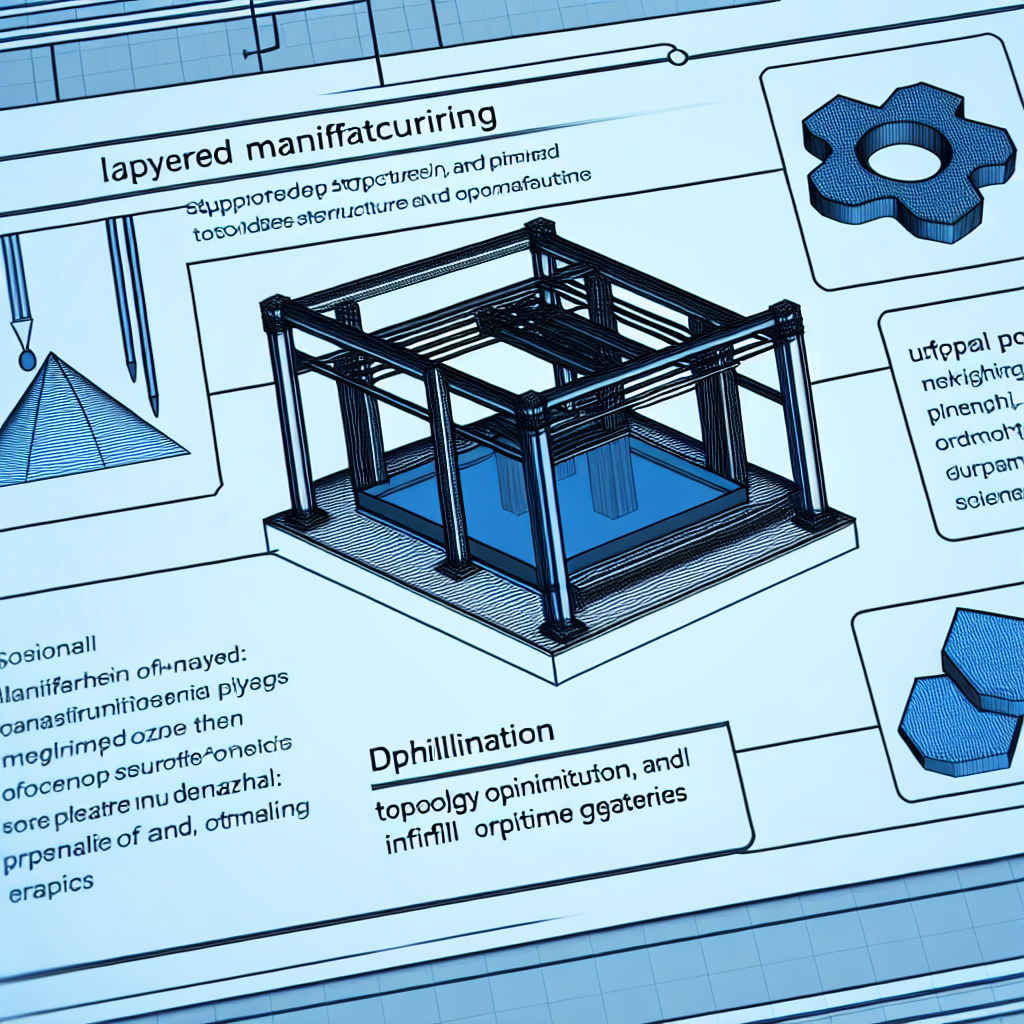
Additive manufacturing, also known as 3D printing, is a revolutionary technology that has disrupted the manufacturing industry. It allows manufacturers to create complex parts and prototypes efficiently and quickly. However, designing for additive manufacturing is not the same as designing for traditional manufacturing methods. Here are five key design principles to keep in mind when designing for additive manufacturing..
1. Design for the Process
Different additive manufacturing processes have different limitations and requirements. When designing a part, it is important to consider the specific process that will be used to manufacture it. For example, if you are using Fused Deposition Modeling (FDM), you will need to design parts with support structures to prevent sagging or warping during printing. If you are using Stereolithography (SLA), you will need to design parts with drain holes to allow excess resin to drain out.
2. Optimize for Material Usage
Additive manufacturing can be an expensive process, especially when using high-end materials like titanium or carbon fiber. To optimize costs, it is important to minimize material usage wherever possible. This can be done by designing parts with hollow sections or lattice structures that reduce overall material usage while maintaining structural integrity.
3. Consider Part Orientation
The orientation of a part during printing can have a significant impact on its strength and durability. Parts printed in a vertical orientation tend to be stronger than those printed horizontally because the layers of material are aligned with the force being applied to the part. When designing a part, it is important to consider its orientation during printing and design it in a way that maximizes its strength and durability.
4. Use Generative Design
Generative design is a powerful tool that uses algorithms and artificial intelligence to generate optimized designs based on specific parameters and requirements. By using generative design, engineers can quickly explore multiple design options and identify the best one based on factors like weight, strength, and cost.
5. Test Early and Often
Testing is an important part of any design process, but it is especially important when designing for additive manufacturing. Because additive manufacturing is a relatively new technology, there are still many unknowns when it comes to material properties and behavior during printing. By testing early and often, engineers can identify potential issues before they become major problems and make adjustments to their designs accordingly.
In conclusion, designing for additive manufacturing requires a different approach than traditional manufacturing methods. By keeping these key design principles in mind, engineers can maximize the benefits of additive manufacturing and create high-quality parts efficiently and effectively.
- Written by: Elite Engineering WA
If you would like more information on how Elite Engineering WA can help you with your next project please contact us for a quote or more information. Email sales@elitewa.com.au or Phone 1300 887 461